Relic point Vietnam
Việt Nam
Tomb of Pham Van Lieu
The person listed 89th in that golden book is Le Lieu (also known as Pham Van Lieu, documents say Pham Dinh Lieu), a famous general who from a young age followed his father to join the Lam Son insurgent army, participating in many battles. fought fiercely on the battlefields in the mountainous areas of Thanh Hoa, Nghe An, Tot Dong, Truc Dong... and especially had the first contribution in the siege of Xuong Giang citadel and destroyed the Ming dynasty's great reinforcements on the battlefield of Xuong Giang in the history of Xuong Giang. history. Pham Van Lieu is the son of Pham Van Thanh, and was once awarded the rank of Admiral of the same rank. Originally located in Nguyen Xa village, Lam Son village, Thuy Nguyen district, Thanh Hoa province. He followed Le Loi and the Lam Son insurgent army to build a resistance movement against the Ming army from the early days at the Lung Nhai oath festival. During the arduous resistance war against the Ming invaders, he made many great achievements on the battlefields of Nghe An and Thanh Hoa. During the great war to destroy the Ming Dynasty's reinforcements on the Xuong Giang battlefield, Pham Van Lieu was the general who commanded a secret army along the banks of the Thuong River (present-day Xuan Huong, My Thai, Lang Giang district). attacked, destroyed and captured more than 70,000 Ming reinforcements at the end of 1427. After destroying the invading reinforcements, Pham Van Lieu was appointed by Le Loi to stay in Kinh Bac to guard the northern region of Dong Do citadel. In 1428, the resistance war against the Ming invaders ended, he was promoted to the title of Ngan Thanh Vinh Loc Dai Phuc, Ta Xa Cav General with the title Khang Vu Marquis, and later promoted to the title Khang Quoc Cung. Due to his merits in the resistance war against the Ming, when considering awards, he was included in the "national founding meritorious" (a subject who has contributed to opening the country), was given national status (Le Van Lieu) and was awarded many titles in the country. Kinh Bac origin and settled in Chua hamlet, Xuan Huong commune, Lang Giang district today. In the year of the Rat (1456), Pham Van Lieu died in Kinh Bac. The grave is located in Forbidden Forest, Chua village, Xuan Man commune, Bao Loc district, Lang Giang district (now Chua village, Xuan Huong commune, Lang Giang district, Bac Giang province). 3. Pham Van Lieu has two children, a boy and a girl. The girl recruited into the palace was later appointed Minh Phi. In the book Dai Viet, historian Le Quy Don wrote about her as follows: "Pham Minh Phi (wife of King Le Thanh Tong) Minh Phi, surnamed Pham, was the niece of a mandarin who was awarded the rank of Admiral and co-trier, her name was Thanh, and she was the daughter of The mandarin was awarded General Tri Khang Vu, Pham Van Lieu. She was elected to the palace on the 7th month of Mau Ngo, the 2nd year of Quang Thuan (1461). In the 6th year of Quang Thuan (1465), he was promoted to Tu Vien. On Quy Suu in the 6th month of Hong Duc's 2nd year (1471), he was promoted to Chieu Vien in November 1477 and promoted to Minh Phi in Thuy Duc palace In 1497, King Thanh Tong died. In the first year of Canh Thong (1498), she was a concubine of the previous dynasty, so she served in Thien An palace not long before she fell ill on Giap Ngo day in September, at the age of 50 The consolation money was 270,000 and the mandarin ordered the deceased to be buried in Linh Hoa field in Lang Giang district. Pham Van Lieu's second son, Pham Duc Hoa, was honored with the title of Special Patriarch of Thuong Quoc, Tu Do reviewed, the title of Hoa Phong Uncle (later given the title Hoa Phong Marquis) was chosen to be his son-in-law. Pham Duc Hoa married the 8th daughter of King Thanh Tong Thuan Emperor, Thieu Duong, Princess Le Thi Ngoc Khanh. Thus, Pham Duc Hoa was originally the younger brother-in-law, then was chosen to be the son-in-law (son-in-law) of King Le Thanh Tong. His father, Pham Dinh Lieu, is both the father-in-law and in-laws of this wise king. When settling down on the assigned land, the Pham family became an influential family in Kinh Bac. 4. With the royal benefits and benefits of the 2,370 acres of assigned fields, the Pham family, especially Princess Thieu Duong Pham Thi Ngoc Khanh, donated merit to many localities in the country. Kinh Bac built and expanded welfare projects, so it was worshiped by many localities. According to the declaration of the local Chief Ly from 1942, in Bac Giang province there are 15 communal houses worshiping Pham Van Lieu and his son and Princess Thieu Duong as Phuc Than/Tutelary God. Particularly, Tri Le district, ancient Bao Loc district (now belonging to 4 communes: Duong Duc, Xuan Huong, Tri Le, Tan Thanh of Lang Giang district) has 8 villages/communes worshiping and still preserving the ordination and tablets worshiping three These are the communes: Chuyen My, Chi My, Dai Man, Xuan Man, Huong Man... Pham Van Lieu became the ancestor of the Pham family in Chua village, Xuan Huong commune, Lang Giang district. Currently in Chua village, there are still remains of graves and a family church, a place to worship and commemorate the famous historical general Pham Van Lieu. The relic has been decided by the Ministry of Culture and Sports to be ranked as a national historical and cultural relic. SOURCE ELECTRONIC INFORMATION PORTAL DEPARTMENT OF CULTURE - SPORTS - TOURISM OF BAC GIANG PROVINCE
Bac Ninh
2889 view
Rating : National monument

Phuc Quang Pagoda
Located 20km northeast of Bac Giang city center, Tien Luc commune, Lang Giang district is famous for its clusters of historical and cultural relics. This is an ancient temple, established in 1723 under the reign of King Le Canh Hung, facing south, built by a monk whose hometown was Tien Luc, Lang Giang - he is the Patriarch sitting on the Three Jewels. . The pagoda has 35 compartments, designed in the "domestic and foreign" architectural style. The entire front hall, two corridors and bell tower are connected to form the letter Quoc, the remaining part is the incense burner connected to the upper palace to form the letter Cong. In the pagoda, the system of Buddha statues is arranged in order from the upper hall to the two corridors and below the large bell tower, in total there are about 90 precious ancient statues. If you stand in the middle of the pagoda to observe and admire the ancient statues, you will not be surprised and admired by the extremely skillful and sophisticated sculpting art of the ancestors. With these precious values, in 1989, Phuc Quang Pagoda was ranked by the Ministry of Culture and Information (now the Ministry of Culture, Sports and Tourism) as a National Historical and Cultural Monument. However, the people of Tien Luc commune still constantly wonder why the pagoda has such beautiful, majestic architecture and peaceful landscape without an owner, with the doors closed front and back. Mr. Nguyen Dinh Thuan, the long-time caretaker of the pagoda, said that there is a monk Thich Hue Cuu, whose birth name is Nguyen Thanh Chung (from Ninh Thuan), who has stayed for no more than three years at the longest (abbot since 2010). to 2013). Even though they cannot explain it, people believe in the sacredness of the temple. The evidence is that during the war years, although the surrounding area was bombarded to the point of ruin, Phuc Quang pagoda and Tien Luc commune were still safely protected. They believe that the more than 300-year-old pagoda has guarded this land, helping people settle down. At the end of 2014, the project to renovate and embellish Phuc Quang Pagoda relics was officially started, including 04 main items. On the morning of July 29, 2016, 02 completed items were handed over as planned, including the Main Pagoda (Three Jewels, Bell Tower, two Corridors), area of 884.5 m2 and Thao Xa House, area of 278.3 m2. The total settlement value from the national target funding source and local budget is estimated to be about 23.5 billion VND. SOURCE PROPAGANDA COMMITTEE OF BAC GIANG PROVINCIAL COMMITTEE
Bac Ninh
2931 view
Rating : National monument

Dinh San
San Communal House worships saints Cao Son - Quy Minh and Minh Giang Do Thong, both generals of King Hung, who had meritorious achievements in fighting the enemy, defending the country, eliminating disasters and were bestowed with titles by the Le - Nguyen feudal dynasties. god. Currently, in the two coffins of San Communal House, many religious ordinations with era titles such as: Tu Duc Luc Nien; Tu Duc decade; Tu Duc thirty-three years; Khai Dinh is nine years old; Duy Tan's third year... Passing through the communal house gate, on the right is San Pagoda, going straight in is the Great Temple with 3 compartments, 2 compartments, 2 majestic, majestic wings with 4 curved blades. The roof's edge is covered with "Luong, dragon flanking the moon", both ends have pincers, the strip edge is covered with Nghe chau, dancing phoenix, extremely lively. All the roofs and banks are decorated with lemon flowers, running throughout, adding to the majesty, grand, and outstanding beauty, yet still gentle and elegant thanks to the sophisticated, harmonious combination of horizontal lines. Straight lines with soft, lively curves. The Communal House is made in the shape of the letter Cong (I) and includes three morning glory rooms connected to three harem rooms and the three harem rooms also have very beautiful cornered swords, making this entire massive communal house superior to other temples. Another family in Luc Nam. With the structure: Upper is the husband's head, gong price, lower is the husband's head, the long is strong and beautiful. In particular, this is a Le Dynasty communal house that is still quite intact, but the main pillar frame is much higher and the military column is completely lower, creating a high, wide and very airy interior of the communal house. With this "four rows of legs" structure of the column frame system, the communal house's roof has a large water slope and a wide roof, making the communal house both durable, strong, sturdy, massive, and tall and spacious inside. Spacious but still gentle and elegant. The "nine insects" hammock door is the most outstanding symbol of the art of carving, lacquer and gilding during the Nguyen Dynasty. With 4 monograms "Long live the Holy Palace". The middle space and the entire roof in front of the communal house are covered with ceilings, the well's well is painted with embossed "Four Spirits", "Four Quarters", "Long Ma", "Lac Thu" and a period pattern extending through the morning glory strip. to the harem. The shrine in the harem is bright and brilliant with 2 golden-painted dragon pavilions, 2 altar thrones, inside there are two splendid statues of gods, lacquered tablets of the Le Dynasty, palanquins and many other worship objects... In 1994, San communal house was recognized by the State as a national historical-cultural, architectural and artistic relic. SOURCE BAC GIANG DEPARTMENT OF CULTURE, SPORTS AND TOURISM CENTER FOR INFORMATION - TOURISM PROMOTION
Bac Ninh
2772 view
Rating : National monument
Phu Loc Pagoda
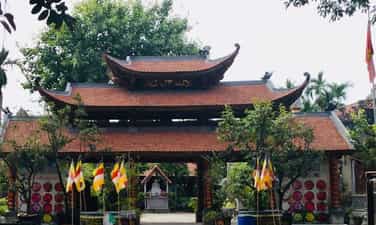
Phu Loc Pagoda, whose abbreviation is Ma Ha Pagoda, or Phu Loc Tu, is one of six relics of Cam Vu commune, Cam Giang district, about 12 km northwest of Hai Duong City. As a place with a convenient transportation location, since previous centuries, Phu Loc has soon become the center of economic and cultural exchange of the region, on that social basis, many traditional cultural institutions have been established. life and development. The pagoda was built in the early Le dynasty (15th century), which was also a period of brilliant economic and cultural development in local history. The pagoda was greatly restored in the 19th century (1898), with the relatively massive. Over the years of hardship, war and social events, the pagoda still has a nail-shaped (J) architecture including 5 front halls and 3 back halls, preserving the ancient architecture. Located on a spacious and flat piece of land in the center of Phu Loc village, in front there is a large pond, along the pond people plant many types of green fruit trees, the ancient pagoda roof is hidden in the groves of trees, creating a utopian landscape. quiet, solemn. The front hall is built with a dome, reinforced with pillars, has a frame structure with overlapping ridges, a chamfered roof top with a stylized "Tho" engraved on it, rectangular in shape, the husband's children are carved with fire swords, in the style of the Later Le and Late Dynasties. stylized lotus. The ends of the seven front halls touch the canal with dragon leaves wrapped around them, the swords and beards of the dragon's hair are shaped like clouds and fire blades. On the striped part is a system of dong leaves, decorated with "Dragon leaves" "Bamboo turning dragon" interspersed with playing weasels. In general, the monument has undergone many renovations, so the original architecture has been slightly changed, the two gables are in the style of gong stands interspersed with piles of beams, and the panels are carved with the theme of the four sacred animals. Connected to the front hall are 3 back rooms built with truss and pillars, with simple truss and buttress architecture. Phu Loc Pagoda worships Buddha according to the Mahayana sect. Before the August 1945 revolution, the pagoda had a very large scale, with up to 50 statues and many sacrificial offerings. Particularly, the system of worship statues in the upper hall has 6 layers and most The statue was created in the 18th - 19th centuries. In addition, in the side rooms there are statues of Quan Am To Son and Quan Am Tong Tu, according to Buddhist scriptures, these are the two forms of Avalokiteśvara. In the front hall, worship statues are arranged as follows: On the left side is the place to worship Saint Hien and the statue of Trung Evil, on the right side is the place to worship Duc Ong and the statue of Khuyen Thien. On both sides of the gable are worshiped the Vajra Prajnaparamita, Thai Thuong Lao Quan and Bodhidharma. The new Mother Goddess Church was built by the people in 1996, worshiping Mother Thoai, Mother Thien and Mother Thuong Ngan according to the belief of worshiping natural supernatural forces of the ancient Vietnamese people. With 35 statues of all kinds, most of which were created in the 18th - 19th centuries, Phu Loc Pagoda is not only a place for religious activities but also a place to store valuable works of folk sculpture. In addition to the Buddha statue system, Phu Loc Pagoda also retains many other antiques and worship objects such as parallel sentences, great characters, bronze bells, hammock doors, incense bowls... Worshiping Buddha for good luck is an indispensable activity for Buddhist people in Vietnam. On the full moon days and first days of the month, Phu Loc people go to the pagoda to worship Buddha. The offerings to Buddha are only hometown products but clearly show their sincere devotion. In addition, Phu Loc Pagoda also has a number of main holidays as follows: It is the 8th day of the 4th lunar month - Buddha's birthday. In Phu Loc, there is a custom of chanting sutras and holding Moc Duc ceremonies, bathing statues with fragrant leaf water and The statue is made of red silk, the silk is later torn into many small pieces for everyone to pray for good luck. On the 15th day of the 7th lunar month - Vu Lan holiday, a ceremony is held to worship the souls of Buddhists to help and forgive the sins of the dead. In recent years, local people have also held the "Buddha Return" ceremony for the deceased with the meaning of praying for the souls of the deceased to be liberated according to the concept of folk beliefs. Because Phu Loc communal house worships the Tutelary God, during festivals, people always go to the pagoda to worship Buddha and vice versa. Therefore, Phu Loc communal house and pagoda ceremonies have become an indispensable need of the people. here. Phu Loc Pagoda is a Buddhist relic built quite early on a land with a rich cultural history, an ancient architectural work imbued with the art of worshiping the Later Le Dynasty, with typical carvings of images. "Four Sacred Spirits" is incarnated with "Four Precious Elements". The lotus image with many different angles is stylized to create beautiful richness. The Buddha statue system is unique sculptures of the 18th - 19th centuries. The pagoda is also the revolutionary resistance base of Cam Giang district and Cam Vu commune. Researching and protecting relics has the value of demonstrating the revolutionary tradition of local officials and people and educating the younger generation in their responsibility to participate in building and protecting the homeland. With historical and cultural values as mentioned above, Phu Loc Pagoda was ranked at the national level according to Decision No. 04/2001/Quyet Dinh - Ministry of Culture and Sports, dated January 19, 2001. With that scientific and legal basis, along with the awareness of preserving the cultural heritage of the local people, Phu Loc Pagoda will be protected and promoted effectively to meet the aspirations of the local people. Source Electronic information portal of Cam Giang district, Hai Duong province.
Hai Phong
4052 view
Rating : National monument
Long Dong Temple
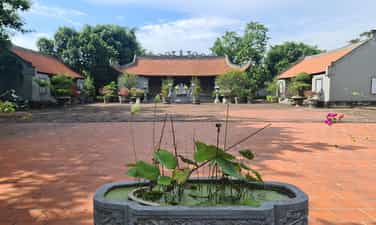
Long Dong Temple, Nam Tan commune, worships 3 famous academicians: valedictorian of Minh Kinh scholar Mac Hien Tich, who passed the exam in the 2nd year of Quang Huu (Binh Dan, 1086), equivalent to Poinsettia; was selected as an Academician of the Academy, later promoted to Minister of Ministry, was a person with exceptional political talent, and had been an ambassador to Champa in the 4th year of Hoi Phong (1094). Dr. Mac Kien Quan (younger brother of Poinsettia Mac Hien Tich) passed the matriculation exam (year of the Snake 1089) and became an official to the position of Minister of Public Works. Binational Poinsettia Mac Dinh Chi (5th generation of Poinsettia Mac Hien Tich) passed the Poinsettia exam in the year Giap Thin (1304), during the reign of King Tran Anh Tong. The lives of the sages Mac Hien Tich and Mac Kien Quan are rarely mentioned in history, but Mac Dinh Chi has been mentioned in many books and newspapers and also has many anecdotes. Accordingly, Mac Dinh Chi was an extremely diligent, intelligent, and talented man in business and economics. He was the head of the court, going through three generations of kings Tran Anh Tong, Tran Minh Tong and Tran Hien Tong. Legend has it that he was an ambassador twice. With his erudite knowledge, eloquence and skillful behavior of a talented diplomat, he was greatly admired by the kings and mandarins of the Yuan Dynasty and made him a Poinsettia of the Two Kingdoms; "The immortal name of the two countries, the immortal name of the three sages, the valley of eternal happiness".... With its historical and cultural values, in 1995, Long Dong Temple in Nam Tan commune was recognized as a national historical and cultural relic. In 2019, Long Dong Temple was recognized as a provincial tourist destination. Long Dong Temple Festival is held in the Spring (from the 9th to the 11th of the second lunar month) to commemorate the death of Mac Dinh Chi on February 10, the year of the Dog (1346). The festival is imbued with traditional cultural values of the nation, expressing the moral principle "When you drink water, remember its source", contributing to preserving and promoting the nation's cultural heritage. Source Electronic information portal of Nam Sach district, Hai Duong province.
Hai Phong
3781 view
Rating : National monument

Bao An Pagoda
Bao An Pagoda (Minh Kinh Tu), located in Cuong Son commune, Luc Nam district (Bac Giang). Because it is located in the Western Yen Tu relic system, located near Luc Nam river wharf, next to road 293, the pagoda is an ideal stop for tourists on their travel journey to the land of Yen Tu Buddha. Bao An Pagoda was built during the Le Dynasty and was repaired in 1710. Over more than three hundred years, the building has been repaired and renovated many times. And now it basically has the architectural features of the 19th century Nguyen Dynasty, some Buddha statues and worship objects have the style of the 18th century Le Dynasty. As one of the ancient pagodas belonging to the Truc Lam Yen Tu sect, Bao An pagoda worships the Three Patriarchs of Truc Lam: Tran Nhan Tong, Phap Loa and Huyen Quang. History books say that, after leaving the throne, King Tran Nhan Tong founded the Truc Lam Zen sect. At that time, Tran Nhan Tong advocated converting Buddhism closer to the people, with the concept "Buddha is the Mind - The Mind is Buddha". In addition to the summer seasons, King Tran Nhan Tong also returned to many places to preach and travel around the zodiac. Along with affirming the position and role of the Truc Lam Zen sect, during the Tran dynasty and later periods, many ancient pagodas appeared on the high peaks of Bac Giang province such as: Am Vai, Binh Long, Ho Bac. , Ma Yen... Although Bao An Pagoda appeared later (Le Dynasty), it is a continuous continuation of the prosperity and development of the Truc Lam Zen sect in Bac Giang. This is an ancient pagoda with beautiful scenery. In front of the pagoda, two ancient brick towers, the resting place of the master, are shaded by the foliage of two ancient trees. The temple garden is covered with green leaves and the scent of flowers and grass spreads throughout the four seasons. Many ancient trees in the temple grounds are proof of the long existence and development of this ancient temple. Bao An Pagoda currently has the following construction items: Tam Bao Court, Patriarch House, Mother House, Guest House and 2 ancient brick towers, all located on a 10,700 square meter campus, surrounded by moss stone walls. ancient style. The Tien Duong and Buddha Hall have a continuous structure in the style of a nail. The 5-compartment frontage is built with a brick structure, the architectural structure is ironwood roof, linked in the style of upper and lower husband, lower and lower, and the carved floral and leaf-shaped structures are in the style of the Nguyen Dynasty in the 19th century. The Upper Palace has 3 compartments, the wooden frame has discolored over time, and is fully decorated with a system of Buddha statues. The Patriarch's house is behind the Tam Bao building, this is where the statue of the Tam To Truc Lam is arranged. All three statues are beautifully crafted according to standards, the statue of Tran Nhan Tong is meditating on a wooden pedestal in the middle, his knees wide open, and the statue is painted with pink powder. The statue of Phap Loa sits as an assistant on the left, the statue of Huyen Quang sits on the right. In addition to the system of beautiful Buddha statues and ancient architecture, Bao An Pagoda also preserves a number of worship objects and Sino-Nom heritage that have existed for hundreds of years such as: Incense burners, "Minh Kinh Tu Chung" bronze bells, stele. stone "Epic of the Late Buddha", ancient tower... Every year, pagoda festivals are held on the 18th, 19th, 20th of the third lunar month with many rituals and folk games imbued with national cultural identity. Along with many other relics on the slopes of West Yen Tu in Bac Giang, Bao An Pagoda will be an attractive destination for tourists from near and far. SOURCE: INFORMATION CENTER, OFFICE OF THE PEOPLE'S COMMITTEE OF BAC GIANG PROVINCE
Bac Ninh
2746 view
Rating : National monument
Dinh Than
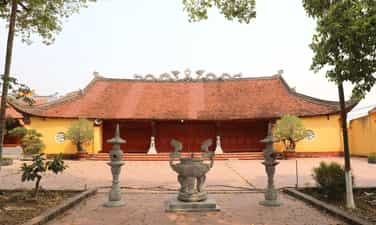
Than Communal House is a place of worship for famous gods who have made great contributions in the fight against foreign invaders and protecting the homeland; In the early days, this place worshiped the Thanh Hoang Thanh Cao Son and Quy Minh Dai Vuong, talented generals of the Hung King period, beautiful symbols of patriotism and the nation's spirit of fighting against foreign invaders. Through the content of documents still preserved here, such as: stories, ordinations, couplets, sacrificial writings... it has been confirmed that this place worships generals of the Hung Due Vuong period and princesses of the Ly Dynasty. Arranged in chronological order, the following gods are worshiped at Dinh Than: * During the reign of Hung Due Vuong, there were: - Cao Son Dai Vuong is a supreme God - Quy Minh Great Vuong is a supreme God - Phuong Dung - Goddess of Yin Phu * During the Ly period there were: - Binh Duong Princess - Princess Thien Thanh - Princess Thien Cuc In the modern historical period since the French colonial invasion, Than communal house has been the base of our army and people, the base of operations of revolutionary and resistance organizations. This place was the base for the activities of revolutionary soldiers in the pre-uprising period and later in the years of resistance against Japan and France. It was also here that in March 1943, the Communist Party in Luc Nam sent comrade Kien to build the party's base and enlighten the elite sons of the homeland who followed the revolution, namely you (Mr. Huyen, Mr. Tai, Mr. Tuy, Mr. Vuong, Mr. Thang, Mr. Moc, Mr. Man, Mr. Cam, Mr. Luu...). At the same time, it was also here that on July 25, 1945, the guerrilla team met to discuss and organize the people to overthrow the Japanese to build a Provisional Revolutionary Committee. During the anti-American period, Dinh Than was the gathering place to send off generations of hometown children who went to fight the enemy to save the country. On September 2, 1969, when President Ho Chi Minh passed away, the District Party Committee - People's Committee of Luc Nam district took this place as the place to hold a very solemn and solemn memorial ceremony for Uncle Ho. A large number of officials and people from all ethnic groups in the district came here to attend Uncle Ho's memorial service. In the period after 1975, when the South was liberated to unify the country, Dinh Than village, in addition to serving the religious culture and community activities of Than village, was also the place where the Party Committee and village authorities discussed and unified production methods. Intensive farming to increase crops, especially during the renovation period. The communal house is where the Board of Directors of Thanh Xuan Cooperative discusses and makes decisions on intensive farming to increase crops and improve efficiency in agricultural production; During the period 1986-1992, Thanh Xuan cooperative was the leading flag in good production and business of 04 mountainous districts of Ha Bac Province. For that achievement, the President awarded the Third Class Labor Medal in 1991. Through many ups and downs of history, the communal house still retains its ancient and unique majesty; With the above mentioned cultural and artistic values, Dinh Than has been ranked as a National Historical - Cultural Relic according to Decision No. 502-QD/BT, dated April 28, 1994 of the Ministry of Culture and Information. news (now the Ministry of Culture, Sports and Tourism). Developing national traditions, government committees and people of the village are now Than Binh, Than Phu, Thanh Tan residential groups, and businesses; Local children who are studying and working in all parts of the country every year make contributions and embellish the relic site to make it more spacious and beautiful. This place is also an annual place of traditional education for generations of young people and teenagers in the area. 2. Architecture Lang Than Communal House is also an ancient cultural and artistic architectural work of the Le Dynasty (17th-18th centuries) with unique and typical artistic value. Currently, the communal house has a Dinh-shaped layout including a Vestibule with 3 compartments and 2 left and a 2-room Harem building. The value of artistic architecture is mainly shown in the Vestibule with its massive architectural scale, unique long lines that give the communal house a steep slope, and sophisticated carvings on all ends. The top is embossed, embossed with leaf-shaped themes, vivid and harmonious animal shapes, carved lines, elegant and sophisticated altarpieces bold with the artistic architecture of the Le Dynasty. The history of building the Than Communal House on the first sentence of the communal house is still clearly inscribed with the inscription that reads: "The roof will be topped off in the first quarter of the year, two moons, two decades, and five days". That means the communal house was built on February 25, Quy Ty year (1713) under the reign of Le Du Tong, the 8th year of Vinh Thinh. The communal house has a unique ancient architecture, typical of art that has been over 300 years old. age, especially the carved lines shown at the ends of the muzzle depicting the four sacred animals (Dragon, Ly, Quy, Phuong) with twisted shapes and rich rolling clouds make the throne unique. The communal house is more sacred and artistic. SOURCE ELECTRONIC INFORMATION PORTAL OF DOI NGO TOWN - LUC NAM DISTRICT
Bac Ninh
2933 view
Rating : National monument
Communal house - Pagoda in Thuong Lam village
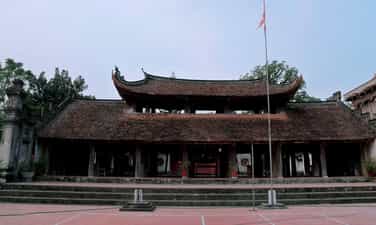
Historical-cultural relic area of Thuong Lam communal house and pagoda, located in Thuong Lam village, Thanh Lam commune, Luc Nam district, Bac Giang province, 20km northeast of Bac Giang city. The cultural and historical relic area of communal houses and pagodas in Thuong Lam village was built from the end of the Le dynasty to the beginning of the Nguyen dynasty, during the reign of King Le Hien Tong in the 42nd year of Canh Hung in 1781 as a place of worship and commemoration of the hero who had work with the people and the country. Because in the years 1516-1522, the insurgent army led by Tran Cao and Tran Cung, father and son, occupied a large area from north of Song Cau upwards. In addition to historical significance, this relic also has architectural and artistic significance - helping to educate all generations today and in the future about the tradition of building and defending the country of our ancestors. . The Thuong Lam Village Communal House - Pagoda historical relic site received the first deity ordination to worship the emperor, who contributed to helping the country. Over many dynasties, the relic complex has received many ordinations from kings. Lords of the Nguyen Dynasty, that shows the respect and worship of the local people for the heroic heroes who have made contributions to the country and the people. In the tablets that have been preserved until now, it is written (Chinh Minh, An Quoc, Thai Hoang, Duong Huong, Great Ceremony, Chi Than, Tien) along with the bronze bell, the inauguration of the dragon cot pagoda, the dragon palanquin, the god's hat, the god's hat, are still kept in the village communal house to this day. Precious relics that have been preserved over the centuries still retain their splendor and solemnity. The relic area includes: 1) Communal house: facing south, designed in 2 parts - The altar house is made of ironwood, roofed with funny-nosed tiles, made in the style of stacking beds, with five compartments, 6.87 m wide and 13 m long. - The rear palace consists of 1 room and 2 doors with long stripes, beams, materials made of ironwood, tiled roofs and brick walls, 8.35m long, 6.10m wide. 2) Thuong Lam Pagoda (Long cot pagoda) facing south includes: The old location of the pagoda was built on Long Cot Tu mountain, facing the North. In 1940, the pagoda was moved to its current location. For reason: to protect the temple. The old location now has only 3 towers remaining. - The altar house has a stacked-bed structure, 12.22m long, 7.65m wide. - The cathedral is structured in the style of a gong stand, ironwood, funny-nosed tiles, and square tiled floor. It is 7.5m long and 5.91m wide. In this relic, many rare documents and artifacts are still preserved, which have direct scientific research and traditional educational significance for many present and future generations. These are great paintings, parallel sentences, bells, inscriptions, incense burners, worshiping objects, a system of statues (including 21 Buddha statues), original artifacts of the Le and Nguyen dynasties that have economic value as well as both as art and as documents and artifacts serving scientific research and traditional education. These are rare collections of worship objects that represent a variety of types, ages, and construction materials. Thuong Lam communal house - temple - pagoda relic area is a typical cultural center of Thanh Lam commune in particular and Bac Giang province in general. It is meant to be a very important document that deeply reflects our people's tradition of love for homeland and country and deep hatred of the enemy. At the same time, it is a place of worship and commemoration of Tran Cao - Tran Cung, two leaders of the peasant uprising in the early 16th century against the oppression, exploitation, repression, and harshness of the Vietnamese feudal court in the later period. Pear. What is precious and respectful is that the restorations and repairs are all created by the skillful hands of local carpenters and bricklayers. It is also a reflection of the traditional handicraft tradition here that has existed for a long time and is constantly developing to beautify the village and make Thanh Lam commune prosperous. 7. Related cultural activities and rituals The traditional festival of the local people is held on January 13. During the festival, in addition to the sacrificial ceremony to the village deity and tutelary god, there are also many traditional folk games held such as Chinese chess, wrestling, cockfighting, pot beating, Quan ho singing under the boat... In addition, other rituals Other ceremonies are also held at the relic such as Village Work Day on April 11, Ceremony Day (August 10), Temple of the Soul Worship Day on November 15... Each ceremony has different regulations. SOURCE LUC NAM DISTRICT ELECTRONIC INFORMATION PORTAL
Bac Ninh
3160 view
Rating : National monument
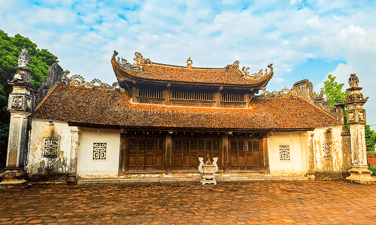
Hundred Gian Pagoda
Hundred Gian Pagoda is a historical and cultural relic in An Dong village, An Binh commune, Nam Sach district, Hai Duong province. The relic was formed about 1000 years ago, located in a peaceful countryside, near the romantic Kinh Thay river, pure space, moss tiled roof, ancient tower garden and was once a large pagoda. Buddhist center of the country, a school that teaches Buddhist scriptures to many Buddhists. The pagoda is called according to the scale and architecture of the monument. Up to now, it still retains its unique layout, architectural features and many antiques of scientific value. In addition to the name Tram Gian, the pagoda is also called An Ninh, named after the village's place name and the original name is Vinh Khanh pagoda. From Nam Sach town, go towards Binh bridge along Highway 37, reach the intersection turning into An Binh commune (next to the headquarters of the People's Committee of Quoc Tuan commune), visitors follow the commune's main road to An Dong village (away from the headquarters of the People's Committee of An commune). 400m) to reach the ruins. Like other temples, the Hundred Gian Pagoda was built to worship Buddha according to the Mahayana sect, with the idea of spreading Buddhism to everyone to aim for the good values of Truthfulness - Compassion - Beauty, people living together in harmony. peace, start the mind to do many good deeds, stay away from evil, love and care for each other. Mahayana is a "big vehicle" that can carry many Buddhists in practice and together to soon reach the shore of enlightenment. Hundred Gian Pagoda, in addition to worshiping Buddha according to the Mahayana sect, also worships the Zen sect of Truc Lam Tam To (Number of Giac Hoang Tran Nhan Tong (1st group), Venerable Phap Loa (2nd group) and Venerable Huyen Quang (3rd group). In addition, the pagoda also worships monks who took refuge and became abbots at the pagoda, who contributed to the restoration, embellishment and expansion of relics such as: Saint Patriarch Pham Thi Toan (Toan Nuong) who was abbot for 02 years (ordained in 1011, passed away in 1013), was a disciple of Zen master Tu Dao Hanh of the Bhikkhuni lineage. When the Tran dynasty reigned, she was bestowed the title "Trinh Khiet Doan Truc Trai Hoang Quy Phi, High Class Princess". "The next monk to be the abbot was a villager who studied according to the Truc Lam Zen sect, named Nguyen Dieu Quang, and was called To Rau (because he practiced the monkhood and only ate 1 piece of tofu and 2 bunches of vegetables every day). enter at noon). King Le Canh Hung conferred the title "Venerable Monk Luc Zen Elder". The next monk, Vien Giac, from the commune, took refuge and passed away at the pagoda on September 14. The next monk is Vien Tich, who first practiced at Bo Da Pagoda (Bac Giang), then became a disciple of Vien Giac and passed away on June 24, and a number of other monks now have tower tombs behind the pagoda. Not only is it a fairy tale landmark in the region, during the resistance war against the French colonialists and American imperialists, the pagoda was a revolutionary base, a training, meeting and shelter place for local guerrillas and soldiers. In 1965, the pagoda was the warehouse of the 7th branch and the military warehouse of Military Region III. After 1975, a part of the pagoda became the headquarters of the Commune People's Committee, library, radio station, commune traditional house... Currently, the pagoda has returned to being a cultural, religious and spiritual activity spot for the people in the area. . Legend has it that the Hundred Gian Pagoda dates back to the Ly Dynasty (around the 11th century). During the Tran dynasty, general Nguyen Huy Tinh stationed troops at the pagoda to block the Nguyen army from the direction of the Bach Dang River from attacking Thang Long. During the Le dynasty, in the year of Chinh Hoa (1691), King Le Hy Tong repaired the upper palace, in the year Vinh Thinh Nguyen (1705), the year of King Le Du Tong, the king continued to repair the upper palace; In 1740 and 1809, many works in the temple were repaired and renovated. In the 19th and 20th centuries, the Hundred Gian Pagoda was restored on a large scale and uniquely in the style of the Nguyen Dynasty. Currently, the entire campus of the monument is located on an area of 17,977m2, with main works such as: From the East, the bell tower (128m²) begins, with a large and unique scale. On the bell tower in the central space hangs a bronze bell cast in the 2nd year of Thanh Thai (1890), this is a rare bell in Hai Duong province. The bell tower consists of 05 compartments, of which 03 middle compartments have ancient architecture. The two gables are architecturally styled to create the shape of a pan handle. The roof of the match stack is two trusses and columns placed on the upper beams of the structure below. Above the match-stacked roof there are 4 knife heads with reliefs of a flanking dragon and dancing phoenix, and the roof is covered with a dragon at both ends. Roof-top system, soft flowing banks, decorated with stylized lemon flower umbrellas. Behind the bell tower, through a small yard is the main pagoda including: 07-compartment front hall, 16m long, 8m wide. The structure of the trusses is in the style of stacking lotus mats. Details such as main pillars, military columns, seven porches, armpit beams, main pillars, first sentences, pillars, rim pillars, and dou goi are meticulously crafted. The upper beams, lower beams, diaphragms, and rafters are all illuminated. The structure of the horizontal and vertical bracing system is reasonable and tight. The upper palace is 11m long and 8m wide. The carpentry part of the upper palace has the same structure and fabrication as the front hall, but the carpentry details are smaller. The walls are built of Bat Trang bricks, the inside is plastered, the outside is left to smooth woodwork, and the roof is tiled. On the left side of the upper palace are 7 compartments of the Mother Church, 14m long and 4m wide. The trusses are structured in a simple, bridge truss style. On the right are two Guest Houses connected together like a hallway. Behind the upper palace is the Tu An house, with a structure of lines overlapping the top, children-in-law, lotus lines, and intricately carved leaf paintings. The ancestral house is located behind the four graces house. The north of the pagoda has a yard of about 1,000m² with a number of buildings facing the yard such as: tower house, monk's house, inner temple, outer temple and many other auxiliary buildings. Behind the pagoda is a tower garden of 10 pagodas, of which 9 were built during the Le and Nguyen dynasties, one was built in 2003. Hundred Gian Pagoda is a pagoda belonging to the Truc Lam Zen sect, with many public works. The project and the most rooms still exist in Hai Duong province. Every year, the Hundred Gian Pagoda holds a festival on the 11th and 12th day of the 9th lunar month. With great historical, cultural, sculptural, and scientific values of relics and antiques being kept at the pagoda. On March 2, 1990, the relic was ranked as a national historical and cultural relic by the Ministry of Culture and Information (now the Ministry of Culture, Sports and Tourism) according to Decision No. 168/Decision - Ministry Sports Culture. Source Electronic information portal of Nam Sach district, Hai Duong province.
Hai Phong
3784 view
Rating : National monument
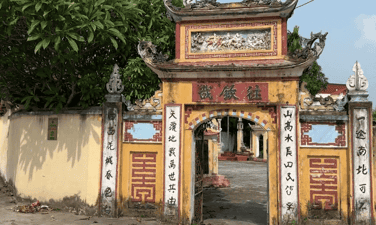
Quan Dao Communal House
Quan Dao communal house in Quan Dao village, Tan Tien commune, Gia Loc district, Hai Duong province is a place to worship Thien Tac Dai Vuong Ly Canh Ton, a famous general of the Ly Dynasty who was instrumental in helping the Ly Dynasty defeat the invading Song army. . Quan Dao in the past was originally Quan Dao site, a commune of Tong My Xa - Phu Tu Ky. From 1925 to 1944, it was a commune of the General Association of Gia Loc district. From 1945 until now, Quan Dao has been a village of Tan Tien commune, Gia Loc district. Previously, every commune and village had communal houses and pagodas. The communal house belongs to Quan Dao village, so it is called: Dinh Quan Dao. The communal house was built in the center of Quan Dao village, located on a high mound called the elephant pile. In front of the communal house is a large pond, previously connected to the river, boats could enter the communal house, and around were village roads. To the west of the communal house, there is also a temple built on a mound also known as the Snake pile. North of the Communal House, there is also a high mound called King Procession Heap, located about 500m from the Communal House. Thus, the communal house was built in the middle of the mounds, creating a posture of the dragon flanking the tiger. Just like every Vietnamese communal house. Quan Dao Communal House was built to worship the tutelary god and is a meeting place for villagers whenever there is a big event. The communal house was built during the Ly dynasty. Originally, it was a place to worship Thien Tac, whose hometown was Cao Xa Cam Giang. Following orders from the afternoon, the communal house returned to Quan Dao to recruit troops to fight the Song invaders. When he won, he was awarded the title "Ton Canh Linh Ung" by the king, and when he died, he was honored by the people of Quan Dao as a tutelary god and worshiped at the village communal house. Before the August 1945 revolution, the village festival was opened from the 10th to the 20th day of the first lunar month. At the communal house, many forms were held such as processions, sacrifices, ceremonies, Cheo singing... Especially here there was a pig worship competition. One of each armor. Quan Dao Communal House is also a special place that marks historical events associated with the local resistance war against the French colonialists. The people of Quan Dao in particular and the people of Tan Tien in general were famous for their resilience and courage as guerrillas fighting the French, and were recorded in the history of the province and district. The communal house is the soul of the local resistance war against the French. Here the commanders always make the right decisions and win. In August 1945, Tan Tien people gathered at the communal house to go to the district to participate in seizing power. In the years 1946, the communal house was also a place for people to learn popular education and eliminate illiteracy for people in the commune. The communal house is also where people come to donate gold and silver during the golden week that Uncle Ho and the government called for. The communal house was also the place where Tan Tien commune was established, including three villages, Dong Can, Quan Dao, and Tam Luong in 1946. On January 6, 1946, the communal house was also the place to witness the first National Assembly election of democratic Vietnam. commune republic. In consecutive years from 1946 to 1947, the Communal House was also a place for guerrillas to practice martial arts, to prepare for the local resistance war against the French. On December 23, 1946, enemy soldiers landed on canoes at the ferry wharf (2 km from the commune) and opened fire on the commune. Immediately after that, about 40 Tan Tien people holding weapons rushed to Street 191 to fight back. The first military battle demonstrated the people's determination to fight the enemy and was praised by the district. February 23, 1947. The enemy invaded the commune, burned 2/3 of the houses, shot dead 4 people, and captured 20 people. Turn hatred into action. The Tan Tien cell met at Quan Dao communal house and issued a resolution: "Organize strict guerrilla army staff, military training, each comrade must have a weapon...Propagiate the people of the entire commune to prepare to fight the enemy." ”. From then on, at the guerrilla camp, where they practiced day and night, the people stepped up production and participated in popular education. Since 1947, the enemy increased their raids. During the first 3 years of the resistance from 1946 to 1948, Party cells continued to develop and the government was consolidated. Since 1950, enemy troops suffered defeat at the border and returned to the plains, and military posts sprang up like mushrooms. Around Tan Tien commune, there were many enemy posts such as Binh Di, Dong Quan, Xuan Ngo, Luy Duong... Faced with this situation, the cell meeting at Quan Dao communal house issued a resolution to stick close to the people, maintain the base, and fight with the enemy during this time. During this difficult time, Quan Dao children's communal house hid hundreds of district, provincial and some commune officials. During difficult times, the love of the village and the neighborhood became deeper and deeper, everyone gave their food and clothes. From 1952 to 1954, our main battlefield expanded, the commune was developed one step further, including 42 comrades with 6 rifles, a machine gun, a submachine gun and many mines and grenades, always active to harass the enemy. During the 8 years of resistance against the French, Tan Tien people and other communes participated in 105 large and small battles, destroying 241 enemies. For that achievement, the commune was awarded the First Class Resistance Medal. Quan Dao village alone was awarded the 2nd class resistance medal, and 4 guerrillas were awarded emulation soldiers. Previously, the relic had many sacrificial items such as Long Dinh, Luyen, Bat Bieu, Fan flags, Broken heart, Sacrificial clothes, Worship items... Over time and especially the fierce resistance war against the French took place. A lot of things have been destroyed on this land, and now there are only: 1 Nguyen Dynasty Peak, 1 lacquer painting, 1 porcelain incense bowl, 8 porcelain flower vases, 3 altar sets, 1 Y Mon painting, 1 throne. worship wooden, 2 wooden couplets, 1 lacquered wooden altar, 1 coffin, 1 miracle, 3 great paintings. With great historical, cultural, sculptural, and scientific values of relics and antiques being kept at the pagoda. In 1995, it was granted the title of national historical and cultural relic by the state. Source: Electronic information portal of Gia Loc district, Hai Duong province.
Hai Phong
3631 view
Rating : National monument