Relic point Vietnam
Việt Nam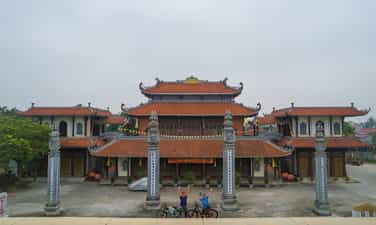
Muong Pagoda (Quang Khanh Tu)
Muong Pagoda (Quang Khanh Tu) in Ngu Phuc commune is a major religious center of Kim Thanh district, Hai Duong province. The pagoda has experienced 7 centuries of existence, recorded in the history of Vietnamese feudalism. In addition to its rich history, Muong Pagoda is also known as the pagoda with the most towers in Hai Duong province. Having gone through the devastation of the war, the pagoda still retains a rather massive system of stone towers from the Le and Nguyen dynasties. Quang Khanh Pagoda is a large temple in the country belonging to the Truc Lam Zen sect. The pagoda dates back to the Tran Dynasty in the early 14th century and was presided over by Hue Nhan, the National Master Vuong Quan Vien. Hue Nhan was also a physician with talent in treating eyes. King Le Thanh Tong once came to the pagoda and wrote poems at the relic. The pagoda is the revolutionary and resistance base of the Party Committee and the province. By 1947, the pagoda still had 120 rooms, 32 stone and brick towers, about 50 Buddha statues and many antiques. This is the temple with the most rooms in the province. At the same time, it is the largest Buddhist religious center in Kim Thanh district. The pagoda was ranked as a national monument in 1992. Every year the festival is held for 3 days: the 24th; The 25th and 26th day of the first lunar month (lunar calendar) are often called Non Dong Festival. Due to the advantage of water transportation and being a famous ancient temple in the area, it attracts several thousand tourists to the Pagoda Festival every year. Source Electronic information portal of Kim Thanh district, Hai Duong province.
Hai Phong
4636 view
Rating : National monument
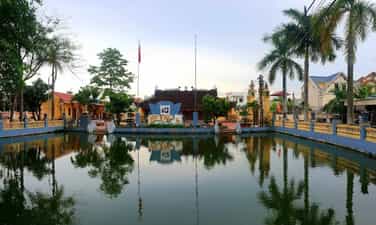
Dinh Quynh Coi (Dinh Goi)
The communal house is in Ngoc Lam village (Quynh Goi village), Tan Ky commune, Tu Ky district, Hai Duong province. The communal house worships the tutelary god Cao Son Dai Vuong, during the reign of Hung Due king, who fought against the Thuc invaders and kept the land peaceful. The communal house was built in the 17th century and restored many times in 1686, 1692, 1750, 1756, 1772, 1838, 1899. During the war, the communal house was severely damaged. The current communal house includes 5 rooms for Tien Bai, 3 rooms for Hau Palace, and 6 rooms for Giai Vu. In the communal house, there are still many antiques, including 9 steles dating from the 17th to 18th centuries, 15 steles from the Le Trung Hung and Nguyen dynasties. Annual festival from February 8 to 13 of the lunar calendar. The communal house was ranked as a national historical and cultural relic in 2001. Ngoc Lam village communal house is currently somewhat no longer in its original state due to time, but with the efforts of the village government as well as the people, they have restored the current status and preserved the traditional and ancient features of Quynh Coi Communal House. relics bearing the essence of the homeland "Banyan Tree-Water Well-Cathedral". Source Electronic information portal of Tu Ky district, Hai Duong province.
Hai Phong
3863 view
Rating : National monument
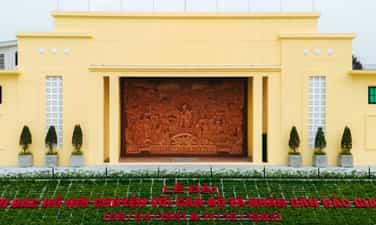
Stand B (old A) of Bac Giang Stadium
National relic stand B (formerly stand A) of Bac Giang stadium in Ngo Quyen ward (Bac Giang CITY) is a place to mark historical events and preserve profound memories of Uncle Ho. Ho to the Party Committee and people of Bac Giang province. In order to promote the historical value of the monument, the Party Committee, provincial government and Bac Giang CITY pay a lot of attention to repair and embellishment work. Honor and pride After the Democratic Republic of Vietnam was born, from 1946 to 1963, despite being busy with many things, Uncle Ho visited and worked in Bac Giang province 5 times. During those visits, Bac Giang CITY was honored to welcome Uncle Ho four times. Including 2 times, Uncle Ho met and talked with officials and people of Bac Giang province at Stand A, Bac Giang Stadium. This is a great pride and honor that not every locality can have. Going back in time, on April 6, 1961, Uncle Ho visited and talked to more than 3.5 thousand officials and people of Bac Giang province at Bac Giang stadium. On Stand A, the leader of the Party, the Father of the Nation, is simply dressed in familiar brown clothes. He cordially asked his compatriots and officials; comrades of the army, police, militia, self-defense, and workers; old people, young people, teenagers, children and expatriates who have just returned to the country. He praised the achievements achieved during the years of resistance; the efforts and progress of the people and officials of Bac Giang province since the day peace was restored. At the same time, Uncle Ho emphasized important tasks, pointed out specific shortcomings that localities need to repair and overcome; Reminding the tasks of unions, each person at this time needs to focus their energy on developing production and fighting for national reunification. More than 2 years later, on October 17, 1963, Uncle Ho visited Bac Giang town. This is an important historical moment for the people of all ethnic groups in the province, since the two provinces of Bac Giang - Bac Ninh were merged into Ha Bac province. That was the first Hebei Provincial Party Congress. This time, also at Stand A of Bac Giang Stadium, Uncle Ho spoke to officials and people of all ethnic groups in the province. He advised his compatriots, officers and soldiers to unite, develop agricultural production, handicrafts, plant forests, improve cooperative management, improve techniques and practice thrift. , contributing to the struggle for national unification. It is Uncle Ho's concern and direction that has empowered him and become a source of great spiritual motivation to help officials, party members, and people overcome difficulties and strive to successfully complete assigned tasks. The Party and Uncle Ho assigned. With that great significance, on June 21, 1993, the Ministry of Culture and Information (now the Ministry of Culture, Sports and Tourism) decided to classify Stand B (former Stand A) as a historical relic. ), Bac Giang Stadium is a national monument. Worthy of its historical significance and value Stand A of Bac Giang Stadium was built between 1958 and 1960, over 10m high, iron frame and corrugated iron roof with two up and down stairs, two chicken wings on both sides, area of 350m2 in the East. stadium, facing National Highway 1A (now Provincial Highway 295B). This place was once chosen to hold many major events of the province such as: Celebrating the 110th anniversary of the founding of Bac Giang province (1895-2005); many sports conferences in Ha Bac and Bac Giang provinces; Provincial and national sports tournaments... Over time, the building deteriorated. In 2008, the People's Committee of Bac Giang City repaired and embellished the small-scale monument with a cost of 800 million VND, the total area of the entire grandstand area is about 1.4 thousand m2. However, up to now, some items of the relic site have deteriorated and are a place for practicing martial arts of the Center for Culture, Information and Sports of Bac Giang CITY. Through assessments of the government and functional agencies, in recent times, the management and promotion of the value of the grandstand relic site has been limited; There has been no interest in investing in large-scale, synchronous and worthy renovations and renovations. Setting landmarks, demarcating land protection, and erecting steles to mark historical events have not been done. The main documents and artifacts about the relic are images of Uncle Ho visiting and talking with the people of Bac Giang, currently displayed at the Provincial Museum. It is known that currently across the country there are very few works associated with his visits and working times in the provinces that are preserved intact like the stand B of Bac Giang Stadium, which is deeply imprinted in the heart. many generations of officials and people of Bac Giang ethnic groups. SOURCE ELECTRONIC INFORMATION PORTAL OF BAC GIANG PROVINCE
Bac Ninh
2790 view
Rating : National monument

Tu Vu, Bui Ben village
Tu Vu is located on Bai Mo field (formerly) in Bui Ben village, Yen Lu commune, Yen Dung district, Bac Giang province, built by local people to remember the gratitude of the general Nguyen with the title Ngan Trung Hau. many achievements during the Le dynasty in the 18th century. The relic complex is divided into three parts: The first part is the exterior landscape including a lake, a festival yard... closely related to the interior and separated by 4 walls protecting the interior. The second part is the outdoor architectural cluster including architectural complexes and relics arranged as follows: Tu Vu gate with arched style, laterite walls. Through the Tu Vu gate along the Shinto path, there is a cylindrical stele carved in the 31st year of Canh Hung (1770). The stele has a unique shape, the conical roof is 1.42m high, the circumference is 2.12m, like a "big bell", the body is divided into 4 cells, engraved with Chinese - Nom characters. This unique stele is of interest to many researchers because of its strange design and content recording the merits of an official. On both left and right sides of the pillar stele are stone warrior statues standing as servants. The statue is carved in a serious stance, wearing a helmet, armor, and holding a weapon, facing each side. Behind the two rows of martial artists, there are two steles made of chicken liver stone dating back to the Nguyen Dynasty (19th century), recording the names of people who contributed to the field and money to repair and build the local martial arts temple. The worship architectural block includes a three-compartment front hall connected to the back hall by a strip of morning glory pipes. The newly renovated altar building is built with bricks in the style of a rectangular vase, with a floor paved with large, thick, square tiles. In the middle of the Shinto path is a stone incense burner. On opposite sides, there are two identical stone tables used to place offerings. In front of the stone table are two large stone incense burners and two oval green stone trays. The rear of the hall still has its original architectural appearance relatively intact: walls built of laterite, dome inside, and outside roof covered with 60cm thick bricks. “Our people are very proud, because this is a land of outstanding spiritual people with a complex of unique cultural relics, our generation always preserves, honors, and propagates and educates future generations. "I am proud of the great contributions of the Nguyen general in fighting foreign invaders to preserve the nation's land and rivers" - Mr. Linh shared. The back of the road is paved with square tiles, in the middle is a large blue stone stele engraved with Chinese and Nom characters on all four sides. This is a beautiful stele with historical and artistic value, the head of the stele is shaped like a dragon, embossed with tiger motifs and stylized leaves. The stele's border is embossed with stylized floral motifs. The delicate, engraved features have typical values of stone carving art of the 18th century Le Dynasty.
Bac Ninh
3442 view
Rating : National monument

Uncle Ho's memorial site
(BGO) - The Ministry of Culture, Sports and Tourism (VHTTDL) has just ranked the historical relic site of Uncle Ho's visit to Cam Xuyen village, Xuan Cam commune, Hiep Hoa district (Bac Giang) as a national monument. family. In February 1955, the Land Reform Committee of the three provinces of Bac Giang - Bac Ninh - Thai Nguyen held a conference to summarize the second phase of land reform in Cam Xuyen village. More than 2 thousand reform officials came here to participate in training, and many high-ranking Party officials attended. It was an honor for Xuan Cam commune and Hiep Hoa district that on February 8, 1955, President Ho Chi Minh attended the conference, visited and encouraged the local people. This is a historical milestone, marking a great transformation of the Vietnamese revolution: Completing the national revolution, people's democracy, realizing the plowman has the field and the biggest goals set by the revolution. . In 2001, the souvenir relic of Uncle Ho's visit to Cam Xuyen village was ranked as a provincial historical and cultural relic. In 2019, Hiep Hoa district spent more than 3 billion VND to build and renovate the relic, such as: Reception area, yard, gate, entrance road, lighting system, drainage... The ranked relic contributes to creating a highlight in the journey back to the source, educating historical traditions for the young generation of Hiep Hoa district in particular, Bac Giang province in general, and at the same time associated with tourism development. SOURCE Bac Giang Newspaper
Bac Ninh
2854 view
Rating : National monument
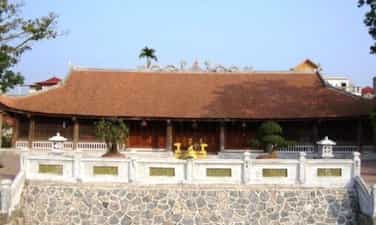
Am village temple
Am communal house, located in the middle of Am village, Xuan Huong commune - Lang Giang district - Bac Giang province, is located on a campus with an area of 1,460m2. Based on the tablets still preserved at the communal house, it shows that Am communal house is a religious building of local people built to worship Princess Ngoc Khanh (Princess Thieu Duong - the 8th daughter of King Le Thanh Tong) has made many contributions to the nation. The communal house was built on a large scale, with the characteristics of an ancient Northern communal house, including: 3 rooms and 2 wings for the main house and 1 room and 2 wings for the harem, creating a Nhi-shaped architectural plan. Wooden architectural structures are carved with a variety of themes: Dragons are carved on the heads of the dragons with eye rolls and blunt lancet-shaped antennae; The porch line system is embossed with the theme of the four sacred animals (Dragon, lychee, tortoise, phoenix), especially interspersed with four sacred animals such as crabs, fish, deer, snails, and fire trays, which are characteristic of the artistic style. engravings during the Le Trung Hung period in the 18th century; On the 4 pillars, the 4 corners of the great communal house are mounted with 4 unique carved statues: a fairy riding a carp, a turtle in a lotus pond, a shepherd playing a flute sitting on the back of a phoenix, and a mandarin wearing a parasol sitting on his back. unicorn...soft, delicate carvings in the style of the Le Trung Hung period (18th century). The engravings on the hammock door of the great communal house and harem with the images of dragons and tigers, tiger faces... are embossed into large, fat blocks in many positions, with a rich and vivid appearance that is unique. Carving art of the Nguyen Dynasty in the 19th century. In the communal house, there are still many exquisitely carved and splendidly painted artifacts of high historical and artistic value such as: altars, tablets, hammock doors, parallel styles, ceramic incense bowls... dated from the 18th to 19th centuries. Through the Han Nom heritage currently preserved in the communal house and ancient documents in the locality, especially the Chinese characters on the first sentence of the grand communal house: "Canh Thinh eight years, five years Canh Than, seven moons, first eight days, "Hour of the Horse, the 8th day of the 7th month of the year Canh Than, the reign of the 8th King Canh Thinh (1800) was built in the Thuong Luong" (Ngo hour, the 8th day of the 7th month of the year Canh Than, the reign of King Canh Thinh the 8th (1800) was built in Thuong Luong) meaning that Am communal house was renovated and embellished in 1800. (8th Canh Thinh), late Tay Son dynasty - early Nguyen dynasty. Am Communal House was ranked a national architectural and artistic relic by the Ministry of Culture in 2014. SOURCE Explore Vietnam's natural & cultural heritage
Bac Ninh
2962 view
Rating : National monument

My Loc Communal House
My Loc communal house is located in Ngoai village - My Ha Commune - Lang Giang District - Bac Giang Province. Built in the early 19th century. The communal house is located on a beautiful, large, open plot of land next to My Loc village next to the gentle, poetic Thuong river. The communal house consists of 5 compartments, 2 left, facing Southeast. The communal house is large-scale, majestic, and has ancient architecture imbued with ancient Vietnamese architectural style. My Loc Communal House worships two Thanh Hoangs, Cao Son and Quy Minh. These are two generals who have made great contributions to the people and the country during King Hung's reign. Old history records: During the reign of King Hung Due, Cao Son and Quy Minh were two talented generals named left and right generals who assisted the king and helped him crush the Thuc invaders. When the Thuc invaders were finally appeased, the two men asked the king to return to the place where they were stationed and set up their fortifications (which is the area of My Loc Village today). Since the two men were stationed here, the villagers have been able to do business in peace and have become more and more prosperous. The people on this land asked: First to make it a garrison, then please build a temple to commemorate the merits of the two men. . When the two men died, the king ordered the people in the village to build a temple to worship and organize sacrifices and ordained the two men. Gao Son was conferred with the title: Great King Thong Minh, bestowed the posthumous title of protecting the nation and protecting the people of the Phu Van Duong Vu Thanh Thanh with glorious scenes, honoring the original spirit, conferring the title of Linh Don Tinh, Heroic Strategy, Trac Vi, predicting the renaissance of the highest level. . The conferment for Quy Minh is: Hien respond to the king, bestow the title of brave and courageous father to protect the country and people, grant the king's honor to the king, honor the saint lang high magic dech sand, and bestow the good fortune of the Trung Hung Bao. Preparing the people in the Bac Kinh area to worship them forever after. From then on, the people of the village worshiped the two men with deep respect and infinite gratitude. To this day, the descendants of My Loc village always remember and remember the gratitude of the two Thanh Hoangs. Every year, every year when spring comes, people in the village eagerly prepare to organize the My Loc village communal house festival. The festival is held on the 14th and 15th of the first lunar month with many solemn rituals showing respect and gratitude to the two Gods. According to folk beliefs, the festival is an opportunity for people in the village to report on the results of the old year's labor, thank the two village tutelary gods for their kindness and protection in the past year, and pray for a new year. Peace and luck for the whole family. With such significance, My Loc village communal house festival not only attracts the attention of village members but also tourists from everywhere. In addition to the profound historical and humanistic values mentioned above, My Loc communal house is also known as an ancient architectural work full of art. In the communal house, from the roof to the pillars, there are intricately carved and sculpted motifs. According to research, these are sculptural motifs from the Le Dynasty. Through many ups and downs and historical events, My Loc communal house has changed due to the devastation of the war, but has since been restored and embellished by the people of the village and tourists from all over. Up to now, My Loc communal house still retains its original appearance, preserving its ancient dignity and long-standing architectural artistic values. In the communal house today, there are still many relics, ancient objects, and especially 15 ordinations from the Le and Nguyen dynasties for saints Cao Son and Quy Minh. My Loc village communal house is considered a museum of local history and culture. In 1995, My Loc communal house was recognized by the Ministry of Culture as a national historical relic. SOURCE Explore Vietnam's natural & cultural heritage
Bac Ninh
2927 view
Rating : National monument

Dang The Cong Temple
In 1527, Mac Dang Dung usurped the Le dynasty. The civil war between the forces of King Le - Lord Trinh and the Mac dynasty lasted, making people's lives miserable. When the Le Dynasty's soldiers and soldiers pursued the Mac Dynasty through the Kep - Can Tram area, they encountered dangerous mountains that made it difficult to advance. They were repeatedly counterattacked by the Mac Dynasty, causing significant wear and tear on the Le Dynasty's generals. When times were tough and weak, the Le Dynasty issued an edict to recruit militiamen "to help the Le destroy the Mac". Thanks to their understanding of the terrain and their willingness to be brave and clever, the two brothers Dang The Cong and Dang The Loc responded and joined the army. Made many great contributions to help the Le Dynasty defeat the Mac Dynasty. In the Year of the Horse, 1566, the court rewarded soldiers, rewarded generals, and treated people with meritorious services. Due to their great contributions in helping Le destroy Mac, King Le ordained two men, Dang The Cong, with the title: "Duong Vu is a mighty and brave man." , Thai treasure tea in Cong district, whose national name is Trinh Van An"; Dang The Loc - Conferred the title "Duong Vu Mighty Courageous Cong of the Left Admiral, Duke of Su Chew District, with national identity as Trinh Van Loc". In particular, Dang The Loc not only made great achievements in expelling the Mac Dynasty, but also knew how to rally and calm the people, bringing honor to the family, thanks to which his descendants later set an example and were all highly respected in the dynasties. King Le. The Royal Court also conferred on the father of the two men, Mr. Dang Chan Tinh - the title of "Admiral of the Than Vu, Military Quarter Guard, Lieutenant Marquis", Mr. Dang Chan Tinh died on January 14, 1547, his grave The burial was in Ni forest (in Tan residential group today). Remembering the contributions of Mr. Dang The Cong and Dang The Loc, local people built a temple to commemorate them in their homeland. The temple was built in the 16th century and consists of 7 tiled compartments, with two compartments on the left and right sides, a lobby, a back lobby, a warehouse for military provisions, and a weapons workshop. In the 80s of the 19th century, the Black Flag invaders invaded, burned villages and destroyed temples; In 1931, local people restored the temple on the land where their ancestor Dang Chan Tinh was buried in Ni forest hill. The current temple has a typical architectural plan consisting of 5 compartments built with bricks and tiled roofs. The middle compartment has a solemn incense burner and two stone tablets engraved with Chinese characters. On the incense burner, there are statues worshiping Dang Chan Tinh and Mr. two sons are Dang The Cong and Dang The Loc. Dang The Cong Temple preserves many heritages of historical value such as the title of Long Duc 2 (1630), Chinh Hoa 4 (1683), two stone tablets, and porcelain incense bowls of the Le Dynasty (18th century). , worship statues, incense burners... The temple is a center of cultural and religious activities, a place of worship and commemoration of military mandarins Dang The Cong and Dang The Loc who have made many contributions to the people and the country. Every year on January 14, local people hold a Festival to remember and pay tribute to their ancestors and those who have contributed to the people and the country. For many generations, Dang The Cong temple has been the center of cultural and religious activities of the community in the region. The Party Committee, government and people of Kep town always respect, take pride in and create all conditions for the Festival to take place solemnly, joyfully, safely and economically, truly becoming a place of rich cultural activities. national cultural identity, is the place to go home to many people and friends from all over the country. SOURCE OF BUSINESS AND BRAND ELECTRONIC MAGAZINE
Bac Ninh
2977 view
Rating : National monument
Khanh Linh Pagoda
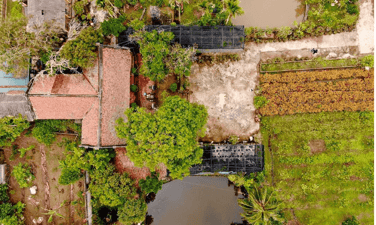
Located in the unique historical and cultural relic complex of Phuong Ky commune, Khanh Linh pagoda is in Tan Hop village (formerly Tu Ky Ha village) about 20km from the center of Hai Duong city, 5km from the center of Tu Ky district. Nam, has been classified as a national historical relic since 1999. There is a system of statues carved from jackfruit wood, painted with gold, dating back to the 18th century, and a system of finely sculpted stone steles. Crafty, Khanh Linh Pagoda is considered a work of artistic character with heroic historical value. According to the stele kept at the pagoda, Khanh Linh Pagoda was built during the reign of Thieu Long of the Tran Dynasty in 1258. At first, the pagoda was small, with a thatched grass roof. In the following dynasties, people contributed money to repair, roof tiles, buy statues, and cast bells, creating a spacious and splendid scene as the poem described: "Khanh Linh Pagoda is majestic and towering/Sacred land." Talented people / Long-lasting prosperity / Front hall built in front / Glorious high roof / Shocking sound / Venerable Buddha ceremony...". The stele recording the restoration and embellishment shows that people's contributions amounted to 1,838 mandarins, 27 stone pillars, 8 columns and wooden diaphragms. In particular, the person who contributed the least amount of money was 1 coin, the person who contributed a lot up to 120 coins and a stone pillar. Having gone through wars and harsh natural disasters, the pagoda now has 5 front halls and 3 back halls. The front hall has a structure in the style of a stack of 6 trusses, with floral motifs carved into the ridges. Supporting the entire rafters and roof are 12 ironwood columns, 32 cm in diameter. Stone military columns include two types: round and square. Square columns are arranged in front of the door, round columns are behind. The names of the donors are written on the stone pillars. The central compartment is connected to the 3 harem compartments by a truss for fighting cocks and husbands. The harem court has 6 ironwood columns, 29 cm in diameter and 6 stone columns. The altars placing the statues in the three back rooms are all built of bricks. The pagoda's system of Buddha statues, stele, and stone incense sticks is imbued with sculptural art that represents the truth, goodness, and beauty of Buddhism. The statue system here is all carved from jackfruit wood, lacquered and gilded, dating back to the 18th century. The ancient statues in the temple have many different styles, sitting and standing. The statue is balanced and majestic, reflecting the diligence and meticulousness in its creation. In the temple grounds, there are a number of other supporting architectural works, which are a 3-compartment ancestral house, including statues of two monks who practiced at the temple. In front of the temple door is an orchid garden with many species and sizes that has been cared for and cultivated by abbot Thich Nu Thong Nhan for nearly 10 years. That scene created tranquility for the temple. In particular, the pagoda also preserves the steles "Renovating the front hall on the upper floor" and "Khanh Linh Tu Biography"; "Epic of the Ten Directions of Merit" and a stone incense stick with sophisticated decorative motifs. In 1999, Khanh Linh Pagoda was ranked as a national monument by the Ministry of Culture and Information (now the Ministry of Culture, Sports and Tourism). Source: Electronic information portal of Phuong Ky commune, Tu Ky district, Hai Duong province.
Hai Phong
3831 view
Rating : National monument
Dong Duong Pagoda
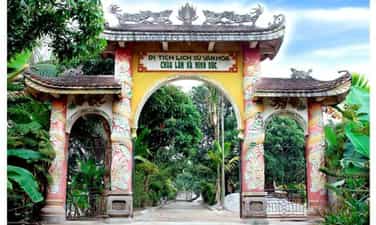
Dong Duong Tu is the Sino-Vietnamese name of Dong Duong Pagoda. People here often call Lam pagoda by name, because the pagoda is located in Phuc Lam village, Minh Duc commune. Local people also often call it by the name Trong pagoda, to distinguish it from another smaller pagoda behind the village, called Ngo pagoda. Trong Pagoda, also known as Dong Duong Tu, means the temple faces East, the direction of the rising sun. And the Outer Pagoda is called Man Nguyet Tu, the pagoda faces the moon, when the afternoon sun sets. Talking about its name, we can see that there is a balance and symmetry in the naming of the temple, in the harmonious architecture of the ancients. Like other temples in Vietnam, Dong Duong Tu is a temple worshiping Mahayana Buddhism. The pagoda was built during the Le Dynasty (around 1600) and with the contributions of money and merit from the Le Dynasty general Nguyen The My, who had the merit of engraving the merit stele at the pagoda. According to the stele engraved in the year of Duc Long (1632), it is said that Duke Nguyen The My's name was Van Phuc, and the king trusted and loved many important responsibilities in the inner government. When foreign invaders invaded, he was appointed marshal by the king to lead the army to defeat the enemy, bringing peace to the country and his homeland. He was greatly rewarded by the king. Although his fame was glorious everywhere, he still lived humbly and richly without being arrogant. He spent money to renovate Indochina Pagoda with 54 very spacious rooms. His merits were engraved on the stone stele, currently kept at the Hai Duong Museum, and he was enshrined in a statue at the Indochina pagoda area. Indochina Pagoda was recognized by the state as a cultural and historical relic in 1994. Source: Electronic information portal of Minh Duc commune, Tu Ky district, Hai Duong province.
Hai Phong
4095 view
Rating : National monument