
 vn
vn en
en ja
ja ko
ko zh
zh


Sin Suối Hồ: The Wild Sunflower Season

Discover Sin Suối Hồ village in Lai Châu, widely celebrated as ASEAN's most captivating community-based tourism destination. We've got your essential guide to experiencing the vibrant wild sunflower season, immersing yourself in the lively local market, and even spending a night in a unique 'bird's nest' homestay!
Sin Suối Hồ, Lai Châu – ASEAN's Most Enchanting Community-Based Tourism Village, a Miraculous Transformation Amidst the Clouds
We arrived in Sin Suối Hồ during the wild sunflower season. The golden hues of the flowers lining the roads added a warm glow to the village scenery as the new year approached. Wooden houses dotted the misty landscape, while terraced rice fields gracefully wound their way across the hills. Silver Cloud Peak (Sơn Bạc Mây) emerged majestically against the clear blue sky. At an altitude of 1,500 meters, Sin Suối Hồ felt truly pristine and peaceful as a new day dawned.
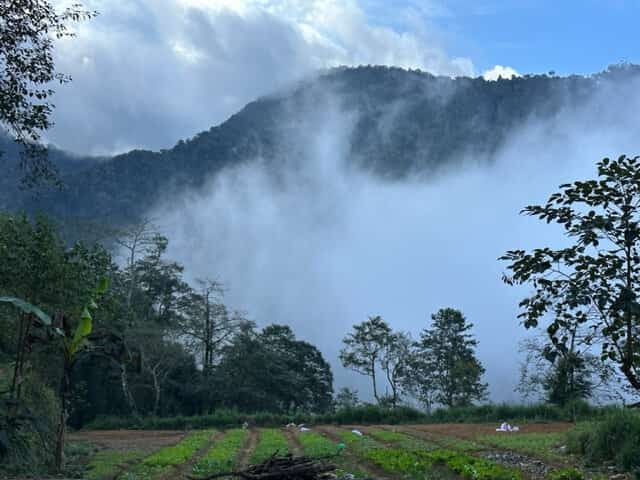
Village in the Clouds.
In recent years, Sin Suối Hồ has become a renowned community-based tourism village in Lai Châu, attracting both domestic and international visitors. Its appeal extends beyond beautiful landscapes to include rich cultural activities deeply rooted in the Hmong community's identity, as well as tourism services that are close to nature and friendly to the people of this border highland region.
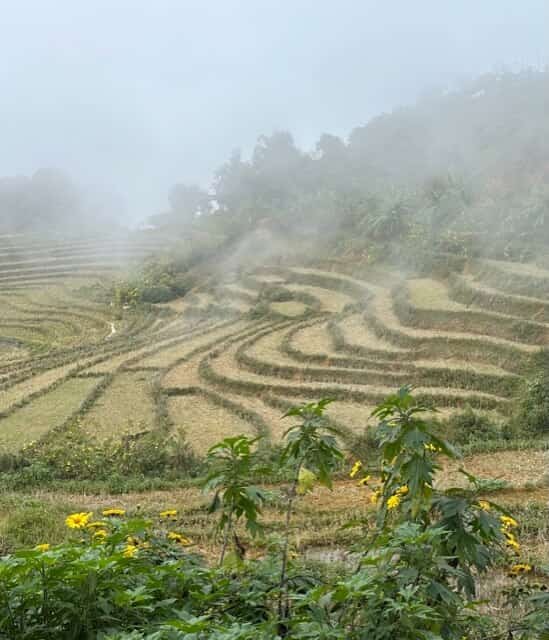
Terraced rice fields in Sin Suối Hồ.
In early 2023, the International Tourism Fair forum in Yogyakarta, Indonesia, honored Sin Suối Hồ as one of ASEAN's most attractive community-based tourism destinations in 2022. Mr. Chẻo Quẩy Hòa, Chairman of Sin Suối Hồ Commune, and Mr. Hảng A Xà, pastor of the Protestant church there, were present at this special event.
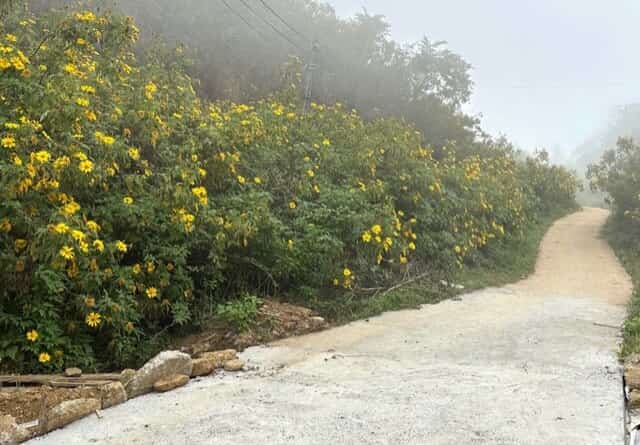
The road back to the village during wild sunflower season.
With nearly 150 families and a population of over 700 people, Sin Suối Hồ now boasts nearly 20 homestays, capable of accommodating hundreds of tourists simultaneously. Households throughout the village participate in various forms of tourism services, alongside their traditional production activities in the region.
During our conversation, Mr. Hoàng Văn Đại, Deputy Secretary of the Sin Suối Hồ Commune Party Committee, shared that thanks to tourism development, the average income of villagers has reached approximately 35 million VND per person, higher than the commune's overall average of 25 million VND per person. Last year, despite lingering effects from the post-pandemic period, Sin Suối Hồ welcomed around 20,000 visitors from various parts of the country. Tourists from several international countries have also visited. In the coming time, the number of visitors is projected to increase.
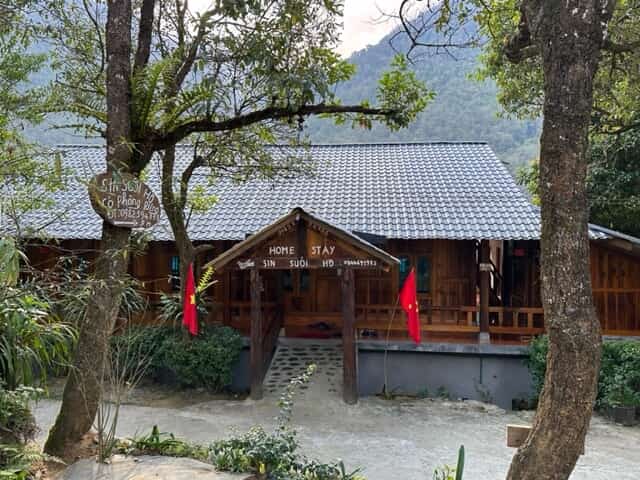
Over 20 homestays are now available in Sin Suối Hồ.
To achieve its current level of development, Sin Suối Hồ has come a long way. In conversations with locals, Pastor Hảng A Xà and the village elders recall Sin Suối Hồ's most challenging years: widespread drug addiction, families plagued by hunger, outdated customs hindering progress, and a seemingly inescapable cycle of hardship. The desire for change emerged in the 1990s, when government leaders, the Protestant church, and the local people united to undertake essential initial tasks such as organizing addiction rehabilitation for youth, mobilizing residents to contribute labor alongside the authorities to build concrete road systems, and reorganizing production, livelihoods, and village construction.
Sin Suối Hồ has a well-structured tourism development program: restoring ethnic cultural activities, designing various tour programs for visitors, building homestays, training human resources for service industries, and establishing the Sin Suối Hồ market fair, which is rich in Hmong cultural identity. These efforts have been carried out persistently, year after year, bringing about significant changes and creating a ripple effect for this small, remote border village.
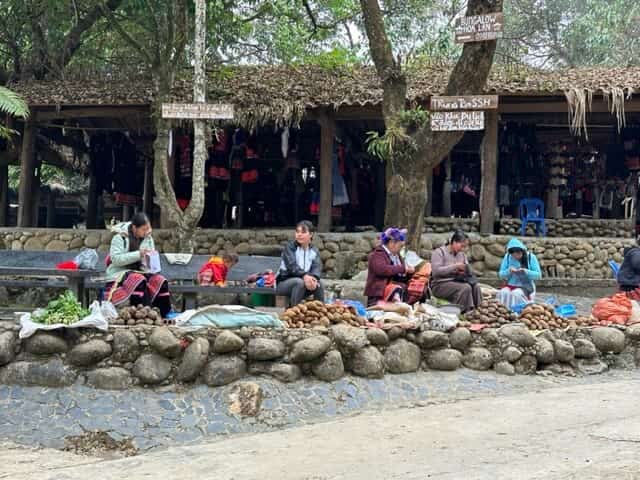
Early morning market.
Today, visitors to Sin Suối Hồ can enjoy beautiful natural scenery, fresh air, comfortable homestays, savor unique ethnic dishes, attend cultural market fairs, and participate in folk dances and singing with the local residents.
We visited the Sin Suối Hồ market and chatted with the locals. 54 stalls, symbolizing Vietnam's 54 ethnic groups, were beautifully displayed. Vibrant ethnic clothing, skillfully crafted by the women here, was on offer. Local specialties like dried bamboo shoots, black cardamom, and 'sâm đất' (earth ginseng) were sold alongside pots of ground orchids, a distinctive plant that is becoming a significant source of income for the residents.

Ms. Vàng Thị Dứ: Tourists really enjoy attending the cultural market fairs.
According to Ms. Vàng Thị Dứ, a vendor, visitors to Sin Suối Hồ particularly enjoy attending the market fairs. Families in the village sell their products, earning additional income to improve their livelihoods. A unique aspect of the local culture is that stalls are left overnight without supervision, and there's no concern about theft or loss. Vàng Thị Dứ is twenty years old this year, has two sons, and her husband works as a construction worker. She offered us refreshing slices of 'sâm đất' (earth ginseng) from Sin Suối Hồ, which had a subtly sweet taste.
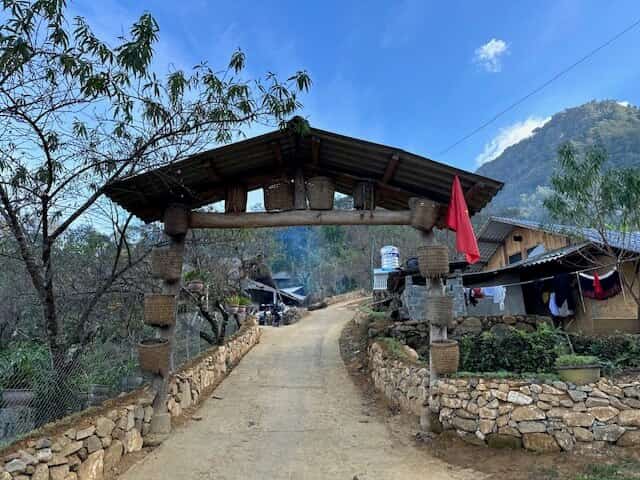
A service area.
We visited the 'Bird's Nest' homestays owned by Mr. Vàng A Lử and Ms. Hảng Thị Nú. Ms. Hảng Thị Nú is the daughter of Pastor Hảng A Xà, who played a significant role in Sin Suối Hồ's development to its current state. Ms. Hảng Thị Nú showed us around and shared: The homestay complex has a total of 6 'bird's nests.' Each 'bird's nest' is self-contained, fully equipped, and can accommodate a small family. Guests can also watch the village's cultural performance team perform on-site. To build this homestay, she and her husband borrowed 100 million VND from the bank, with the remaining costs covered by the family. Thanks to regular guests, their income is stable. Additionally, her family continues to garden and raise livestock. Other families in the village, if not operating homestays, participate in services such as opening coffee shops, running restaurants, or selling souvenirs. All homestays here are traditional Hmong-style wooden houses, featuring signs that provide information about the hosts, services, and contact numbers for guests' convenience. A very systematic approach to tourism has taken shape in Sin Suối Hồ.
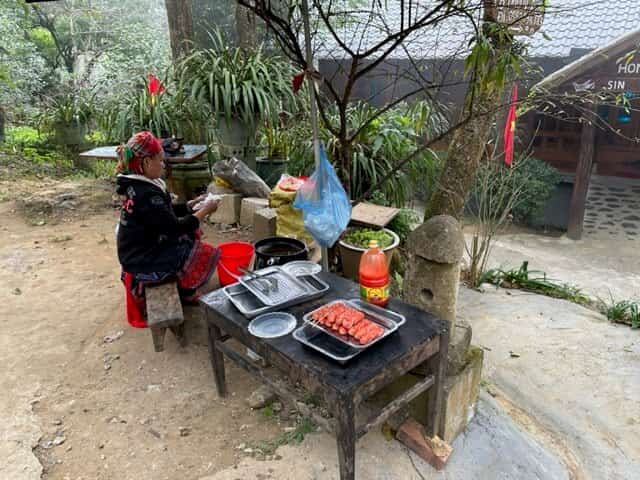
Services for tourists.
In the coming years, Sin Suối Hồ will continue to develop as a community-based tourism destination, preserving and promoting the traditional culture of the Hmong ethnic group, while ensuring ecological environmental protection and agricultural development. The goal is to become a distinctive and exemplary cultural village.
In the Hmong language, Sin Suối Hồ means 'Stream with Gold.' The local people have found this 'gold' in the beautiful natural landscapes, the unique traditional cultural features, and in the spirit of community cohesion, working together to build their homeland. This year's wild sunflower season in Sin Suối Hồ is exceptionally beautiful, signaling a new year filled with good fortune and peace for this northernmost border highland village.
Lai Chau 6341 view
Update day : 17/01/2024
Source : baotintuc.vn Affiliate links



Monuments close by
See all
Historical Relic of Le Thai To Stele (Le Loi)
The temple complex of King Le Thai To and King Le Thai To's stele is located 110km southwest of Lai Chau city center, in the administrative territory of Le Loi commune and Pu Dao commune, Nam Nhun district, Lai Chau province. The temple was built to commemorate the merits of national hero Le Loi, who had the merit of quelling the rebellion in the Northwest region. The temple is located on a prime, high location, with views from all four sides. At the King Le temple complex, there is also a precious relic, the Le Loi stele relic. In December of the year Tan Hoi (1431), King Le Thai To had it engraved into the Pu Huoi Cho cliff on the north bank of the Da River to preserve it for future generations. Old history called it "Ancient stele of nostalgia". The stele records the historical event of King Le Thai To personally commanding troops to suppress rebellion in the Northwest region of the country. That was the event in 1431, the chief Deo Cat Han rebelled, allied with Kha Don (also known as Kha Lai) - a rebellious servant of Ai Lao (Laos) to harass the people on the border, and invaded. Muong Muong land (now Thuan Chau - Son La region today). Due to the rebellious actions of Deo Cat Han, King Le Thai To sent King Tu Te and military officer Le Sat to attack. After that, King Le Thai To personally led his army to Phuc Le district (Ninh Vien district). The imperial army advanced along the road from the Red River, then up the Da River, by water and road, defeating the rebels at Cat Han Pass. When the king's army reached Deo Cat Han's lair, Kha Lai and Deo Cat Han fled, then the People captured Kha Lai and killed him. December of the year Tan Hoi - 1431, after pacifying the Northwest region, on the way back through Le Loi commune, Nam Nhun district (currently), to remember this important event and at the same time teach prisoners The leader of the country's borders, King Le Thai To had a poem carved into the cliff. The stele engraved with a poem by King Le Thai To that remains today is an extremely valuable cultural heritage. The stone stele or rather a golden page of history against foreign invaders and greedy chiefs who colluded with foreigners to fight against the feudal state of Vietnam at that time. In 2005, Son La Hydroelectric Plant started construction. To avoid being flooded, the inscription and stele of King Le Thai To were relocated. After being drilled, the autograph was cut into a large block of stone measuring 2.62m long, 1.13m wide, 1.85m high, and weighing over 15 tons. In 2012, Le Loi stele was moved from the Pu Huoi Cho cliff to the temple grounds of King Le Thai To, 500m from the old location. Le Loi Stele Relic was recognized as a national historical site on September 2, 1981. At the end of 2016, Le Loi Beer was officially recognized as a National Treasure. In early 2017, King Le Loi Temple was also ranked as a national historical relic by the Ministry of Culture, Sports and Tourism on January 23, 2017. Source: Lai Chau province electronic information portal
Lai Chau
8159 view
Rating : National monument
Tien Son Cave
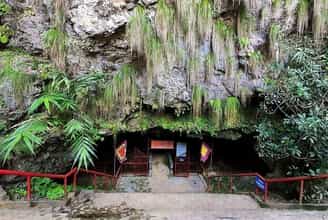
Tien Son cave (other names are Dan Don cave, Po Ngai Tung cave, Da Trang cave, Binh Lu cave) is located next to Highway 4D, in Binh Lu commune, Tam Duong district. Tien Son Cave with caves located in a scenic complex associated with the legend of 99 mountains and 99 lakes of Lai Chau ethnic people - has become a unique beauty that few places have. The legend of Tien Son cave has been passed down through many generations: the 99 mountains are the symbol of 99 healthy, strong boys, while the 99 clear blue lakes are the symbol of 99 hardworking, beautiful girls. Pretty. The mountains and lakes follow each other to create a wall that holds a rich and fertile land. The beautiful scenery and people here became the inspiration for the wonderful lyrics "ninety-nine mountains for boys, ninety-nine blue lakes for girls"... Tien Son Cave has 49 consecutive arcs running through two mountain slopes. The deeper you go inside, the larger the area of the arcs becomes. In the cave there are many stalactites of various shapes and magical colors. At the bottom of the cave, there is a clear stream flowing through, winding through palaces such as: Palace of Merit, Lac Long Quan, Mau Au Co, Ba Chua Kho, clearing injustice, asking for children. Tien Son is a famous natural cave in the region that still retains its wild beauty. During the resistance war against the French colonialists, this place was also a place to hide food and the base of the revolutionary movement. In 1996, the Ministry of Culture and Information recognized Tien Son cave as a national historical and cultural relic and scenic spot. Source: Lai Chau province electronic information portal
Lai Chau
7753 view
Rating : National monument

Temple of Lady Han
Nang Han Temple is located in Tay An village, Muong So commune and Phai Cat village, Khong Lao commune, Phong Tho district, Lai Chau province. This is a place to worship the legendary character known by the people as Miss Han (She means daughter, Han means hero). Legend has it that Nang Han came from a poor Thai family in Chieng Sa (now Muong So commune, Phong Tho district, Lai Chau province). She disguised herself as a man and stood up to call on the young men of the villages to unite and fight the enemy. She led the uprising of 16 Thai people who stubbornly defeated the Northern invaders. After leading the victorious army back, she bathed in the water of Tay An (Muong So commune) and then flew to the sky. From then on, remembering her gratitude, people built a temple and held a festival right in the water where she bathed. Ms. Han is not only a worshiped figure of people in Muong So commune or Lai Chau province in particular, but Ms. Han is a worshiped figure of all White Thai ethnic people throughout the Northwest region. Miss Han in the spirituality of 16 Thai and Muong regions in the Northwest is like Ba Trung and Ba Trieu to the Kinh people. On December 25, 2007, the People's Committee of Lai Chau province recognized Nang Han Temple as a provincial-level historical, cultural, architectural and artistic relic. Source: Lai Chau province electronic information portal
Lai Chau
7574 view
Rating : Provincial level relics
Ban Luong Historical Relic Area
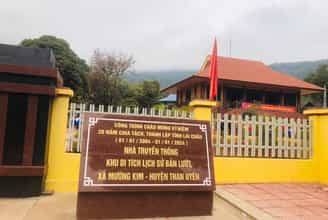
Ban Luot relic in Muong Kim commune is where Lai Chau Provincial Party Committee was born through the Resolution of the 10th Inter-Regional Party Committee on establishing Lai Chau Party Cell. This is the predecessor of today's Lai Chau Provincial Party Committee. On October 10, 1949, the Standing Committee of the 10th Inter-Regional Party Committee established the Lai Chau Party Committee consisting of 3 comrades: Nguyen Ba Lac (alias Tran Quoc Manh) - member of the Yen Bai Provincial Party Committee as a member of the Party Committee, and co-commissioner. Comrade Hoang Dong Tung - Leader of the Lai Chau assault team and comrade Ta Nhat Tuu (alias Hoang Hoa Thuong) - Standing member of the District Party Committee of Lap Thach district (Vinh Phuc) were transferred to Lai Chau as members. In November 1949, the Lai Chau Party Committee delegation led by comrades Tran Quoc Manh and Hoang Hoa Thuong came to Than Uyen and decided to choose Ban Luot, Muong Kim commune (Than Uyen) as the base of operations to advance. to Lai Chau. On December 2, 1949, the Lai Chau Civil Affairs Committee convened a conference to announce the decision of the 10th Inter-Region Party Committee to establish the Lai Chau Cell with 20 comrades, with comrade Tran Quoc Manh as Secretary. This is an important event in the history of Lai Chau revolution, marking the birth of the first party cell of Lai Chau Provincial Party Committee. Ban Luoi is located on Noong Nanh hill in Luot village, Muong Kim commune, Than Uyen district, 4km south of Than Uyen town and 100km southeast of Lai Chau city along national highway 4D and national highway 32. The tourist area The area was invested in building a memorial stele around the village's campus. In October 2003, Than Uyen district was honored by the state to award the title of Hero of the People's Armed Forces during the resistance war against the French. Ban Luoi relic was recognized by the province in 2009 as a revolutionary historical relic. Source: Lai Chau Provincial Youth Union
Lai Chau
7544 view
Rating : Provincial level relics

Nam Tun archaeological site
Nam Tun archaeological site was excavated in Nam Tun cave, Phieng Danh village, Muong So commune, Phong Tho district, now Phong Tho town, Lai Chau province. Before 1945, Nam Tun cave was called Tham Ho Khoai - meaning Buffalo Cave. Nam Tun archaeological relic excavated in 1973, the cultural layer is 1.8 m thick with two layers. The upper layer has ground stone axes, pottery and 3 graves (still retaining remains) typical of the late Neolithic period. The lower class found nearly 200 large, rough-hewn pebble tools, over 700 scrap pieces and 2 graves typical of the late Paleolithic period, representing the oldest cave archaeological relics in the Northwest. belongs to the Son Vi culture. Nam Tun cave site is the residence, burial and tool making of two classes of people, with two cultural layers, the pre-Neolithic period and the post-Neolithic period. In Nam Tun cave, there are 5 ancient tombs and many ancient relics, especially bone awls, found for the first time in Vietnam. Nam Tun Cave is in a quite favorable location. The cave entrance looks west. In front of the cave is a large stream, today people here often call it Nam Phe village (Nam Phe is not more than 100 m from the cave entrance). During the flood season, the stream rises and floods the valley surrounding the cave. The valley is clearer today, and from there, villages of Chinese and Thai people living side by side have sprung up. Nam Tun Cave has a very complex structure. There are places where stalactites are thickly covered. There are places where the stalactites are only coated in a thin layer. This layer is about 0.15m to 0.20m thick. Here you can find cultural relics of many different eras. Full-body grinded axes, ceramic pieces that, although rough, were made on a turntable, decorated with engraved patterns, rope patterns..., a double-edged stone mold, a green bead made of jade - All of them, if the earliest, belong to the late Neolithic period. Through the layer of large pebbles, there is a layer of dark brown soil mixed with many gravels. Here, many crudely hewn pebble tools were found, with different weights and sizes, without a stable shape. Many large scrap pieces were found, products of the tool making process by the hewn method. direct. Nam Tun cave archaeological relic was ranked as a National Archaeological Historical Monument on February 7, 2013. Source: Lai Chau province electronic information portal
Lai Chau
7507 view
Rating : National monument
Nearby tourist attractions
See all
O Quy Ho Pass
Backpackers often joke that if they haven't reached O Quy Ho Pass, they can't be called genuine backpackers. O Quy Ho Pass has a length of more than 40km, located at an altitude of over 2000 meters, on National Highway 4D crossing Hoang Lien Son range, the top of the pass is the border between Lai Chau and Lao Cai provinces. According to the legend of O Quy Ho Pass, in the past, in this mountainous area, there often appeared a bird with a melodious cry, associated with the legend of the uncoupled love story of a couple. Therefore, over time, it was the cry of that bird that gave the name of this famous pass. For every person traveling O Quy Ho Pass, going down the pass on clear, sunny days is a blessing in life. Standing on the top of the pass, admiring the vast and majestic beauty of the mountain and forest nature, feel the magic of the scenery on the pass: on the Lao Cai side, the fog spreads, on the Lai Chau side, it is sunny and sunny. Summer is often covered with clouds, winter has snow and ice, attracting not only domestic tourists but also foreign tourists. O Quy Ho Pass runs along the slopes of Hoang Lien Son range, a long road with majestic and impressive mountain and forest scenery. On clear, sunny and windy days, you can see small villages in the distance, undulating mountains and the majestic beauty of Fansipan peak amid the clouds. On cold winter days, O Quy Ho has incredible beauty, with snow covering the forest trees and roads. The most ideal journey is from Sapa to O Quy Ho pass, about 12km past Silver Waterfall - one of the most beautiful waterfalls in Lao Cai. In particular, when conquering the pass, backpackers rarely miss Tram Ton - the ranger station of Hoang Lien National Park. This is also one of the starting points to conquer the majestic Fansipan peak and the road to visit Love Waterfall. Here, with the scenery of a cliff on one side and a deep abyss on the other, it creates a feeling of challenge for every driver when passing here. Under the dense tropical forests, a winding road, climbing on cliffs with steep downhills and sharp turns will be a challenge for any driver. However, O Quy Ho Pass has become an important road, a bridge connecting the lowlands to the town center. But this same danger is one of the attractive reasons that attract backpackers to O Quy Ho to experience and surpass themselves.
Lai Chau
7337 view
From January to December
Sin Ho Highlands
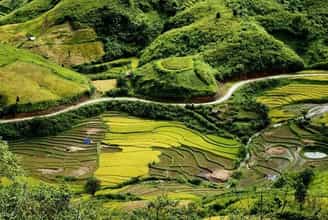
Sin Ho Plateau is a highland district of Lai Chau, this place is considered the second Sapa of the Northwest region. Because the climate here is cool all year round, the average temperature fluctuates around 18 degrees Celsius. The plateau is located in a quite favorable location, located in the middle of rolling rocky mountains, surrounded by green primeval forests. , blending with the sea of floating clouds, creating a scene like a fairyland. Tourists arriving in Sin Ho not only have the opportunity to see the sea of clouds, explore majestic mountain ranges, or visit unique terraced fields, but they also learn about customs and culture. Lai Chau's transformation is also interesting. As a famous tourist destination, you can come here anytime. Because each time in the Sin Ho plateau has its own unique beauty and experiences. If you want to explore fresh natural beauty, with peach blossom forests, plum blossoms,... in full bloom, you can visit in spring. Summer is the ideal time to explore the beauty of the ripe rice season, the terraced fields look like they are wearing a beautiful golden shirt. Or autumn is the time when the air is slightly cool, which is the right time to conquer the surrounding mountains. Winter is the time for you to have the opportunity to watch snow fall on the plateau, which is also very interesting. Where is Sin Ho Plateau located? It is known that this plateau is one of the most famous tourist destinations in Lai Chau, located in Sin Ho district, about 60km from the city center and located at an altitude of about 1,500m. Therefore, getting here is not easy, especially for those who do not have experience traveling to forests and mountains. So what is the road to Sin Ho plateau like? If from Hanoi, first you need to travel to Lai Chau by bus or motorbike (if you are a backpacker). By motorbike, you can follow the route: Hanoi -> Lao Cai -> Sapa -> O Quy Ho Pass -> Lai Chau. Or you can also follow the route: Hanoi -> Phu Tho -> Yen Bai -> Mu Cang Trai -> Lai Chau. After arriving in Lai Chau city center, you can rent a motorbike at hotels or Homestays to stay and conquer the plateau yourself. Not only is it known as an attractive natural tourist destination, but Sin Ho is also a land that preserves the long-standing cultural and historical values of the Vietnamese people. When you arrive at the plateau, before your eyes will be majestic mountains, surrounded by a sea of clouds, dense forests, and winding passes, all creating a unique beauty of the land of Lai Chau that is not typical of Lai Chau. everywhere. The nature here, imbued with the characteristics of primeval forests and mountains, creates wild and majestic beauty. On beautiful days, holidays or weekends, the number of visitors coming to hunt clouds is very large. A scene of floating clouds, stretching endlessly, in the distance are rays of sunlight shining through the trees, causing the clouds to gradually fade. All these images paint a romantic, extremely impressive picture of nature. Sin Ho Lai Chau Plateau is the living and working place of many ethnic minorities, typically: H'Mong people, Thai people, Dao people,... After discovering the beauty of the plateau , visitors can go to the villages to immerse themselves in the simple, rustic life here and learn about the cultural beauty and unique customs of the Sin Ho people. Along with that, you can also enjoy many delicious dishes and Lai Chau specialties, as well as buy ideal souvenirs to give to friends and relatives.
Lai Chau
7115 view
From January to December

Chu Va peak
From Sa Pa, follow Highway 4D towards Lai Chau for about 30 km, visitors will reach the foot of Chu Va mountain. Chu Va is a new tourist destination, but it is attractive to tourists who like to explore and take photos because when coming here, visitors can be creative in every moment because of the virtual changes of mountain clouds. Chu Va peak stands tall like a sharp arrow reaching high into the sky, that's why this place is like a "navel" of cumulus clouds. Depending on the time, weather, and light changes during the day, Chu Va turns virtual and captivating with many nuances. To reach this mountain range, you have to walk about 1 km from the main road. According to some photographers, taking beautiful photos in Chu Va depends on many factors, but the most beautiful is when the clouds wrap around the mountain body, which photographers call "Scarf Ring". only revealing the mountain amidst the vastness of heaven and earth. The most beautiful season in Chu Va is around the beginning of September, when the terraced fields turn golden yellow surrounding the foot of the mountain, creating a colorful picture. The strangeness and excitement of Chu Va makes many people who love to explore and eyes that want to capture beautiful scenery in their lenses come here to admire and enjoy.
Lai Chau
6871 view
September to March
Muong Than Field
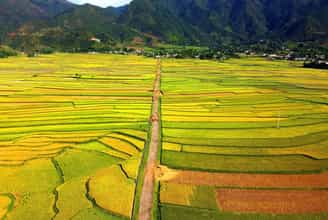
"First Thanh, second Lo, third Than, fourth Tac" is the summary sentence of our ancestors talking about the most vast and beautiful fields in the Northwest. Having just vaguely heard the story of "Than Uyen wind", the temperament of a person who likes to "travel" was eager to cross Highway 32 from Mu Cang Chai (Yen Bai) to Than Uyen (Lai Chau) on a rainy afternoon. sunny winter. Than Uyen district capital is located in a valley, and the valley is a vast, rolling field. Coming to Than Uyen, you will be immersed in a rustic indigenous life of brocade weaving. The scenery and delicious dishes keep attracting visitors from far away. Fish pa deck, it's a dish you can find and enjoy anywhere, from a small restaurant in town or in a lovely stilt house of the Thai people. It is an ancient Thai dish, but is still famous today. To "carve" this unique and unique cuisine, people have to go to the Nam Mu river to catch fish called pa patch in Thai. The fish is cleaned, then mixed with ginger, salt, chili, garlic, wine, especially fragrant roasted sticky rice... mixed well. After being marinated, the fish is placed in a sealed tube of apricot shoots and waited for half a month until the salt is absorbed and can be used. When eating, put the fish on charcoal and grill it, which is called taking the heat from the fire to give it a smoky flavor. Grilled fish eaten with fragrant sticky rice will make the taste buds unforgettable. This season, relax in the fields of Muong Than, the rhythm of working life is full of charming colors. We walked slowly on the endless green fields, as if lost in the vast steppe in a fairy tale. Occasionally the wind rushes into the basin, creating a rather special microclimate on the third most beautiful field in the Northwest. Therefore, "Than Uyen wind" is also a "specialty" of this valley. The wind whistles strongly, swirling around the basin. This season the wind is dry and dry. Tourists who want to explore Than Uyen often go to Muong Cang commune, through Muong Mit commune to see the stilt houses of the Thai people looming in the brilliant color of azalea flowers on the mountainside. What makes us excited is not only the fairy tale scene but also the image of a Thai woman working diligently at the loom. Thai women in Muong Cang commune are busy this season weaving towels and cushions for their families, especially unmarried girls who have to diligently weave day and night to prepare for the happy season when Tet comes and spring comes. about.
Lai Chau
6868 view
From January to December

Nam Pu Ta Leng Mountain - Phong Tho
Pu Ta Leng mountain peak with an altitude of 3049m in Lai Chau province is considered a common dream for those who love to travel and are passionate about exploring and discovering. Coming to the second highest mountain peak in Vietnam (only after Fansipan peak), you will be overwhelmed by the majestic and majestic mountains and forests mixed with a bit of magic. The area around the mountain has steep terrain, full of dangers and quite picky with people, however Pu Ta Leng is definitely a worthy gift, an unforgettable experience for youth when deciding to conquer the second roof of the mountain. This Indochina! As one of the mountains in the Hoang Lien Son range, Pu Ta Leng is located just northwest of Fansipan peak. If Fansipan is considered the "roof of Indochina", then Pu Ta Leng is the second roof that backpackers or young people who love challenges "must" try to conquer even just once. Between these two peaks is O Quy Ho Pass (also known as Hoang Lien Pass) and National Highway 4D runs through (this is the road from Lao Cai to Lai Chau and vice versa). Pu Ta Leng peak (Phu Ta Leng) is read in the language of the Dao ethnic people living in Phong Tho district, Lai Chau province as Pu Ta Leng, in which the word "Pú" means "mountain". Conquering Pu Ta Leng is not an overnight event, usually the process of climbing to the top and getting back down will take about 3-4 days. If you want to stop and combine camping along the way and rest a lot, it will take about 3-4 days. from 5-6 days. You can start at the starting line from Pho village, Ho Thau commune, Tam Duong district, Lai Chau province to start your journey to conquer the Pu Ta Leng challenge. With a "respectable" height just behind Fansipan, the 3049m Pu Ta Leng peak is conquered by backpackers who divide their journey into smaller pieces. The first day, from the starting point (the foot of the mountain) climb to an altitude of about 1500-2000m, the second day conquer the remaining altitude, and so continue to repeat the journey when going down from the top, returning to the point. initial departure. Unlike Fansipan peak, which has been upgraded and built with many convenient services for the climbing industry for commercial and tourist purposes, Pu Ta Leng peak is still quite wild, with a rugged mountainous landscape with steep, challenging slopes. Awaken courage, calmness as well as quick thinking in handling unexpected situations. In the first 700-1000m, the road up is not too dangerous, with few turns and jagged cliffs, but dense forest trees block most of the path. Large trees that are thousands of years old, have large rough trunks, and roots that protrude from the ground and lie scattered after a rainstorm or strong wind are also considered one of the significant obstacles that consume time and energy for climbers. From an altitude of 1500m or more, colorful azalea flowers bloom all over the sky of Pu Ta Leng, creating a picture of majestic mountains and forests that still shines with romance and poetry. At most, pink and purple rhododendrons crept across the path, fallen petals littering the path, creating a scene like the road to a fairyland. From here, looking far away we can also see Bach Moc Luong Tu peak and Phu Xi Lung peak, two peaks of the Hoang Lien Son range. Climbing to a height of 3049m, looking down from the top is a feeling of pride in having overcome hundreds, thousands of challenges along the way to conquer the second highest peak in Vietnam. At this altitude, the temperature drops, the weather becomes cold, the air is thin and the climbing path is arduous, easily making the hiker tired. So, take some time to sit down and gather to share your feelings and joys with your group members. In addition to the majestic Pu Ta Leng peak, you can also take this opportunity to explore Bach Moc Luong Tu and Phu Xi Lung peaks... these are all peaks that challenge climbers with sharp, jagged rock slopes. and uneven terrain with many hills and obstacles. Pu Ta Leng in general and the peaks of the Hoang Lien Son range are always a common dream for young people who are passionate about traveling and want to mark unforgettable moments of their youth with conquering feet.
Lai Chau
6939 view
From January to December
 AI Travelviet