Tourist destination
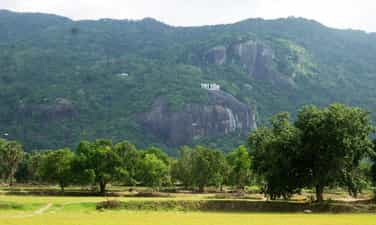
Co To Mountain
Tri Ton district, An Giang with its beautiful, pristine natural landscape along with cultural relics and heroic revolutionary history has attracted many tourists to come here to explore, find for themselves moments of relaxation and adventure. impressive photos. Traveling to An Giang, if you want to find a place to camp overnight in the mountains in Tri Ton, Co To is a great choice. Co To Mountain is an ideal place to watch the sunset, from here you can have a panoramic view of Tri Ton district or an area bordering Cambodia of An Giang, with many mountains, rice fields as well as beautiful landscapes. The fields of the Khmer people living here. Co To Mountain is abbreviated as To Mountain, also known as Phung Hoang Son, Khmer name is Phnom-Kto, located in That Son range, in Co To commune, Tri Ton District (An Giang). Co To Mountain has a height of 614m, 5,800m long and 3,700m wide. This place is endowed with hundreds of large and solid underground cave systems. This is also the attraction for thousands of tourists to visit. quan every year. Coming to Co To, visitors will listen to an interesting legend that has been passed down by people for hundreds of years, that fairies often descend to That Son mountain on moonlit nights to roam and have fun. . One day the girls played a game of throwing stones and the next morning a small mountain appeared there, rocks piled up on top of each other with many attractive shapes, that is Co To today. Another assumption not associated with the legend is that because the mountain is shaped like an overturned bowl, it is called Mount To. Located in the middle of vast, immense fields, Co To mountain has a wild and majestic beauty that captivates people's hearts. The houses are built on steep cliffs, each row of trees sways with the wind like rippling ocean waves, providing a cool climate all year round. When you arrive, you can't help but be amazed by the vast landscape and majestic mountains in front of you. Co To Mountain does not have an exact address on the map like apartments or shops. However, don't worry about not being able to find them, considering their huge size, just looking from a distance is enough to see them. To make it easier, starting from Long Xuyen direction, visitors can follow provincial road 943 down to Nui Sap town. From here, asking for directions to Co To Mountain will be very easy. Or you can also go another route. Many directions lead to the mountain, but with provincial road 943, visitors will enjoy more interesting experiences. There are many ways for you to climb to the top of the mountain, by hiking, motorbike taxi, or self-sufficient motorbike. The self-managed motorbike taxi team of Co To Mountain has a clearly listed price list in which the price is calculated according to the destination gradually increasing with the height of the mountain. If you choose the motorbike mode, within just a few hours you will go to all the worship and sightseeing spots. For those who love to explore and challenge, they can walk along the stairs, temples, bushes and rows of ancient trees, enjoying the natural atmosphere while walking. Climbing Co To Mountain is simple without having to go through many terrains and dangerous paths. By walking, it takes you a full day to visit Co To Mountain. Going up quickly takes nearly two hours, and going slowly takes up to 3 hours. You need to prepare specialized climbing shoes. In the "San Tien" area near Nam Can Palace, there is a beautiful "TRI TON" symbol, which has become a hot check-in point over the past time. Considered by young people as "the door to heaven". Each letter is 7m high, located on a pedestal 1.5 - 2m high, with a solar lighting system and surrounding fence to protect visitors. Looking from the foot of Co To mountain, the word "TRI TON" can be clearly seen and photographed, seen as the district's invitation to tourists. From the position of the word "TRI TON" on the mountain, you can observe the beautiful panorama below, golden rice fields, villages and charming river scenes, you will feel like you are embracing the whole world. into my heart. San Tien is a place that still preserves giant footprints imprinted on the rock. Co To Mountain has a footprint of the right foot, while Cam Mountain also retains the footprint of the left foot. To see this footprint, you go past the altar on the Tien Yard to the outer edge of the rock. Near the edge of the rock, there are small carved steps. Co To is chosen by many tourists as a place of pilgrimage because there are many temples and shrines on the mountain, visitors will be served food, sleep and learn about the vegetarian life here. From Nam Can Palace, going up about a hundred stone steps, you will see Ba Co Temple and then Vo Hoi, which people call Do Hoi. Do Hoi Lon and Do Hoi Nho are two extremely large rocks of Co To mountain that you can see from the foot of the mountain on the way to Soai So lake. To get to that stone yard, you will have to go through a house made in front. Do Hoi is a place to worship Buddha and lost souls. Therefore, on the pyramid-shaped stone pedestals that stand out between heaven and earth, you will see short calligraphy sentences to commemorate those who have passed from this world to another. Do Hoi has an extremely wide and open view, the entire Ta Pa field will spread out before your eyes with very characteristic tree canopies everywhere, creating a unique feature completely different from other rice areas of Vietnam. From here, you can also see Cam Mountain and Ta Pa Mountain opposite. If you watch the sunset, go to the big Vo Hoi, if you watch the sunrise, go to the small Vo Hoi, the two places are only about 50 meters apart. Large Vo Hoi is a place of pilgrimage and worship, so there are fewer angles for taking photos. As for small Vo Hoi, it is more deserted, so you can freely take photos. If you want to find a place to camp overnight in the mountains in Tri Ton, Co To is a great choice. In the morning, you can get up early to watch the sunrise and the surrounding scenery. In the evening, from the top of Mount To, you will be able to observe the entire small Tri Ton below, with the flickering lights blending beautifully with the light mist. Visiting Co To Mountain, you will feel peace and serenity in your soul. At the foot of the mountain, you can sit and relax by the romantic Soai So lake, this is an artificial freshwater lake created by dams to block the flow of the Golden and Silver streams, serving to irrigate thousands of hectares of land. around the Co To mountain area during the dry season. Soai So Lake is also a famous landscape of the Bay Nui region because of the "mountain" and "water" elements that create the charming "Co To mountain" that captivates many travelers.
An Giang
7683 view


Ca Be floating village in Chau Doc
If in the past most tourists knew about Chau Doc because of Ba Chua Xu Temple, a sacred pilgrimage site, today, Chau Doc is also known for many other wonderful things. From the center of Chau Doc city, up the Hau river, visitors will see Chau Doc floating fish village - one of the very special Chau Doc tourist destinations. Located west of Chau Doc city center about 3km along the river in the direction of the Mekong Delta watershed, An Phu district. Floating houses and fish rafts nestled close together form a "village", stretching several kilometers. If you go towards Chau Phu district, the floating villages seem more crowded and last longer. The most crowded are the floating houses gathered in the river section of Tan Chau district, the village stretches nearly 10km. The floating raft village on Chau Doc River is a freshwater fish raft village established in the 60s of the last century. At first, there were only a few floating rafts raising fish in a natural way, no need for feeding because of the good water source. However, from the 70s onwards, due to high economic benefits, the number of fish rafts increased significantly and gradually became a key economic point of An Giang. The highlight is that from 1990 to 2005, the areas of Chau Phu, Phu Tan, Cho Moi, and Vinh Nguon had over 2,000 fish cages with an average annual harvest of over 20,000 tons/year. Most of the fish raised in floating rafts in these regions are catfish varieties such as pangasius and basa fish, mainly for export to Western European and North American markets. In recent years, due to climate change, the Mekong River has dried up. In addition, the water source is increasingly polluted, leading to loss of income from fish raised in raft houses, and some households are left empty-handed and bankrupt. That's why the number of fish cages is decreasing day by day. Now, when basa and pangasius fish are no longer popular in the market, people have switched to raising all kinds of fish for meat such as: catfish, tilapia, silver carp, grouper, plaice... Thanks to the prices of The variety of meat fish is increasing, so raft fish farmers in Chau Doc are making a living, bringing high economic efficiency to help many families have a well-off life. Because it is a tourist destination on the river, travel must be by train or boat. Therefore, if you want to go to the floating raft village on Chau Doc river, you must go to Chau Doc junction (about 500m from Victoria hotel) or at Chau Giang wharf located on the other side of Chau Doc town to rent a boat. Boat rental prices at each location will vary depending on where your trip goes and how many people are traveling. However, one thing that you can rest assured about is that the price is relatively cheap and reasonable. Besides renting a boat at the marina, if you want to be quick and not worry about price gouging. You can ask the receptionist at the hotel to rent it for you or buy a package tour of An Giang to make your trip comfortable without worrying about anything. Coming here, you will be immersed in the space of floating houses swaying along the upstream of the Mekong Delta and the two branches of the Tien and Hau rivers. The architecture of the "houses" in the floating village is also very unique. The wooden houses are lightly painted, have simili-patterned ceilings with full amenities, have a 5m deep bottom made of star wood, and are surrounded by stainless steel mesh to raise basa fish and some other types of fish. The main means of transportation for people is by boat. You will be introduced to the process of raising fish on the river by the people, told stories of ups and downs and the reasons why they have stuck with this profession until now. Experience feeding the fish yourself, the bait is dropped into the raft, a whole school of fish rushes up to compete for food, looking so excited, thousands of same-sized, healthy basa fish splash around in the water, competing for food. The floor was soaked all over. In addition to practical experiences and learning about fish farming by floating rafts on the river. Here you can also immerse yourself in the cultural life of the river region that has been famous for many generations. A life not only about eating, transporting and staying on the river but also a place to live with many things related to residential life and survival. This is what makes the people of the Southwest region unique. Sit on the raft, watch the floating water hyacinth clusters, feel the cool breeze blowing in from the river to dispel the stress and fatigue of daily life. The scene on the river is calmer and more poetic when it is just dark. At this time, trading activities in the villages are no longer bustling, families gather together after a day of hard work. The floating raft village on the Bassac River begins to light up. The light from the rafts reflects into the water, looking like a city at night floating on the river, the scene is truly sparkling and magical. If you come to Chau Doc and don't once visit the floating village, it would be a mistake. You can combine visiting the Floating Market, Chau Phong Cham village and Chau Giang Cham village nearby. The two Cham Muslim villages are famous in An Giang for possessing many special harmonious cultural features. Here, you will learn about the life and customs of the Cham Muslim people. Along with that, you can visit and learn about the mosque... and the traditional weaving craft that has been passed down for many generations.
An Giang
7412 view


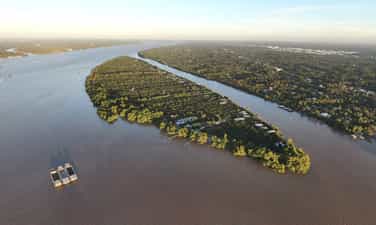
Con Quy
As a land covered by alluvium, Ben Tre has many islands, each with its own beauty and unique products. It is impossible not to mention Con Quy. What makes visitors excited about Quy island is that this place still retains its wild features with many perennial fruit orchards, planted in rows and paths, so it is very airy and beautiful. Con Quy is located along the romantic Tien River, between Tan Thach and Quoi Son communes, Chau Thanh district, Ben Tre province. Con Quy tourist area is about 23km from Ben Tre city center. You can rent a tourist boat to go down the Tien River for about 30 minutes to reach Con Quy. Traveling to Ben Tre, coming to Con Quy, visitors will enjoy the fresh air and admire the typical landscape of rivers and gardens, and listen to captivating amateur folk music. Con Quy, also known as Con Cat, is one of the "four islands" of the Tien River. Con Quy is the smallest of the islands in Ben Tre province, with a natural area of about 65 hectares. According to local people, among the four famous "Tu Linh" dunes of Western tourism, three dunes Long, Lan, Phung have long shapes, only Quy dune has a round shape (like a turtle) so it is associated with this name. Among them, Quy and Phung islands belong to Ben Tre province, while Long and Lan islands belong to Tien Giang province. In some regions of Vietnam, usually in the South, people use the concept of dune or island to refer to the middle beach, which is a strip of land formed in the middle of a large river thanks to the process of long-term alluvial deposition. Con Quy was formed hundreds of years ago. Initially, this was just a desolate promontory floating on the river, dense with grass and trees, and gradually grew larger with river silt. After that, around the 1950s and 1960s, there were only a few people who went to establish a business and found land reclamation... The remaining evidence at the beginning of the dunes (upstream direction) is the Ba Chua Xu temple built by the ancestors who reclaimed the land. . In the early days, the island was about 60 hectares wide. Later, thanks to farmers planting cork to preserve the land and silt, it became the area it is today... In the 1960s, Con Quy began to reclaim land and invest in tourism development. . The attraction for tourists when coming to Con Quy is its wild beauty and lack of human impact. Admiring Con Quy from afar, it looks like a floating island in the middle of the river. On the Con Quy there is a Protestant church where people come to pray. At first, people here only built small houses made of bamboo leaves and on a small scale to welcome tourists. Then, when they realized there was potential for tourism development, people built Thuy Ta restaurant along the river that could accommodate hundreds of customers and from there the service quality was also improved. Traveling to Con Quy, you will admire the lush grapefruit, orange, longan, rambutan, banana, coconut, mango, jackfruit gardens... luxuriant and fruitful. Besides growing fruit gardens, people also develop beekeeping for honey. The honey here is taken from longan flowers, so it has its own unique flavor. Especially when visiting the dunes, tourists can also dress up as farmers to participate in "slapping ditches to catch fish", "picking for crabs and snails",... experiencing the simple life of the river countryside. At noon, under the trees, visitors can relax in hammocks swaying with the breeze. In addition, visitors can also organize camping trips with many attractive activities. In the evening, local people will row their canoe to take them through small winding canals, with lush green coconut trees on both sides, making it very attractive to watch fireflies at night. The daily activities of the people here are associated with handicrafts made from coconuts and coconut candy production. Visitors coming here will have the opportunity to witness firsthand the process of making products made from coconuts, learn how to make coconut candy and can choose for themselves some coconut candy or cute products as souvenirs. Or give to friends and relatives after a trip to Ben Tre. Coming to Quy island, don't forget to enjoy special and rustic dishes such as: roasted coconut shrimp, catfish cooked in sour soup with water spinach, steamed red tilapia with termite mushrooms and pumpkin flowers, goby fish hotpot. , Braised snakehead fish,… At Con Quy, hotel and motel services are developed to meet the relaxation needs of tourists. In particular, homestays attract tourists who both save money and have the opportunity to learn about the lives of the people here. Sitting on boats floating on the river watching the rich, green and peaceful trees will be one of the experiences that everyone probably wants to try once in their life. Con Quy is definitely one of the destinations that leaves a strong impression in your mind after leaving Ben Tre.
Vinh Long
6151 view


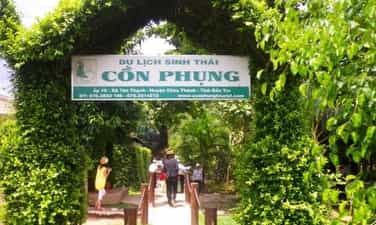
Con Phung tourist area
Ben Tre is a rich land blessed by nature with a mild climate all year round and a system of rivers and rivers heavy with alluvium. With lush fruit orchards and vast green coconut gardens, Ben Tre has attracted a large number of tourists to experience the type of eco-tourism and river gardens imbued with the love of the people here. Con Phung is one of the most famous Ben Tre tourist destinations. Con Phung, also known as Tan Vinh islet, is a floating island in the middle of the Tien River in Tan Thach commune, Chau Thanh district, Ben Tre province. Con Phung is located in the complex of four sacred animals (Dragon, Lan, Turtle, Phung). Among them, Quy and Phung islands belong to Ben Tre province, while Long and Lan islands belong to Tien Giang province. In some regions of Vietnam, usually in the South, people use the concept of dune or island to refer to the middle beach, which is a strip of land formed in the middle of a large river thanks to the process of long-term alluvial deposition. Con Phung was initially just a floating island in the middle of the Tien River in the 1930s with an area of about 28 hectares, but due to abundant alluvial deposits each year, it has now reached over 50 hectares. The name Con Phung came from when Mr. Nguyen Thanh Nam came here to build Nam Quoc Phat Pagoda in the early twentieth century. While this project was under construction, workers found an ancient bowl shaped like a Phung bird, so it was named Con Phung. In addition, the reason it also has another name is Dao Dua island is because Mr. Nguyen Thanh Nam, when he came here to build Nam Quoc Phat Pagoda, founded a sect called Dao Dua. Dao Dua advocates bringing peace and living by fruits. The travel distance from Ho Chi Minh City to Ben Tre will take about 1.5-2 hours. You move across Rach Mieu bridge, turn left and there will be a riverside road, here there is a ferry to take you to Con Phung. If not, you can go to the pier in My Tho, then depending on the number of people, rent a boat to go to Con Phung. With charming river scenery, rich gardens and many attractive activities and services, Con Phung annually welcomes thousands of visitors to explore and experience. When mentioning Con Phung - Ben Tre, it is impossible not to mention the Dao Dua architectural work associated with the anecdote of Dao Dua leader Nguyen Thanh Nam. This place has many unique architectures still preserved such as: Chin Rong yard, Hoa Binh tower, traditional room introducing the land and people of Ben Tre... After 50 years of construction, the relic still retains its beauty. its original. Going deeper inside, visitors can enter the "coconut maze", have the opportunity to understand more about the people, life and culture of the coconut land at the Coconut Museum, a house made entirely from coconut tree trunks. . Coconut is present in war, economy, culture, cuisine... to create Ben Tre's appearance. One must admire, admire, and admire the ingenuity of the artist. From lifeless coconut logs, artisans have created hundreds of sophisticated, eye-catching handicraft products with rich artistic value. Coming here, visitors will have to "take home" something as a gift for relatives to remember Ben Tre. Traveling to Ben Tre, coming to Con Phung, visitors can also witness the entire process of making these extremely delicious and flavorful Southwestern coconut candies: From mixing, cooking candy, cutting candy. , packaging are all made from the hearts and love of the people here. And surely everyone who comes to these coconut candy factories will bring themselves a few bags of sweet gifts from this land of Con Phung! Con Phung is like a miniature Western village of the Mekong Delta. Visitors can explore and learn many unique features of culture and customs in the rustic life of the people of Ben Tre coconut land. Many families still maintain their lifestyle mainly by raising bees to collect honey from longan flowers and some other flowers. The scenery at Con Phung is very peaceful, poetic and what could be more wonderful than when visitors can experience taking a boat ride on the river, walking on the coconut-shaded village streets of Chau Thanh district - Ben Tre; Ride a horse-drawn carriage, drink honey tea, enjoy tropical fruit dishes, listen to traditional folk music, and especially experience rowing a canoe in small canals with both sides lined with nipa palm trees and other rivers. The cork tree sways with poetic white flowers. Coming to Con Phung, visitors not only immerse themselves in the charming river nature, but also enjoy rustic dishes of Western gardens made from available fresh ingredients such as fried giant fish. , fried sticky rice, fish sauce hotpot, coconut weevil fried in butter, free range chicken porridge, coconut rice and coconut fried shrimp... All of them contain the flavor of coconut that makes diners fascinated and remember forever. Definitely don't forget to drink a glass of cool coconut water. Experiencing the feeling of adventure, thrill, heart-pounding, requiring courage is also something that visitors to Con Phung are especially impressed with, bringing joy and relaxing moments when participating in water games. such as cycling across a plank bridge, Zipline across a lake, cable-stayed bridge, balancing bridge... or transforming into a farmer in traditional costumes and trying to catch fish in ditches... The open space of the river and garden, enjoying rustic dishes, admiring unique miniature works, seeing with your own eyes the hot fragrant coconut candy factory... all bring excitement and freshness. Happy for tourists from near and far when coming to Con Phung of Ben Tre coconut land. If you want to have a true trip to Ben Tre, fully explore the beauty of this land, please contact MeKong Adventure Company specializing in Ben Tre Tours at phone number 0292.3819.219 - 0932.886.008 (Ms. Chi) to receive the most attentive service. During our Ben Tre Tour, you will not only visit Con Phung but also explore famous tourist attractions such as: Cu Lao Thoi Son, Vinh Trang Pagoda (Tien Giang).
Vinh Long
7155 view


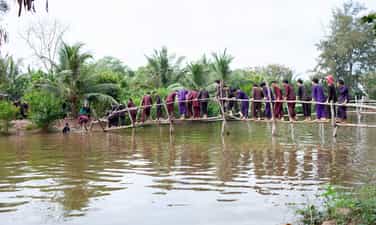
Vam Ho bird sanctuary tourist farm
If you have the opportunity to visit Ben Tre coconut land, don't forget to go to Vam Ho, the largest bird sanctuary in Ben Tre province, to explore the wonderful nature, listen and see with your own eyes the flocks of birds flying in the sky. Vam Ho Bird Sanctuary is located on the right bank of the Ba Lai River in the communes of My Hoa, Tan My and Tan Xuan, Ba Tri district, Ben Tre province, with an area of over 67 hectares. From the center of Ben Tre province, there are many roads leading to the Vam Ho Bird Sanctuary eco-tourism area with a strong impression of mangrove forests. The most convenient route: through Giong Trom to Tan Xuan, Ba Tri district, about 30 kilometers. The time when most tourists visit Ben Tre is from October to April, when birds begin to gather here to breed. It can be clearly seen that the tops of mangroves, cork, and fish sauce are heavy with bird nests. . In August they fly away again. This custom has been maintained for decades. Vam Ho Bird Sanctuary is a unique ecosystem area, typical of coastal mangrove forests of the Mekong Delta, with high biological value and potential for eco-tourism development. Traveling to Ben Tre, coming to Vam Ho Bird Sanctuary, you will experience canoeing through the lush green forests filled with bird sounds. Visit the resistance base, cross rickety bamboo bridges, lie down in a swinging hammock under the forest foliage, and breathe in the fresh air of the Ba Lai river. It's rare to find a place as wild, truly beautiful, with lots of birds and aquatic products as here. Currently, this place owns over 120 rare bird species such as storks, egrets, gongs, gray herons, white ibis, teal... and many types of wild animals such as pythons, snakes, squirrels, weasels, bats, monitor lizards... Vam Ho is a mangrove area, with an average height of 1.25 meters above sea level, so it is safe from annual high tides. Vam Ho's vegetation has nipa palms, dates, mangrove trees, fish sauce... at high levels, which are ideal for resident birds; Meanwhile, the lower layer includes dominant plants such as mangroves, hibiscus, holly, toadstool, sea spinach, reeds... very convenient for storks and egrets to build nests and reproduce. Inside the bird garden is a system of canals crisscrossed like a spider web, so there are a lot of shrimp and fish, mainly goby fish, crabs, crayfish... which are a rich source of food for the birds and storks here. Visiting Vam Ho Tourist Farm - Bird Sanctuary, visitors can also visit the old resistance base that once hid many revolutionary troops underground; Participate in some rustic games such as: riding a monkey bridge, walking on a rope across the lake, riding a mini cyclo, old swing games... This place also develops an area to grow many types of tropical fruits that bear fruit all year round, for visitors to enjoy fruits such as grapefruit, jackfruit, papaya, soursop, etc. grown organically without chemical fertilizers. , picked by you yourself. After watching nature full of interesting birds and animals, guests can stop at the restaurant and enjoy delicious dishes prepared by the skillful people here: cork hot pot, fish braised in clay pot, banh xeo, fish sauce. pork belly steak, folk cakes... The most interesting thing is in the afternoon, when the sun is about to set, visitors will hear the interesting "symphony" of thousands of birds of all kinds flying from all over, chirping together after a day of flying to search for food all over the world. direction and the sound of the herd preparing to flap its wings to search for food at night. Vam Ho Bird Sanctuary is a precious asset that nature has bestowed on Ben Tre province. Coming here, visitors will enjoy the fresh air, as well as discover many interesting things about the mangrove forest, have the opportunity to learn about the lives of animals, and at the same time, visitors will also find here a living area. Agriculture is typical of wet rice civilization where there are many rivers, canals and gardens.
Vinh Long
8122 view


Miss Cai Mon garden, Lach market
Rivers laden with alluvium and green orchards laden with fruit are the trademarks of the Western provinces. One of the provinces in the Southwest region that develops eco-tourism of fruit picking in gardens is Ben Tre. Visit Cai Mon fruit garden, Cho Lach district, you will be truly surprised at the greenness and richness that nature has bestowed on this land. Cai Mon - Cho Lach fruit garden is known as the "kingdom of fruits, seedlings and ornamental flowers" of Ben Tre province. This land attracts tourists because of the beauty of a pure Southern countryside and romantic village roads winding around lush green gardens, countless flowers and fruits... If you want to find Cai Mon orchard, ask for directions to Vinh Thanh commune, Cho Lach district, Ben Tre. From the center of Ben Tre city, cross Ham Luong bridge, follow Highway 60, go about 4 kilometers to Tan Thanh Binh - Mo Cay Bac intersection. Then continue to turn right, follow provincial road 882 to connect with national highway 57 for about 10 km more. According to elders in Cai Mon fruit village, this name has existed for a long time, before the name Vinh Thanh commune. The word "Cai" in Cai Mon means large canal. Cai means "little river" (this is the ancient language of the Funan people). Southerners consider big things to be Good, such as main roads, bookies, etc. "Mon" is a corrupted pronunciation of the word "Mun" (Khmer means honey). Writer Son Nam, who specializes in writing about Southern culture, said that in the past, on both sides of the canal in Cai Mon land there was a lot of honey because this was a land of luxuriant fruit trees, with flowers all year round. Full of branches, it attracts bees to nest and suck honey. Therefore, the name Cai Mon originates from such a meaning. Cai Mon fruit gardens are surrounded by four rivers of the Co Chien and Ham Luong streams, so the climate is mild all year round and the trees are luxuriant and lush. This place has become a rich garden with delicious fruits famous throughout the Mekong Delta such as rambutan, grapefruit, mango, longan, plum... and the specialty Cai Mon durian with yellow rice and flat seeds. Visitors can visit Cai Mon garden any time of the year, regardless of season. Every year, Ben Tre province organizes the Cho Lach delicious and safe fruit festival in the summer, usually on the occasion of Doan Ngo festival (5/5 of the lunar calendar), this is also an ideal time for tourists to love fruit. trees to visit and enjoy. Coming to Cai Mon - Cho Lach garden, you will be attracted and attracted to your eyes from the moment you step into the garden. The luxuriant fruit bunches and bent branches seem to want to "invade" the space of the leaves. Fruitful durian gardens, ripe red rambutan gardens laden with branches, strawberry gardens laden with fruit dangling in clusters, and mangosteens, mangosteens, oranges, tangerines, mangoes, grapefruits, longans... It's not wrong to say this place is the kingdom, the largest fruit granary of Ben Tre in particular, and the Southwest region in general. Only then can we see that nature is so favorable to the land of Cai Mon - Cho Lach, then we can see how patient and talented the farmers of this land are in order to take care of and create lush orchards. buckling branches like that. Not only can visitors take a walk in the garden, they can also enjoy fruit on the spot and have the option to buy it as gifts for relatives. In particular, following the gardener's footsteps, you will also be introduced and instructed on how to care for each type of fruit tree to have the most productive and quality fruit seasons. One very interesting thing when traveling to the West, visiting Cai Mon fruit garden, tourists who want to stay can stay at a homestay (in a homestay). These can be said to be interesting experiences for any tourist. Traveling to Cai Mon fruit garden, visitors can also try many local specialties of the Southern region such as pancakes filled with mussels or rice snails, shrimp miles,... Or listen to the melodious melodies of amateur folk music, sweet and profound. Experience a simple, rustic life when participating in production and living activities with people in the river countryside. Not only are there fruit gardens laden with fennel fruits, Cai Mon is also known as the land of many types of ornamental flowers such as marigolds, chrysanthemums, bougainvillea, dahlias, carnations, raspberry chrysanthemums, etc. Every year, Cai Mon flower village provides the national market with hundreds of varieties of ornamental flowers and precious ornamental plants of all kinds. Cai Mon is a land of "spiritual geniuses", producing many talented people for the country, including the famous Truong Vinh Ky, one of the world's famous scientists in the 19th century, whose stele house still exists today. Memorial welcomes visitors. On the opposite side is Cai Mon Church, one of the oldest and largest churches in the South, built in 1872; The 9-storey bell tower, 56.52m high with 06 bronze bells cast in France with a total weight of up to 4,000 kg... is a sight not to be missed. Many visitors to Cai Mon share the same opinion that this is a "good land for birds to perch on" and it is difficult to forget Cai Mon because there are people there who are very hospitable, honest, and incredibly kind.
Vinh Long
7447 view


Be village tourist area
Lang Be Ben Tre tourist area is located not far from Ho Chi Minh City, only about 75km, so it is very suitable for short trips. Located at number 81B/6B, An Thoi hamlet, An Khanh commune, Chau Thanh district, Lang Be tourist area is considered one of the extremely attractive entertainment and resort destinations, especially in the summer or late summer. week. The reason it is called Lang Be is because this famous eco-tourism area is closely associated with the raft fish farming profession of indigenous people. This place will definitely be an ideal destination with garden scenery, charming rivers typical of the West, many interesting entertainment activities and countless delicious dishes waiting for you to enjoy. Lang Be tourist area has a cool, pleasant climate all year round so you can come here at any time. However, according to the experience of many young people exploring the coconut land, the most suitable time is still summer (from June to August). Because this is the time when the weather is dry, sunny, almost no rain, extremely convenient for you to move, visit rivers and experience many other outdoor activities. Moreover, this is the fruit harvest season in the West, so you can also enjoy countless famous fruits such as mangosteen, durian, jackfruit, grapefruit, rambutan... in the gardens in the area. Lang Be tourism. Because Lang Be tourist area is located quite close to Ho Chi Minh City, you can travel here by bus or motorbike. If you take a bus, you should choose the bus companies running the Western bus station route to Ben Tre with high quality and reputation such as Thanh Buoi, Phuong Trang, Minh Tam... However, because the road to the tourist area is quite good. It's simple, so you can go by motorbike for more convenience and initiative. Departing from the center of Ho Chi Minh City, you move to the West along National Highway 1A - Long An Province - Tien Giang Province - Rach Mieu Bridge - Ben Tre Province - Ca Chuoi Bridge - Lang Be tourist area . If you follow the route starting from the foot of Rach Mieu bridge, you will turn onto the road towards Con Phung tourist area, continue moving until you see a sign, then turn right across Ca Chuoi bridge. From here, you just need to run straight a short distance to reach Lang Be tourist area. As soon as you set foot in Lang Be tourist area, you will immediately be surprised by the natural scenery that is so poetic and charming but has a strangely close and familiar feature. This eco-tourism area is located right next to the riverbank and was designed to look like a miniature Southern village with a very simple and rustic natural landscape imbued with the coconut land of Ben Tre. Walking around the tourist area, you will definitely fall in love with the simple village roads, thatched-roof houses on the water's edge, green grasslands and nipa palm trees swaying in the wind, bringing a feeling of relaxation and comfort. . Moreover, Lang Be tourist area also possesses a fresh, airy atmosphere, completely separate from the dust and noise of urban areas, so it is very suitable for you to enjoy a wonderful vacation in the countryside. Rare peace. Because this place is located near the famous island complex of Long, Lan, Quy, and Phung, on the way to sightsee, you can also combine visits to these destinations. One of the most exciting and popular activities in Lang Be tourist area is participating in folk games. There is a diverse list of games for you to explore, such as swinging on swing bridges, single rope swings, group rope swings, driving over monkey bridges, hitting ditches to catch fish, making clay explosives, and canoeing. , wind the coconut leaf trumpet... These games are guaranteed to give you the feeling of reliving your mischievous, adorable and unforgettable childhood. Although not as large and rich as Cai Mon or Vinh Kim fruit gardens, in Lang Be tourist area there is also a quite lush and lush fruit garden. If you travel here during the ripe fruit season (around June to August every year), you can not only visit and admire the garden but also pick and eat all kinds of delicious, fragrant fruits. If you want to buy it, please contact the resort's staff to weigh it and pay. As the land of coconut trees and many famous river products, Lang Be tourist area will definitely bring you impressive delicacies. Indeed, here serves all the famous specialties of Ben Tre cuisine such as coconut tofu salad, grilled chicken with salt and chili, fried giant fish, crayfish hotpot, coconut weevils, coconut rice... A small note: if you go in a large group, remember to book a table and order in advance. Because this will help the staff prepare the food in the most thoughtful way and as soon as your group finishes having fun and sightseeing, they will be able to eat right away without having to wait long.
Vinh Long
6963 view


Lan Vuong tourist area
Lan Vuong tourist area is an extremely interesting sightseeing and entertainment destination in Ben Tre. Lan Vuong tourist area is located on provincial road 887, in hamlet 2, Phu Nhuan commune, about 5km from Ben Tre city. From pristine fields, it has been designed to create a garden-variety Culture - Sports - Tourism Area that attracts a large number of tourists from near and far. Traveling to Ben Tre, coming to Lan Vuong, you will not only enjoy Ben Tre's specialties but also enjoy fresh air without noise and dust, immerse yourself in green nature with gardens, sweet fruits, Ornamental flowers and rowing boats are very charming and poetic. The entertainment games at Lan Vuong tourist area all have a rustic character typical of the Western river region: Fishing and casting nets to catch fish, boating, digging ditches to catch fish, wading in fields to catch crabs and snails. The large, airy space of a coconut countryside will certainly make visitors flutter. In addition, you can also visit the green-skinned grapefruit garden, the hybrid wild boar farm, the goat farm... Coming to Lan Vuong, you can freely enjoy fruits such as: An Phuoc plum, Taiwanese mango, jackfruit. precious, gooseberry, star fruit... In addition, visitors can shop for handicrafts or enjoy typical dishes of the Southern region at restaurants in the tourist area. Not only is it an entertainment destination, Lan Vuong tourist area is also a picnic and camping location for many households and groups. The cuisine at Lan Vuong Tourist Area is also quite special, not delicacies but just simple, rustic countryside dishes. These dishes are all made from ingredients found by tourists participating in fishing or catching fish activities and many typical Southern dishes such as grilled snakehead fish, shrimp boiled in coconut water, free-range chicken. ...in the thatched huts and long houses roofed with nipa palm leaves, they are close to nature and no less luxurious.
Vinh Long
7319 view


Vinh Kim fruit garden
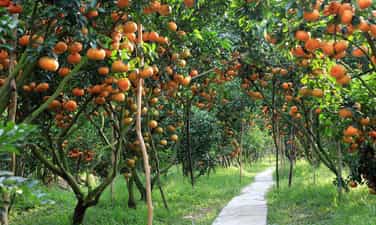
As one of the largest fruit gardens in the Southern region, in Tien Giang there are many famous fruit gardens such as fruit gardens inside the tourist area of Cu Lao Thoi Son and Con Lan Tien Giang. Among them, Vinh Kim Fruit Garden located in Chau Thanh district is still the most famous name and attracts a large number of people to visit every day. This place has a fresh, spacious and airy space, so it is extremely suitable for you to enjoy sightseeing, relax as well as enjoy many delicious and attractive fruits. Next summer is also the time when Vinh Kim Fruit Garden welcomes a large number of people to visit because this is also the time when fruits are in harvest season. Located about 70km from Saigon, if you travel to Vinh Kim Fruit Garden by motorbike, it will take you nearly 2 hours to get there. Depending on the vehicle you choose, the distance may be shorter or longer than 2 hours. After arriving in Tien Giang, you can ask local people for directions to the right place without worrying about getting lost. Below is the guide to Vinh Kim fruit garden that you should save before leaving. Dressed in a simple, rustic beauty, Vinh Kim Fruit Garden is the ideal destination for those who are looking for a peaceful, unhurried place to rest. The climate in the West is quite hot, but in return the green space inside Vinh Kim Fruit Garden has eased the harsh sun outside, creating an extremely cool place for you to comfortably rest and relax. At Vinh Kim Fruit Garden, many different types of fruits are grown such as Vinh Kim Lo Ren Star apple, durian, grapefruit, longan... Each type of fruit in harvest season radiates a fragrant aroma that makes anyone who orders it. When I come here, I can't help myself. Coming to Vinh Kim Fruit Garden, you will be "entertained" with a hearty, delicious and extremely attractive fruit party.
Dong Thap
6608 view


Missing the garden of Cai Be
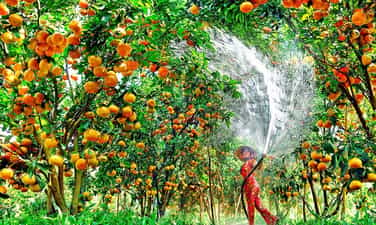
Cai Be garden is a large fruit growing area located along the banks of the Tien River and belongs to Cai Be town, Cai Be district, Tien Giang. Thanks to favorable natural conditions with fertile soil and a suitable climate for fruit trees to grow, the garden is always lush and full of branches. - Address: Trung Nu Vuong Street, Area 2, Cai Be, Tien Giang On a land area of about 1,500 hectares along the North bank of Tien River, there are many different types of fruit trees grown. In particular, the fruit trees here bear fruit all year round, with extremely attractive round and succulent fruit shapes. The sweet taste of the fruit is all thanks to the quality of the fertile alluvial soil that is deposited on the Tien River every year. Because they realize that the trend of exploring fruit gardens in the Mekong Delta is increasingly blooming, local people have launched tours that combine enjoying fruit right in the garden. They probably did not expect that the number of people responding would be so large. Many visitors are also interested in checking in at Cai Be garden to enrich their albums. If you are new to Cai Be Garden for the first time, you will probably be very confused and not know where to start. In fact, this garden is a large fruit growing area on the North bank of the Tien River, about 5km from Cai Be district, about 130km from the center of Saigon. If you depart from Ho Chi Minh City, you can travel according to the following plan. First we will move in the direction of National Highway 1A, then go straight on National Highway 1A through Long An, My Tho, Cai Lay to reach Cai Be district. After arriving at the district center, you should ask local people for the shortest route to Cai Be garden. To cover this distance it usually takes us about 3-4 hours by motorbike. According to the experience shared by many people, to relieve fatigue, we should visit My Tho to rest, eat and drink before continuing the journey to Tien Giang. However, it is best to choose the route on Ho Chi Minh City - Trung Luong highway, then continue in the direction of DT878 to National Highway 1A. This route we only have to travel about 110km. Cai Be garden owns a large area and accounts for 1/3 of the fruit tree area of the whole province. The garden is surrounded by canals and rivers, creating an extremely poetic space. It can be said that the most unique feature of this place is the diverse, colorful fruits hanging on the branches. When visiting, most people will feel like they are lost in the garden of Eden. The garden has Tien Giang specialties with strong Western imprints such as: Hoa Loc mango, Cai Mon durian, king orange, honey orange of all kinds... If you have enjoyed it, you will be aware of the differences between fruits. garden here compared to other places. After enjoying looking at the fruit trees with their branches, everyone can pick the fruit themselves right in the garden. Especially if you buy fruit right from the garden, the price is also extremely cheaper than in the city. Coming to Cai Be garden, you will admire a natural picture with bold characteristics of the river countryside, where we can immerse ourselves in the natural space and typical lifestyle of the river region. It is a rustic and simple life with gentle and simple people, erasing the hustle and bustle of urban life. At Cai Be garden, there is an area for families or groups of visitors to enjoy cuisine. Here we will enjoy many different specialties such as boneless snakehead fish, fried giant fish... with typical flavors of the region. Food prices here are considered reasonable, even quite cheap and not exorbitant. Fruit trees in Cai Be garden appear all year round so we can enjoy them anytime. However, the most ideal time to visit is around June - August. This is also the fruit harvest season, so the whole area will smell of the faint aroma of ripe fruit, which is extremely attractive. It can be said that coming to Cai Be garden, we will be immersed in the vibrant fruit harvesting atmosphere and love the sincerity and simplicity of the people of the West in particular and Tien Giang in general.
Dong Thap
6124 view


