Relic point Vietnam
Việt Nam
Thanh Lang Son Pagoda
During the Ly Tran dynasty, the court built a public house as a resting place for envoys of the two countries Vietnam and China. People built a pagoda next to the public house and named it Dien Khanh Tu. The ancient pagoda is located next to Doan Thanh in the north, so people still call it Thanh pagoda. Dien Khanh pagoda is located on the Ky Cung river at the foot of Ky Lua bridge, Hung Vuong Street, Chi Lang ward, Lang Son city. Legend has it that this ancient pagoda was built above to protect the bronze pillar built by the Han invaders that was buried by our people. In the 1st century, Han general Ma Vien brought troops to suppress the Hai Ba Trung uprising, annexing our country into Eastern Han. Wherever they went, they built ramparts there. At the border between Giao Chi and China (now in Lang Son province), Ma Vien ordered his troops to erect a bronze pillar, engraved with six words "Bronze pillar, Giao Chi will be destroyed" (If the bronze pillar falls, the Giao Chi people will be destroyed). Any Vietnamese who passed by that place would throw a stone at the foot of the bronze pillar. Over many generations, stones covered the bronze pillar. According to the Complete History of Dai Viet, in the year of the Goat (1271), Kublai Khan demanded that King Tran Thanh Tong pay his respects, but the king said he was sick and could not go. Kublai Khan sent an envoy to ask King Tran to show them the bronze pillar of Ma Vien in the past, with the intention of using the bronze pillar to threaten to level Dai Viet. The king did not tremble but answered them firmly: "That column had been lost for a long time." In the 17th century, the year of the Ox (1637), flower detective Giang Van Minh was sent by King Le to meet the emperor. Bright. Seeing the Vietnamese envoy's extraordinary talent, King Minh responded: "The bronze pillar is the same as the golden tower, the continent is green" (meaning that the bronze pillar from Ma Vien's time until now has been covered with green moss, King Minh boasted of the power of the local people). North). Giang Van Minh responded: "Dang Giang is from the ancient blood do the red" (a reminder of the many defeats of the Northern Dynasty, many times stained with blood on the Bach Dang River when they invaded the South). King Minh turned pale and served Giang Van Minh. At the temple's three-entrance gate hangs a new 2,100kg bell cast in 2007 for early recruitment. The pagoda's three gates are stacked with 24 roofs, covered with funny-nosed tiles and curved knife-heads. The pagoda's roof system is meticulously carved in a "seven-pointed" style, with phoenix heads supporting the entire diaphragm and rafters. The mascots: dragon, lyre, tortoise, and phoenix are elaborately and gracefully painted. Completely The set of couplets on the outside in Chinese characters is mounted on porcelain very meticulously and elaborately. The pagoda consists of 38 large and small compartments, with many construction items: Buddha worshiping harem, worship hall, Phuong communal house, Tien Duong, Tam Quan, To Duong, Hau Duong... The entire system of worship statues of the pagoda is cast in Solid gold bronze with over 40 large and small statues. This is the only temple in the country that has a complete system of Buddha statues according to Northern Buddhism. The pagoda's system of horizontal panels and couplets is extremely delicately carved and painted with gold, many of which are hundreds of years old. In the pagoda, there is currently a bell cast in 1671 during the reign of King Le Hien Tong, weighing 600kg. The pagoda was restored many times in 1967, 1980, 1992 and was ranked as a national historical and cultural relic in 1993. Source: Lang Son Tourism
Lang Son
6104 view
Rating : National monument

Bong Lau Victory Monument, Lung Phay
In the years 1948-1949, Route 4 was one of the vital routes used by the French army to transport food and weapons from Lang Son to serve the occupation forces in Cao Bang and Bac Kan. . This is a relatively dangerous route, especially the Bong Lau pass area (about 10 km long, in Trang Dinh district, Lang Son province) which is a winding road with narrow corners and steep slopes, where groups French army transport vehicles were often blocked and attacked by our forces, causing many losses (as of August 1949, French troops were ambushed three times by us in this area). To ensure the safety of important transportation routes, the French army deployed troops to guard important positions on the route. At the same time, when organizing transportation, it was often necessary to use a large number of vehicles (about around 100 vehicles) and divided into several groups, escorted by infantry forces and armored vehicles with a thoughtful contingency plan. After the end of the Cao - Bac - Lang Campaign in April 1949, we advocated continuing to conduct a number of battles to promote the victory of the campaign, focusing on attacking the enemy's transportation activities. on Route 4. Implementing the above policy, Regiment 174 was assigned the task of organizing the 4th ambush in the Bong Lau pass area (the section between Bong Lau and Lung Phay stations), with the determination to "first launch the battle". must win". After studying the situation, Regiment 174 decided to organize an ambush on a 2.5 km long road, from the beginning of Bo village to the top of the pass, with the center being kilometer 58. The force participating in the battle consisted of 2 battalions. Groups 23 and 53. Each battalion consists of 3 infantry companies and 1 support company, equipped with infantry guns, 12.7 mm machine guns, grenade launchers, bazookas, grenades, 81 mm and 60 mm mortars. . Battalion 259 performed a diversionary mission to attract the enemy in the Bo Cung - Lung Vai section. According to plan, the units secretly occupied the battlefield and deployed their combat formations before September 2. On the morning of September 3, detecting signs that the enemy would march to Cao Bang, the regiment organized its units into fighting positions. At noon on September 3, the force escorting an enemy convoy of 10 vehicles (6 transport vehicles), carrying about 100 troops, entered the ambush site, but the regiment had not yet opened fire, waiting to attack the main target, which was the transport convoy. As expected, around 2:00 p.m., when the majority of the French transport convoy of more than 100 vehicles entered the ambush, the units quickly mobilized to occupy combat positions. However, at this time, a French vehicle approaching kilometer 58 suddenly stalled, causing the entire convoy to pile together, and at the same time the accompanying enemy infantry deployed a protective formation. Realizing that the opportunity was not favorable, we still persisted in ambushing; At 2:30 p.m., the enemy finished repairing the vehicle and continued to march to the top of the pass; The battle began, all types of fire from the regiment simultaneously shot at the convoy, causing chaos in the French army's marching formation. Taking advantage of the opportunity, the units quickly mobilized to occupy advantageous positions, used grenades and infantry guns to fiercely attack the enemy formation; After more than an hour of fierce fighting, we completely controlled the battlefield, escorted prisoners, resolved casualties and withdrew our troops. Between 4:00 p.m. and 5:00 p.m., the enemy twice used aircraft to bombard the battlefield and sent troops from That Khe to rescue, but both were blocked by the forces of Battalion 53 and forced to retreat. As a result, we killed and wounded 194 enemy soldiers, captured 23 soldiers, destroyed 86 vehicles (including 1 tank, 2 armored vehicles, 78 transport cars), collected nearly 100 guns of all kinds and many other vehicles. military equipment, military equipment. The victorious battle of Lung Phay was the first victory of the 174th Regiment, and was also the largest ambush on Route 4 in the years 1948-1950, which not only had an impact on encouraging the morale and fighting spirit of the officers. , soldiers in the unit, but also has the meaning of cheering, encouraging, creating confidence in fighting and winning for our troops and people on the secret battlefield of Route 4 in the early years of the resistance war against the French colonialists. Source: Vietnam Military Encyclopedia
Lang Son
8100 view
Rating : National monument
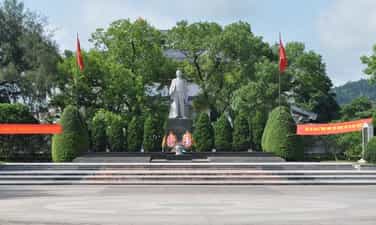
Hoang Van Thu Memorial Area
Comrade Hoang Van Thu (1909 - 1944) was a revolutionary and a loyal communist soldier of the Communist Party of Vietnam. He was born on November 4, 1909 in a Tay family in Phac Lan village, Nhan Ly commune, Van Uyen district (now Hoang Van Thu commune, Van Lang district), Lang Son province. From a young age, he was soon enlightened about the revolution. In 1928, he and his friends went to China to find a way to save the country. In 1930, he returned to Van Uyen district to build a revolutionary movement, establishing the first Indochina Communist Party cell in Lang Son. In 1938, he was assigned to be in charge of the Northern Region Party Committee and then assumed the responsibility of Secretary of the Northern Region Party Committee. In 1941, he was elected to the Party Central Committee Standing Committee. On August 25, 1943, comrade Hoang Van Thu was captured by the enemy in Hanoi and executed on May 24, 1944. Although Comrade Hoang Van Thu's time in revolutionary activities was not long, he made many important contributions to building and developing the Party Central Committee's base before the August Revolution during the period of terror by the colonial government. most fierce. Comrade Hoang Van Thu was posthumously awarded the title of hero and martyr by the government of the Democratic Republic of Vietnam. To commemorate and express gratitude to comrade Hoang Van Thu, the Party Committee, government and people of Lang Son province have built a number of commemorative works to commemorate his comrade in Lang Son city and Van Lang district, his hometown. will. The monument of Comrade Hoang Van Thu is located next to the Provincial Museum, the main gate of the monument grounds faces the Provincial People's Committee, on Dinh Tien Hoang Street, Chi Lang Ward, Lang Son City. Inaugurated in 1994. The relic of House No. 8 Chinh Cai Street is currently located on Ky Lua Street, Hoang Van Thu Ward, Lang Son City. From 1923 to 1927, comrade Hoang Van Thu studied at the French-Vietnamese school and lived at house number 8, Chinh Cai street. In the dormitory, in addition to studying, he drafted a number of leaflets and slogans with the content of mobilizing the masses to fight for food, clothing, freedom, democracy and against colonialism. , feudal oppression. Currently, this place has become a small museum displaying the revolutionary life of comrade Hoang Van Thu. On New Year's and holidays, the relics of House No. 8 Chinh Cai are open to welcome visitors, study and offer incense. Comrade Hoang Van Thu's memorial relic site is located in Hoang Van Thu commune, Van Lang district, 26 km north of Lang Son city. The relic area was completed with cultural landscape items and revolutionary historical relics associated with the life and career of comrade Hoang Van Thu, inaugurated on October 25, 2009 on the occasion of the 100th anniversary. Comrade Hoang Van Thu's birthday (November 4, 1909 - November 4, 2009). Source: Lang Son Tourism Promotion Information Center
Lang Son
8414 view
Rating : National monument

Memorial area of comrade Luong Van Tri
Comrade Luong Van Tri was born on August 17, 1910 in a Tay family in Ban Heo, My Liet commune, My Liet district, Diem He district (now Tran Ninh commune, Van Quan district). When he was young, he was very smart and studied well. Born and raised under the harsh feudal colonial regime, where the people were extremely miserable, he early had a patriotic spirit and progressive ideology. Comrade Luong Van Tri is a revolutionary activist and a person who has made great contributions to the revolutionary movement for national liberation of Vietnam. He and comrade Hoang Van Thu founded a group of patriotic youth in Lang Son town in 1926. In 1928, he was admitted to the Vietnam Revolutionary Youth Comrades Association. In December 1929, he was admitted to the Indochina Communist Party. After graduating from Huangpu Military School (China) in 1933, Luong Van Tri was assigned to Vietnam to build a revolutionary movement in Cao Bang - Lang Son. In 1939, he was elected Member of the Northern Regional Party Committee, in charge of military affairs. In 1940, he held the position of Standing Committee of the Northern Region Party Committee, in charge of inter-provinces Thai Nguyen, Bac Ninh, Bac Giang, Lang Son... After the seventh Central Conference (November 1940), Luong Van Tri was appointed as commander of the Bac Son guerrilla team and the Bac Son - Vo Nhai National Salvation Army base. In August 1941, on the march to Cao Bang, comrade Luong Van Tri was captured by the French colonialists at Ngan Son (Bac Kan) and later died in Cao Bang prison on September 29, 1941. Comrade Luong Van Tri set a shining example of revolutionary heroism, dedicating his entire life to the cause of national liberation struggle, contributing to beautifying the glorious history of our Party. Your life and revolutionary career will forever be a shining example for our children and grandchildren to study and follow. Currently, the house of the comrade who was born and raised in Ban Heo village, Tran Ninh commune, Van Quan district has been renovated, embellished, and restored to its original state, becoming a relic of Comrade Luong Van's Memorial House. Tri. On the occasion of the 100th birthday anniversary of Comrade Luong Van Tri (August 17, 1910 - August 17, 2010), our party and state built the Monument of Comrade Luong Van Tri in Van Quan town, Van Quan district. These are practical activities to commemorate and pay tribute to the great contributions of comrade Luong Van Tri in the revolutionary struggle during the pre-uprising period. The memorial relic and monument of comrade Luong Van Tri in Van Quan district are cultural addresses, regularly attracting people from all walks of life, especially the younger generation to learn and study the revolutionary traditions of the People's Republic of China. homeland. Source: Lang Son Tourism Promotion Information Center
Lang Son
5832 view
Rating : Provincial level relics

Bac Son Uprising relic site
The Bac Son Uprising relic site has typical and important historical value in the system of Vietnamese revolutionary military historical relics. The relic site is a safe place to hide and protect senior agencies and officials of the Central Committee and the Northern Party Committee during the period of revolutionary activities in Bac Son, where the smooth communication station between the Central Government and the Central Government is located. The Northern Party Committee and other areas are the place to provide materials for the training of revolutionary cadres of the Party. The relic includes 12 sites, which were ranked as national relics in 1992, distributed in 6 communes: Tan Huong, Hung Vu, Vu Lang, Vu Le, Tan Lap, Long Dong in Bac Son district, Lang Son province. , include: 1. Bo Tat Relic (Mo Tat): the place where the first Party Cell of Bac Son District Party Committee was established (September 25, 1936 - September 25, 2021). 2. Na Kheo hill relic: where there is a system of trenches 3. Nong Luc Communal House Relics: On September 2, 1940, party members, after escaping from prison under the colonial regime, moved to Nong Luc Communal House for a meeting. The meeting was held with the purpose of choosing an opportunity to carry out an uprising to fight against the French colonialists to liberate Mo Nhai station. 4. Mo Nhai Fort Relics: is a military base built by the French colonialists as soon as they arrived to invade our country. 5. Tham Thoong - Dap Di relic: is a pass located on provincial road 241 (Bac Son - Vu Lang route). 6. Vu Lang School Relics: The school was built by the French colonialists with the purpose of training a team of lackeys to work for them. 7. Sa Khao relic (Phia Khao): a place to hide cadres and activities of the Central Cadre Union and the Bac Son Party Committee. 8. Khuoi Noi Relics: This is the secret area of operation of the National Salvation Army. 9. Lan Pan Relic: is the location of secret activities of the Party Central Committee's Delegation during the implementation of Central Resolution 8 and consolidating the development of the grassroots armed forces at Bac Son Party Committee. 10. Lan Tay - Mo Pia relic: includes 2 points: Mo Pia cave and Lan Tay site. 11. Mo Re cave relic: This is the place of secret activities of the leaders of the Northern Party Committee and the place where the fierce battle to break the enemy siege took place on August 28, 1941. 12. Tam Canh Pass Relic: was chosen as the location to build the symbol of the Bac Son Uprising and a stele house to mark the event with a total area of about 120m2. Currently, relics and documents related to the relic site are being kept, preserved and displayed at Bac Son Museum and Vu Lang Truong Traditional Exhibition House, with a total of 138 artifacts, including : 127 original artifacts, 11 restored artifacts. The Bac Son uprising has enormous significance to the history of the Vietnamese nation, being a shining symbol of patriotism and the indomitable will of the Bac Son army and people in particular and the Vietnamese army and people in general. shared. With particularly typical values, the Bac Son Uprising historical site is ranked as a special national monument. Source: Department of Cultural Heritage
Lang Son
8268 view
Rating : Special national monument

Chi Lang Pass
Chi Lang is a land rich in heroic historical traditions of the Vietnamese people, associated with the glorious victories of our ancestors throughout the history of building and defending the country. Chi Lang is the most dangerous pass on the main road from Nam Quan to Thang Long. Chi Lang Pass is a small, oval valley, the north and south ends are narrow, almost closed. The length of Chi Lang pass is about 4km, the widest part is more than 1km. Many years ago, documents about Chi Lang relics recorded 52 relics (including existing relics, vestiges, place names and remaining oral stories). in folklore). However, according to the results of the relic inventory conducted by the Department of Culture, Sports and Tourism of Lang Son province in 2018, there are currently only 46 relics, locations, and landmarks still recorded, the remaining 6 have been completed. All traces are lost. Chi Lang historical relic site is a narrow valley, sandwiched between the Bao Dai and Cai Kinh mountain ranges, where the strategic talent and military art of the Lam Son insurgents were demonstrated, contributing decisively to the victory of the Vietnamese army. resistance war against Minh. In prehistoric times, Chi Lang was the homeland of famous archaeological cultures such as: Bac Son, Mai Pha with a system of typical relics such as Lang Nac Cave, Nguom Sau Cave, Na Ngum Cave... which are places to preserve and develop. There are relics, scraps, stone axes, pottery pieces... that demonstrate the early and prehistoric stages of the ancient Vietnamese people that are valuable for scientific research. Chi Lang marks the nation's heroic history with layers of history, layers upon layers of victories of our ancestors against the Song Dynasty twice (in 981 and 1077), and two resistance wars against the Yuan invaders (in 1285). and 1287), the fight against the Manchu invaders (1788 - 1789), to the resistance war against the French colonialists and American imperialists (typically the Hoang Dinh Kinh uprising in the years 1882 - 1888, female guerrilla Quang Lang shot down an American plane). Historically, this is the place where strategic battles continuously took place in Vietnam's military history, culminating in the Chi Lang victory in 1427, when our army and people achieved a resounding victory in destroying The reinforcement army of more than 100,000 Ming soldiers led by Lieu Thang contributed to ending the long resistance war, overthrowing the domination of the Ming Dynasty and regaining the entire country. The Chi Lang victory has entered Vietnam's history as a brilliant milestone, along with the victories of Bach Dang, Nhu Nguyet, Rach Gam, Xoai Mut, Ngoc Hoi - Dong Da, Dien Bien Phu, Ho Chi Minh Campaign... Chi Lang Victory is a majestic song about patriotism, the will to independence, the strength of great national unity, the spirit of determination to win and the wonderful military art of our nation. With those important historical values, on April 28, 1962, the relic site was ranked as a national monument by the Ministry of Culture, Sports and Tourism; Chi Lang was awarded the title "Hero of the People's Armed Forces" by the President; In 2019, the relic site was ranked a special national monument, affirming the relic's important position in the treasure trove of Vietnam's national cultural heritage. Source: Lang Son Tourism Promotion Information Center
Lang Son
8289 view
Rating : Special national monument
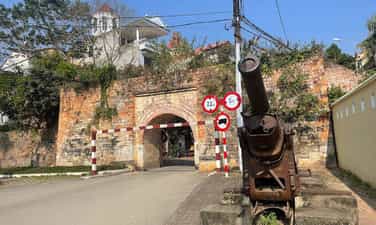
Lang Son Ancient Citadel
Lang Son Ancient Citadel, also known as Doan Thanh, is located in Chi Lang ward, Lang Son city. Through studying historical documents, Lang Son Ancient Citadel was built a long time ago. In Chinese documents written about the Song and Ming dynasties, there are records. At that time, Truong Phu (a general in the Ming Dynasty - China) after conquering our country and imposing colonial rule, strengthened the organization of the political apparatus in the area. Legend has it that during this time he built Khau On citadel. Regarding the construction of Doan Thanh, there is another legend that the Citadel was built by two fairies who came down to help build it. Perhaps that is why the Ancient Citadel also has another name, "Citadel built by Tien". According to Dai Nam Nhat Thong Chi: "... In the 26th year of Hong Duc's reign, the Le Dynasty (1495) citadel was restored...". Based on some of the documents mentioned above, it can be predicted that Lang Son Citadel was built during the Ly or Tran dynasties around the 12th and 13th centuries. The citadel was built on wide and flat terrain, covering a large space of Lang Son city (formerly known as Thanh Lang). Surrounding the citadel are mountains and Ky Cung river flowing through. Those mountains are also called Hoi Doan mountain (north), and Cong Mau mountain in the south. The architecture of Doan Thanh is like other ancient citadels with high walls and deep moat... (the moat here is the winding Ky Cung river). Surrounded by checkpoints located in communes and continents near and far, there are a total of 19 checkpoints, 3 checkpoints and 26 checkpoints. The citadel's walls were built of "mound bricks", a type of large-sized ancient brick, the 4m high vertical wall is very difficult to penetrate and attack from the outside, however, there was a time "... Doan Thanh was attacked three times. fell, the people of seven continents were forced into a miserable situation. The inner western and southern walls of the citadel were covered with soil up to the citadel's surface, at the base of the citadel was a 10m wide soil embankment, on the citadel surface was a 3m wide soil embankment, very convenient. beneficial for the majority of soldiers participating in combat. The height of the inner earth wall is equal to the height of the outer wall, forming a sturdy square trapezoid with a gentle slope that is very convenient for deploying soldiers to the surface. Citadel, in the southwest corner where the western and southern walls meet, there is a small earthen mountain called To Son. The inner eastern and northern walls are not covered with earth, but on the surface of the wall there are pearl holes. apricot; On top of the brick citadel wall, brick walls were built projecting on both sides, each side 0.1m to form a durable roof to protect the citadel wall. The ancient citadel currently has two remaining gates (one gate in the West and one gate in the South). , the city gate was designed and built in the Van Ban (Vo Bang) architectural style of France. Doan Thanh is not only located on rugged terrain, it is also considered sacred land. According to folk legend, this is also the meeting place of Princess Lieu Hanh (Holy Mother) and Trang Bung - Phung Khac Khoan. The ancient citadel was a major military, political, economic and cultural center of Lang Son during the feudal period. Besides, the Ancient Citadel also clearly demonstrates its important role and position in the matter of relations with the Northern feudal dynasties. This is the border crossing point, the place of communication between the two countries Dai Viet - China. The ancient citadel has 4 main gates in the four directions East, West, South, North and corresponding to these 4 gates are 4 sacred temples called: Dong Mon Tu, Tay Mon Tu, Nam Mon Tu, Bac Mon Tu (now called are: East Cua Temple, West Cua Temple, South Cua Temple, North Cua Temple) those are the four gods guarding the four sides of Doan Thanh. Scientists have recognized this as the four unique sacred Lang Son ancient citadels. With all the above meaning and importance, Lang Son Ancient Citadel relic was ranked as a National relic by the Ministry of Culture and Information in 1999. Source: Lang Son Provincial Museum Electronic Information Page
Lang Son
8148 view
Rating : National monument
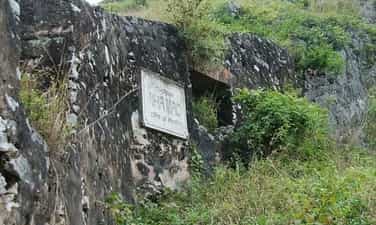
Mac Dynasty Citadel
Mac Lang Son citadel is located in Tam Thanh ward, Lang Son city - this is a remaining historical relic with wild and ancient features reflecting feudal military architecture. Located in a quite important position with its back against three mountains, To Thi, Lo Cot, and Mac Kinh Cung, which are tens of meters high. Each city wall was built solidly and high up, enclosing a flat, empty space of thousands of square meters. Lang Son Mac Dynasty Citadel is ranked as a National Historical Monument and has been invested and renovated to serve tourists and people around the area to visit and sightsee. The remaining vestiges of the citadel of Mac Lang Son today include 2 wall segments about 300m long, the citadel surface is about 1m wide, built of large blocks of stone in the middle of the canyon, from the foot of the mountain leading up to the citadel gate, more than 100 steps were built. built to facilitate visitors to visit. Entering the citadel is an empty area hundreds of square meters wide; Surrounding the walls are three mountain peaks tens of meters high. For tourists to go to the top of the mountain to visit and admire the scenery, there are hundreds of winding steps built, so this is an ideal place for tourists and people to visit and sightsee. On holidays, New Year, and days off, the number of tourists coming here to visit is relatively large, partly due to the convenient location of the relic in the complex of To Thi Mountain Relics, Tam Thanh, Nhi Thanh Caves, partly because Because of the uniqueness of this scenic spot, not only tourists from far away but also young people in the region and people living around the scenic spot also choose this place as a picnic and exercise spot to enjoy the fresh air. Source: Vietnam National Tourism Administration
Lang Son
7128 view
Rating : National monument
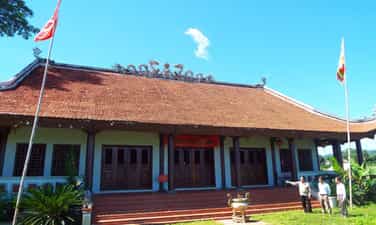
Cao Phong - Thach Yen revolutionary base area
Cao Phong - Thach Yen revolutionary base area belongs to Cao Phong district, Hoa Binh province. Because the activities of the base took place in the two communes Cao Phong - Thach Yen (old), the base was called Cao Phong - Thach Yen (now the relics belong to the communes Yen Lap - Yen Thuong - Cao Phong district). Ranked as a national monument in 1996. From mid-1944 onwards, after the Directive of the Party Central Committee on building guerrilla warfare bases in Hoa Binh province, especially after the Directive of the Standing Committee of the Party Central Committee (January 1945). ) on the construction of the Hoa - Ninh - Thanh war zone to proactively provide good areas for Vietnam's propaganda and liberation troops to advance through; At the same time as preparing militarily for the uprising to seize power, the revolutionary movement in Hoa Binh province developed quickly and strongly. The construction of the Viet Minh base progressed at a faster pace, until the end of 1944 and early 1945, in addition to Hoa Binh town, the Viet Minh base also spread to surrounding communes such as Quynh Lam and began to spread to Cao Phong region. Cao Phong - Thach Yen base area is located in a rugged mountainous area, although the base's operating area is very wide, including historical locations such as: 1. Khanh Pagoda Hill in Khanh hamlet, Yen Thuong commune. This is the training ground for the armed unit - the first team of officers of the base. After completing training here, the unit spread out to the hamlets to build self-defense teams. Comrades in this unit became squad leaders of self-defense teams of the hamlets. 2. Mr. Bui Van Y's family, Dai hamlet, Yen Thuong commune. It is a trusted base for comrades Vu Tho and Truong Dinh Dan... to travel and rest during the time participating in activities. His family contributed a lot of food and money to support the revolution. 3. Mr. Bui Van Hoanh's family lives in Trang hamlet, Tan Phong commune. It is a reliable base for comrades Vu Tho and Truong Dinh Dan... to go, return, eat, rest, during their time of operation at the Cao Phong - Thach Yen base area. 4. Trang village pagoda, Tan Phong commune. This is the location where the Party Committee of Hoa Binh province met in April 1945. During this meeting, the Staff decided to establish base areas. After the successful resistance war against the French, due to many reasons, the pagoda was damaged. 5. Mr. Pho Vien's family (aka Dang Chi Vien). He was instrumental in helping comrade Vu Tho to enlighten the tribes of the Cao Phong - Thach Yen region. During his time working at the base, his family became a trusted place for comrades participating in activities at the Cao Phong - Thach Yen revolutionary base. Mr. Pho Vien's family was also the location where the Provincial Party Committee convened the Provincial Conference of Representatives of the Viet Minh Front in July 1945 to implement the Directive of the Viet Minh General Headquarters on urgently preparing for an uprising to seize power. in Hoa Binh province. Cao Phong - Thach Yen war zone is one of the points to build the revolutionary base of the Party Committee of Hoa Binh province. The Cao Phong - Thach Yen base area is truly a solid base of the Hoa Binh province revolution and the Hoa - Ninh - Thanh war zone system, contributing a significant part to the overall victory of the Hoa Binh province revolutionary movement. . Source: Hoa Binh province electronic information portal
Phu Tho
5691 view
Rating : National monument
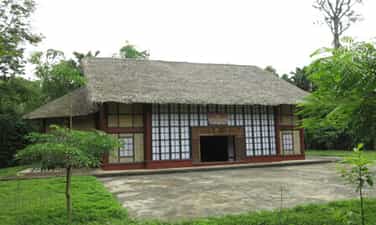
Relics of the Preparatory Congress of the Second Congress of the Lao People's Revolutionary Party
The site of the Preparatory Congress of the 2nd Congress of the Lao People's Revolutionary Party is a national revolutionary historical relic located in the Democratic Ward of Hoa Binh City. This is a relic of special significance demonstrating the friendship between Vietnam and Laos. Vietnam and Laos are two close neighbors, with a long-standing, traditional relationship. That relationship has been diligently cultivated, forged in practice, forged by the efforts and blood of countless heroic martyrs, by the sacrifices and struggles of many generations of Vietnamese people and Vietnamese people. Friend country Laos. The relationship between the two countries has become an invaluable asset for the two peoples. During the years of fighting against common enemies to gain independence and freedom, the two peoples shared sweets, sacrificed blood and relied on each other to survive and develop. That attachment has created a special and extremely valuable relationship built on the principle of respect for each other's independence and autonomy. The good relationship between the two peoples of Vietnam and Laos is most clearly demonstrated through the history of the two peoples' struggle for independence. One of the countless proofs is that the Communist Party of Vietnam helped the Lao People's Party successfully organize the Preparatory Congress of the two Lao People's Parties and successfully organize political training classes for the Lao People's Party. Lao party member in Hoa Binh. During the establishment of the Lao People's Revolutionary Party and during the resistance war, many places demonstrating traditional relationships and special solidarity were present in many places in Vietnam. Hoa Binh province was the place where the Preparatory Congress of the 2nd Lao People's Party Congress took place and where training courses on Party work and political work of the Lao Revolution took place during the period from early 1971 to the beginning. in 1972, once again proving and affirming the great contribution of Hoa Binh and the people of Hoa Binh ethnic groups to the traditional relationship, special solidarity and comprehensive cooperation between Hoa Binh province and Hoa Binh. The Party, State and people of Laos in particular, demonstrate the close bond between the two peoples of Vietnam and Laos that will last forever. Today, the project to restore and embellish revolutionary historical relics, political training venues and the Preparatory Congress for the 2nd Congress of the Lao People's Party, now the Lao People's Revolutionary Party, is being implemented. has now become a familiar destination for tourist groups from Laos when coming to work, study, and visit Vietnam. Source: Hoa Binh Electronic Newspaper
Phu Tho
5018 view
Rating : National monument