Relic point Vietnam
Việt Nam
Huyen Thien Quan Pagoda
Huyen Thien Quan Pagoda was originally a Taoist pagoda, then converted into a pagoda at the end of the Le Dynasty, currently at 54 Hang Khoai Street. Legend has it that Huyen Thien restaurant was established during the Ly dynasty and soon became famous as one of the "Thang Long Tu restaurants" of Taoism (the other three restaurants include: De Thich restaurant, now King pagoda on Thinh Yen street; Chan Vu restaurant, ie Quan Thanh Temple on Quan Thanh Street; Dong Thien Quan, now Kim Co Pagoda on Duong Thanh Street). At the end of the Le Dynasty, Taoism declined, the shop was converted into a pagoda. The project was renovated and repaired many times and had its architecture shaped since the end of the Nguyen Dynasty in Huyen Thien village, Hau Tuc district, Tho Xuong district. There are two major holidays here on March 3 and September 9 of the lunar calendar every year. Quan Huyen Thien was originally a place to worship Huyen Thien God, the northern god worshiped at Quan Thanh temple. This worship practice appeared in our country since the Northern colonial period. In the shop there is a statue of him made of agarwood. When Taoism declined and Buddhism flourished, the villagers brought the Buddha statue to worship together, and from then on it was also known as Quan Huyen Thien Pagoda or Huyen Thien Temple. The epitaph "Light up Huyen Thien bi minh" in the 10th year of Vinh To clearly states "...This belongs to Dong Xuan ward, Tho Xuong district, Phung Thien... the name is Huyen Thien ancient restaurant... The east side touches the white Nhi Ha river , the west looks to the blue Tan mountain, the south has the bridge (Ha Kieu) and the north has Hong Phuc pagoda, what a wonderful place... The restaurant dates back to the Le Dynasty in the 7th year of Thieu Binh (1439). The stele also says that at that time (in 1628), there were 13 rooms to worship Buddha, Mother Goddess and Huyen Thien. The stele built in the 6th year of Canh Tri (1668) under the reign of King Le Huyen Tong records: The restaurant was decorated with statues, restored three gates, bell tower, corridor, incense burner, upper palace, similar to the style of large pagodas of the Tran dynasty. -Pear. In addition, they were able to "cast a new bell and engrave the book "Holy Taoism and Classics", all four volumes kept at the village. This large-scale restoration was issued by Lord Trinh himself, so there were concubines in the lord's palace and mandarins in the court who contributed merit. In the 1st year of Canh Thinh (1793) during the Tay Son period, the pagoda was restored and the bell was cast. During the Nguyen Dynasty, the pagoda built 7 more back houses in the 21st year of Tu Duc (1868). In the early 20th century, when the French colonialists filled in the lake and expanded the streets, the pagoda shrank. In the 5th year of Bao Dai's reign (1930), most of the pagoda's buildings were rebuilt and shaped into their present form. In the days of resistance in early 1947, the pagoda was destroyed and the statue of Huyen Thien was burned. In 1948, local people and visitors from abroad donated to restore the pagoda according to the old layout of "domestic Cong, foreign nationality". From the outside, it includes the Nghi Mon gate, the bell tower, through the yard to two stele houses, two ancient wells and a 7-compartment worship house built in a gazebo style with 2 floors and 8 roofs, where the god Huyen Thien is worshiped. The incense burner runs along like an upper palace, connecting with two horizontal houses behind. Adjacent to the two gables are two corridors, now used as guest houses. In 2014, the pagoda was restored again after many years of encroachment and degradation. On both sides of the front yard of the worship house, there are 2 large stone stele placed in the stele house. The ancient stele bearing the 6th year of Canh Tri (1668) has a broken surface, many words are no longer there. The Arabic version was printed by the Academy of the Far East before 1945, and is currently kept at the Institute of Sino-Nom Studies. The stele shows the architectural scale of the pagoda at that time and many other information. In addition, there are 40 different large and small steles engraved with Han Nom characters on the walls along both sides of the hall and main hall. There is an article describing the bell weighing 500kg, 1m60 high, cast in the 1st year of Canh Thinh (1793) hanging in the bell tower behind the gate. Like other Tay Son period inscriptions, the Canh Thinh chronology here was erased during the Nguyen dynasty. There are dozens of national language epitaphs, mainly engraved after 1954. In the pagoda, there are also systems of Buddhist statues, Saint statues, Mother Goddess statues, Taoist statues, along with beautiful offerings and decorations. The Buddha hall behind the worship hall is solemnly installed with many wooden statues of artistic value such as statues of Bodhisattvas Avalokiteshvara, Mahasthamaprapta, Manjushri, Samantabhadra and 3m high statues of two Dharma Protectors, etc. ... The Mother Palace in the harem is fully decorated according to folk beliefs. Quan Huyen Thien Pagoda was ranked as a National Architectural and Artistic Monument in 2008. Source Electronic information portal of Hoan Kiem district, Hanoi city.
Hanoi
5408 view
Rating : National monument
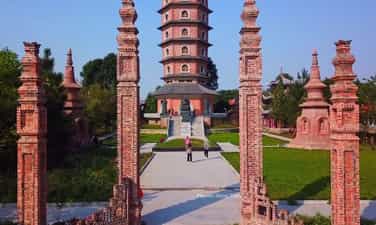
Bien Son Pagoda - Yen Lac
Bien Son is a beautiful pagoda of Yen Lac district, Vinh Phuc, ranked as a national historical relic since 1996, located on a high mound of about 1.5 hectares. In the past, the pagoda was called Doc Nhi, local people often called it Bien Mountain with a very strange shape. History books also record that in the 16th year of Thanh Thai's reign, the pagoda was built with Mon-style architecture. Due to changes in time, the pagoda no longer retains its original ancient architectural structure but was restored and embellished in the Dinh style, an architectural style bearing the Nguyen Dynasty's style including 2 worship halls and the main hall. Around the pagoda, the scenery is peaceful and charming, under many years old trees covered with a majestic green color. Coming from Provincial Road 303, visitors will be able to admire the first beauty of the pagoda, which is Tam Quan. The three-entrance gate is designed in the style of a three-storey, 12-roofed dome and is decorated very elaborately and sophisticatedly. From Tam Quan, there is the most straight path consisting of stone steps built along a gentle slope. The pagoda was built according to the internal and external principles. In the temple grounds, there are two long corridors connecting the front house in the front with the back house in the back, forming a rectangular area surrounding the incense burning house. Compared to other temples in the region, Bien Son Pagoda still preserves a system of more than 40 dharma statues and also preserves many valuable treasures and antiques. The statues here are beautifully crafted, gorgeously painted and gilded, meticulously crafted, imbued with the style of the Le Dynasty. A highlight of the Buddhist architecture at Bien Son Pagoda is the 12-ton monolithic bronze stupa, one of the largest stupas in the country, storing many Buddha relics, especially statues. Buddha Emperor Tran Nhan Tong is made of monolithic green jade... In addition, in the pagoda there are other houses such as the ancestral house, which is a place to worship the monks who once lived at the pagoda and have now passed away, and the monk's house, where the monks live. . Located right behind the upper palace, we can admire another extremely unique architecture, which is the rotating tower, also known as the mortar. Today, Bien Son Pagoda has become a stop, sightseeing, and research destination for many tourists on their journey to return to their national roots, and is the place where the Loan River - Bien Mountain festival imbued with national identity takes place. , attracting a large number of local people, tourists, and Buddhists from near and far to worship and enjoy. Source: visitvinhphuc
Phu Tho
5125 view
Rating : National level relic
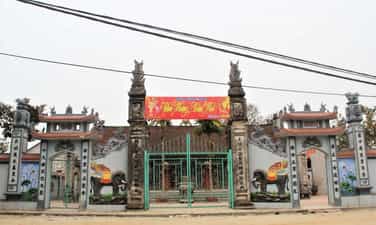
Holy Mother Temple
The historical relic of Thanh Mau Temple is located in Minh Luong residential group, Thanh Lang town, Binh Xuyen district, Vinh Phuc province. Thanh Mau Temple has a total area of 6,705 m2, of which the worship area is 3,114 m2, built a long time ago, and the current architecture still bears bold features of ancient architectural art. The temple has Dinh-style architecture with 5 compartments and 2 compartments and a 3-compartment harem. The overall layout of the relic includes: Nghinh Mon gate, fence system, front house, harem house, left vu house, right vu house, golden house, internal garden system. – Nghinh Mon Gate: includes the main passage and 02 side passages. The main walkway is formed by 02 large bronze pillars, bronze pillars, the base of which is covered with buddha vases, the top of the pillar is covered with fruit and wind wings made of four phoenixes, the body is covered with embossed thread and written with grapes on 03 sides of the pillar. The side walkway includes two symmetrical paths. The walkway is formed by small bronze pillars and a fence system, the side path is covered with 02 floors of small-sized roofs. – The altar house: built in the shape of a rectangle, with the architecture of a boat with a leaf roof, a husband's head, and a gong stand. The whole house is made of wood, has a door system, and a tiled roof. The building has very beautiful cultural and artistic value. – The harem house: built in the shape of a nail, in the style of a boat with a leaf roof, covering the harem part, inside with wooden structures like husband and wife, and a gong stand. – Historical stele: built in 1992, on it is written the preliminary history of the Holy Mother's behavior and the history of the temple. The stele is 1.8m high, the stele is engraved with yellow letters on one front side. The base of the stele sits on top of the turtle's back. The stele's base is made of square stone. – Left house and right house: the project was built quite a long time ago, the building is built in the most typical style. Thanh Mau Temple is the place to worship Saint Mother Trieu Thi Khoan Hoa. Holy Mother Trieu Thi Khoan Hoa belongs to the Trieu family. The genealogy records that "She belongs to the lineage of the 18th King Hung Vuong" and was once the concubine of King Ve Duong Vuong. Since the Trieu family lost their country, she had to hide from the Han army, lived in exile and then came to live at Quang Huu pagoda, An Lang commune, Chu Dien district; Now it is Thanh Lang commune, Binh Xuyen district. She was originally a beautiful and talented girl. She had 5 sons, all 5 of them had heroic talent, more courage than ordinary people, were skilled in martial arts, good at literature, and had a will as wide as the ocean. Legend has it that her 5 children were born in the same bundle due to a dream of love with the Duck god in this country, hatching from 5 eggs. Because of that, she named all 5 children with the word "ap Lang", meaning Duck. Later, the Holy Mother transformed into Minh Luong mound on the 10th day of the 11th lunar month and was buried by the people in Minh Luong area (Minh Luong residential group). When Hai Ba Trung raised the uprising flag, Thanh Mau's five children had grown up, and the five brothers all came to join Ba Trung at the mouth of the Hat River, bringing with them more than 1,000 indigenous people. Assigned by Hai Ba Trung to lead the navy and army to attack Luy Lau citadel, the five Ap Langs commanded the army to destroy a fierce battle, the Crown Prince To Dinh lost greatly and had to run back to the country. Because they accomplished many glorious victories, all 5 of them were rewarded and given titles by Hai Ba Trung, became 5 Great Kings, and named the mother of the 5 brothers "Queen of the country, Princess". Thanks to the help of the five Duck brothers and many other talented generals. In just a short time, the Hai Ba conquered 64 strongholds. Mrs. Trung Trac proclaimed herself king. The uprising of the Trung Sisters and their generals, with the help of the people of the whole country, won brilliantly, and the country returned to peace. Mrs. Trung Trac ascended the throne, her title was Trung Nu Vuong, and all the generals and soldiers were awarded. When the Han enemy returned to rob our country again, under the command of Hai Ba Trung, the five Ap Langs and their generals fought very bravely, but the enemy was so strong that our army could not resist. Hai Ba was defeated at Cam Khe, 5 generals from the enemy's siege brought their bodies and buried them in Hi Son (He village, Phuc Thang ward, Phuc Yen town), the year Ap Lang returned. Hamlet sacrifices his life to preserve the atmosphere. Remembering the merits of the five Ap Langs and the holy mother Trieu Thi Khoan Hoa, An Lang people built temples and shrines to worship. During the reign of King Le Thanh Tong, in the 12th year of Hong Duc's reign (1460-1497), the Holy Mother and 5 deities were worshiped: An Lang commune was divided into Xuan Lang commune, Hop Le commune, Minh Luong hamlet to serve the Holy Mother and 5 Gods. Later, all the dynasties granted beautiful letters and approved four communes (Yen Lan, Xuan Lang, Minh Luong, Hop Le) to serve them. Although Mrs. Trieu Thi Khoan Hoa did not directly stand under the banner of the Trung Sisters, with her upbringing, her five sons became talented and dutiful generals who helped the Trung Sisters gain independence. Later, she was honored by the people and a temple was established to worship her when she passed away. Her title of Mother Goddess is revered among the goddesses worshiped in some villages in Vinh Phuc. Through the dynasties, she was posthumously promoted to the position of Holy Mother in the 9th year of Khai Dinh (1924) and later as the "Higher God of Fortune" worshiped and commemorated by all people with reverence. Currently, in Thanh Lang town, the relics worshiping the Holy Mother Trieu Thi Khoan Hoa and the 5 Apangs are: Thanh Mau Temple (nationally ranked) worshiping the Queen Mother Princess Trieu Thi Khoan Hoa, Xuan Lang Temple (ranked nationally) national rank) worshiping King O Me, Hop Le communal house (provincial ranking) worshiping Quy Minh king and Yen Lang temple (provincial ranking) worshiping Trinh Ap Lang Nga royal king, Supervisor of royal affairs , Cuong guess the great king's avenue. With a respectful heart and remembering the gratitude of our ancestors, on May 11, 2017, the Management Board of Thanh Mau Temple Historical Relics, Thanh Lang town held a groundbreaking ceremony to build a memorial stele to commemorate the Five Great Kings. Vuong at the termite mound where five generals were martyred. Thereby not only contributing to enhancing the beauty of space and landscape for the relic, but also contributing to preserving and educating the tradition of "Drinking water, remember the source", helping today and future generations to always cherish gratitude. the contributions of our ancestors and forefathers to building and defending the country. Source: Vinh Phuc Department of Culture, Sports and Tourism.
Phu Tho
5063 view
Rating : National monument
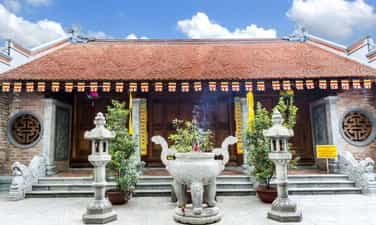
Ba Da Pagoda
Ba Da Pagoda was originally the ancestral place of the Lam Te Zen Sect, one of the two major Zen Sects of Buddhism in Northern Vietnam. Ba Da Pagoda (Linh Quang Tu) is located at 3 Nha Tho Street, Hang Trong Ward, Hoan Kiem District, Hanoi, only about 100m from Hoan Kiem Lake area. This place used to belong to Tien Thi village, Bao Thien ward, Tien Tuc district, Tho Xuong district, Phung Thien district, Thang Long capital. Ba Da Pagoda is one of the four most ancient Ba Pagodas in the Capital along with Ba Danh Pagoda, Ba Nanh Pagoda and Ba Ngo Pagoda. Ba Da Pagoda was originally the ancestral place of the Lam Te Zen Sect, one of the two major Zen sects of Buddhism in Northern Vietnam. The pagoda is also associated with many evidences of two resistance wars to save the country of Hanoi people. During the resistance war against the French, Ba Da Pagoda was a travel base for Viet Minh cadres. After the establishment of the Vietnam Unified Buddhist Association (May 1958), Ba Da Pagoda was the headquarters of the Hanoi Buddhist Liaison Committee. After the establishment of the Vietnam Buddhist Sangha (November 1981), the pagoda became the Headquarters of the Hanoi Buddhist Association. Since 1992, at Ba Da Pagoda, the first Hanoi Buddhist Intermediate class (1989 - 1992) opened. At the end of Le Trinh's reign (1767 - 1782), when people dug around the pagoda garden to get soil to build Thang Long citadel, they found a stone statue. People believe that this is a statue of Lady Buddha so they brought it to worship in the pagoda, from then on it was called Ba Da Pagoda. In June of the Year of the Horse (1786), the Tay Son army entered Thang Long. During the battle, an accidental fire caused Ba Da Pagoda to turn to ashes. The pagoda burned down, leaving only an empty ground with grass and moss growing. At that time, the superior ordered the people to weed that deserted garden to repair the ruin. The villagers built a pagoda made entirely of bamboo paintings to pay respect to Buddha and have a place to worship. In the year of the Ox (1793), monk Khoan Giai became the abbot of the pagoda and gradually built a three-room, tile-roofed pagoda. In the year of the Snake (1821), Patriarch Giac Vuong succeeded to the throne and received merit from ten directions, so he built a larger pagoda, added several corridors and increased guest rooms. Next, Pho Si's ancestors planned to post... From here on, Ba Da Pagoda restored its ancient beauty. The pagoda today has a relatively large scale with 5 front halls, 4 upper halls and the Patriarch and Mother Church areas located in a closed campus. The pagoda does not have three gates like other pagodas, the entrance is a narrow alley about 9 meters deep. The temple faces North. The most unique architecture of this temple is the low porch supported by four stone pillars of modest, proportionate size. On the column there are very delicate and soft carved motifs, depicting scenes of the four seasons and four seasons. In the pagoda, there are many wooden statues painted in red and gilded, on top there is a statue of Tam The, below is a statue of Amitabha Tam Ton. Next is the statue of Sakyamuni Buddha, with statues of Bodhisattva Manjushri and Bodhisattva Samantabhadra on both sides. The bottom row is the Cuu Long Temple, the statues are all larger in size than other pagodas, the statues here have their own very beautiful and ancient appearance. In particular, the Bai Duong house does not have a Dharma Protector Statue like other pagodas, but there are many back stele mounted on the walls on both sides. The pagoda also preserves a number of precious artifacts such as two bronze bells cast in 1873 - 1881; bronze casting ceremony in 1842. Ba Da Pagoda was ranked as a historical and cultural relic by the Hanoi People's Committee in 2006./. Source Electronic information portal of Hoan Kiem district, Hanoi city.
Hanoi
5945 view
Rating : National monument

Cau Dong Pagoda
Dong Cau Pagoda (Dong Mon pagoda) is located at 38B Hang Duong street (Hang Dao ward, Hoan Kiem district, Hanoi), formerly belonging to Dong Hoa Mon village, Hau Tuc canton, Tho Xuong district, Thang Long citadel. Legend has it that the pagoda was built during the Ly dynasty and underwent many restorations from the 17th - 19th centuries. The reason the pagoda is called Cau Dong is because many centuries ago, near this area there was a stone bridge across the To Lich river connecting Ha Khau with the streets and eastern gate of Thang Long citadel. At the same time, there is also a market nearby called Cau Dong market. Therefore, the pagoda was named Cau Dong. The ancient Dong Cau Pagoda had a spacious campus. In the stele "Dong Mon Pagoda" engraved in the 5th year of Duong Hoa (1639), there is the following description: "Dong Mon Pagoda is as beautiful as a fairy scene, the Nhi River strip is displayed before the eyes...". By the 19th century, the temple grounds were narrowed because the French colonialists filled in rivers and opened roads; The pagoda was rebuilt in the typical style of Nguyen Dynasty architecture. The pagoda's three-entrance gate is quite massive, consisting of 2 floors and 8 roofs, above is a bell tower. The Three Jewels Palace is designed in the shape of the letter "Cong", including 5 front halls and 3 morning glory chambers connected to the 3-compartment upper Buddha shrine. Behind is the yard, then the Mother's house, the Patriarch's house, and the monk's house. In addition, within the pagoda grounds there is also Duc Mon communal house - a place to worship general Ngo Van Long during the Van Lang period, and a martyrs memorial. In Cau Dong Pagoda, there are still many valuable relics: Bronze bell - "Dong Mon Tu Chung" cast in the 8th year of Canh Thinh (1800) in the Tay Son period; 60 round statues, including 3 Tam The statues created in the 18th century, along with many decorative carvings of high artistic value. In particular, in the harem there are 2 worshiping statues: the statue of Grand Master Tran Thu Do and Lady Tran Thi Dung - who was given the title Linh Tu Quoc Mau. They were people who had great contributions to the Tran Dynasty, and Ms. Tran Thi Dung was the one who repaired Cau Dong Pagoda. The two statues are carved in the lotus position, expressing the attitude of returning to Buddha. Dong Cau Pagoda is the only place in Hanoi to worship Grand Master Tran Thu Do and Linh Tu National Mother Tran Thi Dung. Besides its cultural and historical values, Cau Dong Pagoda is also a revolutionary relic. During the resistance war against the French, this was the place where Viet Minh officers were hidden. Currently, under the temple's Mother Goddess altar there are still traces of a secret cellar door. With those values, in 1989, Cau Dong Pagoda and Duc Mon communal house were ranked as national historical-cultural relics. Source Electronic information portal of Hoan Kiem district, Hanoi city.
Hanoi
5423 view
Rating : National monument

Van Phuc Communal House (General Communal House)
Van Phuc communal house (also known as Tong communal house, Van Bao communal house) is located on high ground in lane 194, Doi Can street, Ba Dinh district. The communal house was built in the 11th century and is a place to worship Linh Lang Dai Vuong Thuong Phuc Than. Van Bao camp was later changed to Van Phuc camp, with the general pavilion of Thirteen camp area. Van Phuc relic cluster includes Van Phuc communal house, White temple and Bat Thap pagoda. The communal house has ancient origins dating back to the construction of the capital Thang Long (Ly Dynasty). This area has a temple worshiping Linh Lang Dai Vuong, according to legend, he was Hoang Chan, the fourth son of King Ly Thanh Tong (1054 - 1073), who was instrumental in fighting the Song invaders and preserving the capital of Thang Long. . Van Phuc Communal House was also the place where his army was stationed. In addition, the communal house is also a place to worship Mother Thien Tien Ly Hue Tong. Linh Lang Dai Vuong's name is Hoang Chan, the fourth son of King Ly Thanh Tong. In 1075, the country had a foreign invasion, Linh Lang asked the king and Prince Chieu Van to command the fleet to cross Vinh An sea, attack and destroy enemy posts, coordinating with General Ton Dan's troops. Capturing strategic bases and gathering food and supplies of the invading Song invaders. Our army won a great victory, the King held a Grand Banquet, wanting to cede the throne to the Prince but he refused. The country was peaceful for a while, but at the end of 1076, the Song invaders sent troops to invade our country again. Once again, the Prince and Prince Chieu Van commanded the fleet from Van Xuan upstream to Khao Tuc, suddenly gathering attacked the Eastern defense line of the Song enemy on the north bank of the Nhu Nguyet River, expelling the Song enemy from the border of the Fatherland. At this river, the Prince heroically sacrificed his life (February 10, Dinh Ty - 1077). Considering the prince's merits, the King bestowed the title of My Tu, allowing 269 villages throughout the country to build temples and shrines and conferred the title of Linh Lang Dai Vuong, Superior Phuc Than. The main festival of the communal house on the 9th day of the 2nd lunar month commemorates the transformation day of the Holy Saint. The remaining days, 12th day of the 9th lunar month, is the Grand Banquet day, and the 13th day of the 12th lunar month is the birthday of the Holy Saint. At the communal house, the largest drum in Hanoi is kept. Each side of the drum must be stretched with the skin of a buffalo so that every time the drum is beaten, all the people of "Thirteen Camps" can hear it. By 1986, Van Phuc communal house was ranked by the State as a national historical and cultural relic and a historical and cultural relic in 1992. Source: Electronic information portal of Ba Dinh district, Hanoi city.
Hanoi
5031 view
Rating : National monument
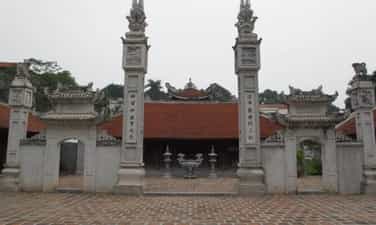
Dinh Ngoc Ha
Ngoc Ha Communal House at Lane 158 Ngoc Ha, Ngoc Ha Ward, Ba Dinh District; The communal house was built around the end of the Le dynasty, worshiping Saint Huyen Thien Hac De. Ngoc Ha is the name of one of the Thirteen Camps of the Ly Dynasty; Today, it includes the former land of three ancient villages: Ngoc Ha, Huu Tiep, Dai Yen, famous for growing flowers and making traditional medicine. It is unclear exactly what year Ngoc Ha communal house was built, but a stray line in a parallel sentence at the pre-mortal house indicates that October 16, 1898, was the completion date of the restoration under King Dong Khanh. The communal house was destroyed during the fight to protect the capital in late 1946 and early 1947. By 1952, it was rebuilt by villagers. Inside the communal house, there is an altar to worship Saint Huyen Thien Hac De - the saint who assisted the Ly Dynasty king in defeating foreign invaders and protecting the country. The village festival is held on January 19, jointly with Huu Tiep village. The two villages carried the god's tablet to Mount Sua for joint worship. The communal house was originally located on an island in the middle of the lake, the gate facing south, including 4 pillars and 2 side gates with 2 floors and 8 false roofs. The front yard of the communal house has two old trees, in the middle is a screen with a pair of stone elephants flanking it. Further there is a small square pond and then the lake. The left and right sides of the yard inside the Nghi Mon gate are bordered by two 3-compartment pavilion houses facing each other, in the middle are steps leading up to the 3-compartment, 2-wing wide front altar. The structure of the altar is made in the style of "over the top, the bottom is down". Here there are horizontal panels, parallel sentences, incense burners, etc. brilliant gold plated. The communal house is located behind the altar, the roof is made of a 3-storey stack of matches, and the top is shaped like a wine gourd. The four corners of the communal house have 4 supporting columns decorated with scrolled dragon images, inside is placed a palanquin with tribute bowls carved with dragon images in the late Le and early Nguyen style. The harem consists of 3 compartments, the middle compartment holds the altar throne, tablets and sacrificial objects which are precious antiques created in the 19th century. On February 15, 1992, the Ministry of Culture and Information ranked it as a national historical and cultural relic. Source: Electronic information portal of Ba Dinh district, Hanoi city.
Hanoi
4630 view
Rating : National monument

Giang Vo Communal House
Giang Vo communal house worships Mrs. Ly Thi Chau Nuong. According to the family tree kept in Dinh, she was from Vo Trai (Giang Vo). At the age of 16, she was proficient in martial arts and had perfect intelligence and courage. Her husband is General Tran Thai Bao - Director of Chau Hoan Department (now Nghe An province). During the third fight against the Mongol invaders, surrounded by the enemy, he led his troops to break through the siege. She disguised herself as a man and commanded the soldiers to defend the citadel and protect the treasure for more than a month. After that, mandarin Thai Bao recruited more soldiers and headed to the citadel to relieve the siege. She joined the army to fight, the Yuan army lost and had to retreat. King Tran Nhan Tong heard the news and praised Chau Nuong's intelligence and appointed her the title Princess Treasurer of the Great Lady. After that victory, he was promoted to the title of Commander Duc Thanh, commanding the army to protect the king and Thang Long capital. She had full authority to collect military salaries from the National Treasury and manage Phung Thien palace. In a fierce battle, she heroically sacrificed her life in 1287. King Tran awarded her the title "Heroic Spirit Responding to the Treasurer, Princess of the Great King's Treasurer, Lady Thanh Mau" and ordered Giang Vo village to build a temple. Grandma. To show respect to the heroic daughter, she was worshiped as the Tutelary God of Giang Vo village, so the Temple to worship her was called the Communal House, and the people used to call it the Temple of Lady Kho (besides Giang Vo, which is the main place of worship). According to the King's orders, many villages in Chau Hoan also established Temples to worship her. Her communal house is located in the middle of the old Giang Vo village (now Lane 612, La Thanh Street, Giang Vo Ward, Ba Dinh District, Hanoi), located on a land area of nearly 2,000 m2. Although destroyed by war and time, restored and rebuilt, the communal house still retains its beautiful and ancient architecture. In front is a shrine to Miss De Nhat and Miss De Nhi, two of her servants. In the middle is Phuong Dinh house, inside is the Dai Dinh building, where the Tablet and Dragon Throne are worshiped. The oldest relics of the communal house are the Ta Mac and Huu Mac houses located on both sides of Phuong Dinh house. This is a house with unique ancient architecture, hitch truss structure, gable end with pillars supporting the roof. At the top of the pillar are two cows facing each other. In addition, in the communal house grounds there are also 4 stone pigs, 2 stone steles and some stone pillars previously used to support the pillars of the communal house. On the roof of the communal house, there is a large inscription with four words "Ly Tran Phuong Danh" (the name of the Ly Tran family). In the communal house, there is a large inscription "Nu Trung Anh Hero" (a heroic hero among women) and a couple of sentences praising her: Finances are sufficient for the army, and the internal destiny is written according to the Emperor's decree. Conspiracy or retreat, the country's reputation will shake the goddess. Pandemic : The wealth was enough to support the army, and everywhere heard the news of the King's passing. Always planning to defeat enemies, the country is famous for its talented women. In front of the communal house's yard are ancient banyan trees reflecting on the clear blue water, enhancing the majesty and ancient look of the communal house. On July 20, 1994, Giang Vo Communal House was recognized as a National Historical Site. Giang Vo communal house worships Ba Chua Kho, a sacred communal house of Hanoi. Every year, the Communal House organizes a traditional festival on her birthday (February 12 of the lunar calendar) and death day (July 20 of the lunar calendar). In addition, on the 23rd day of the 12th lunar month, the Vietnam Exhibition Fair Center, Giang Vo Ward People's Committee and the Central Tuong Theater jointly organize a procession of her tablet and incense bowl to pray for peace in the country and people. The festival is held solemnly, imbued with national identity, free from superstition, attracting a large number of people in the region and visitors from all over. Source: Electronic information portal of Ba Dinh district, Hanoi city.
Hanoi
4957 view
Rating : National monument
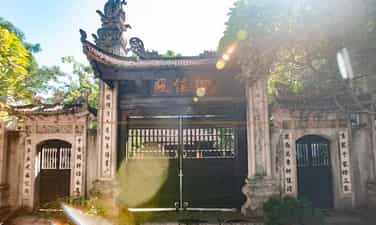
Communal House - Lieu Giai Temple
Lieu Giai Communal House - Temple Historical Relic Area is located in Lieu Giai ward, Ba Dinh district. Temple of Thanh Mau and Princess Ngoc Nuong. According to legends preserved at the temple, in Phan Son village, Bang Chau district, Nam Sach district, Hai Duong province, there is a family whose last name is Ly, whose name is Nghi, whose wife's name is Hoang, with a cultural tradition that has had members for three or four generations. be an official. Ly Nghi worked as an official of the Ministry of Rites during the reign of King Tran Nhan Tong. One hot day, she went to Bach Nhan lake to bathe. Suddenly, a white snake appeared and swam towards her and wrapped itself tightly around her. The following year, at the Dragon hour on March 21, Giap Thin, she gave birth to a baby girl, named Ngoc Nuong. The older she became, the more beautiful she became, more gentle and intelligent than others. At the age of 18, Ngoc Nuong went on a boat to watch the moon on the night of the 17th day of the 8th lunar month. When she arrived at Lieu Giai camp, she encountered a thunderstorm. At that time, a snake about 10 meters long appeared to take Ngoc Nuong back to the Water Kingdom. My parents were extremely compassionate and built a temple to worship Ngoc Nuong on the land next to Bach Nhan Lake, later called Dong Nuoc Lake. During Tran Anh Tong's reign, the Mongol invaders invaded our country. Ngoc Nuong plotted to help the king defeat the enemy in a major battle. The king then gave the villagers 100 mandarins to repair the temple and ordained the female scholar: "Eternal blood and food, Du Quoc Dong has not written, Female white tiger, Thuy Tinh Ton Linh princess, Ho second brother one death". During the dynasties of kings Vinh Khanh, Canh Hung, Chieu Thong, Minh Minh, Thieu Tri, Tu Duc, Duy Tan, and Khai Dinh, they all had the title: Thuy Tinh Princess of Superior Court. Lieu Giai Temple faces southwest. After many renovations, it now has the architectural art style of the Nguyen Dynasty. The temple is built in the shape of the letter "Cong", with Co pavilion, Cau pavilion, in the middle is the Thanh Mau temple, on the right side is the Mau Cuu Trung Thien pavilion. During the anti-French period in 1946, the colonialists suspected there were hidden revolutionary soldiers, so they fired mortars, causing destruction. The festival celebrates the transformation day of the Holy Mother Ngoc Nuong on the 17th day of the 8th lunar month, January 12th is the festival commemorating the transformation day of tutelary god Hoang Phuc Trung. Lieu Giai Temple - Communal House was decided by the Ministry of Culture and Information to recognize and rank as a national historical, artistic and architectural relic on December 27, 1990. Source: Electronic information portal of Ba Dinh district, Hanoi city.
Hanoi
4847 view
Rating : National monument

Mount Sua Temple
Mount Sua Temple is located on top of Mount Sua in the western area of Thang Long citadel of Thap Tam Trai land, now in Bach Thao Park, Ngoc Ha ward, Ba Dinh district. The temple worships Huyen Thien Hac De - the god who assisted Ly Thanh Tong in fighting the Champa invaders, fighting against foreign invaders, and protecting the independence and autonomy of the nation. The temple was built in the 19th century. According to the legend of Huu Tiep village, before the Ly dynasty, in Sua mountain area, Quang Duc district, Phung Thien district of Thang Long citadel, there was a famous chief named Ly Phuc, married to Hoang Thi Duc from the area. The couple has a rich family background, is tolerant in nature, cultivates virtue, and often takes care of the poor and destitute. There's nothing I don't try to do when it comes to helping people. The only thing is that the couple was three weeks pregnant and still had no children, so they immediately went to the One Pillar Pagoda to pray day and night with incense lamps without end. One day, in the dark temple, suddenly I saw a halo of light shining brightly in one corner, shaped like a torch. The couple dreamed of a white-haired and bearded mandarin holding a baby boy and giving it to his grandparents, saying that this child was the third child of the Jade Emperor, and because he was guilty of breaking the jade cup in heaven, he had to be born. earthly. Now seeing that the couple's family is blessed, Hoang Thien has decided to reincarnate as your child. Saying this, the couple hugged the baby and saw the mandarin fly into the sky and disappear. When they woke up, they knew it was a good dream. Three days later, the wife knew she was pregnant, and since then she has been vegetarian. On January 19, the year of the Tiger, she gave birth to a baby with a handsome face like the one in her dream, with dark skin and an extraordinary appearance. The boy had honey-colored skin. When he was three years old, his family had a ceremony to name him Hac Cong. In that same year, unfortunately, his mother passed away. When he was eight years old, Hac Cong accidentally slipped and fell from a tree and transformed on November 21. The villagers took pity on those who died young, so they set up a shrine on the mountain, and people worshiped in large numbers because their prayers would be fulfilled. When King Ly Thanh Tong led his army to defeat the Champa invaders on the southern border, he dreamed at night that there was a black-skinned boy asking to come and help the King save the country. When entering the battle, the King saw dark clouds covering the sky, covering the enemy's eyes. The great victory contributed to keeping Dai Viet peaceful. The king thought that the dream corresponded to the dream of meeting an angel, so he gave the Han Xuan page 100 francs of money, rebuilt the temple on Sua mountain, and appointed the god Huyen Thien Hac De as the Supreme God of Happiness, everywhere in the Huong region. smoke of worship. The Sua Mountain Festival is held every year on his birthday - January 19 of the lunar calendar. In 2015, Nui Sua Temple was ranked as a historical, cultural, architectural and artistic relic. Source: Electronic information portal of Ba Dinh district, Hanoi city.
Hanoi
4725 view
Rating : National monument