Relic point Vietnam
Việt Nam
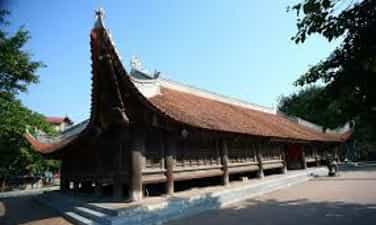
Ha Thai Communal House
The architectural and artistic relic of Ha Thai communal house, Duyen Thai commune, Thuong Tin district, Hanoi is one of 15 monuments in the country ranked as a national monument by the Ministry of Culture, Sports and Tourism in the first phase of 2017. . The Ministry of Culture, Sports and Tourism has just issued decision No. 824/QD- BVHTTDL recognizing the architectural and artistic relic of Ha Thai communal house, Duyen Hai commune, Thuong Tin, Hanoi as a national monument. Ha Thai communal house, Duyen Thai commune, Thuong Tin district has bold architectural features of the Northern Delta with banyan trees, water wharf, and communal house yard. This is the place to worship the two village tutelary gods, the military mandarin of Le Bui Si Luong's reign and Mrs. Dinh Thi Trach (also known as Mrs. Lay) who sacrificed her life to let the villagers escape the disaster to pay tribute. The genealogy records that: previously this land was desolate, overgrown with trees and sparsely populated. At that time, there was a ferocious tiger in the forest, called the wolf tiger by the villagers, who often came to capture people and livestock to eat. Unable to capture this mature tiger, the villagers had to pay tribute to the tiger every year on November 10. In the village, there was Mrs. Lay, a woman without a husband or children. Understanding the pain and loss of the villagers, she voluntarily offered herself to the tiger with the hope that this tribute would stop. Her prayer before heaven and earth seemed sacred and fulfilled, because since November 10 of that year when the tiger came to pounce on Ms. Oi and took her away, people have no longer seen the tiger return to harass her. To commemorate her merits, the people built a shrine. She was later honored as the village's tutelary god and that shrine became Ha Thai village communal house and took November 10 every year as the traditional village festival. Ha Thai village communal house is also related to the military mandarin during the reign of Le Bui Si Luong (1544-1597), he held the position of Grand Master and Commander of the Palace. As a man of excellent literary and military intelligence, he had great contributions in defending Le and destroying Mac. When he came to Ha Thai, realizing that this land had the power of dragons worshiping tigers, he chose Ha Thai to establish a family home and teach people to start a business, so after his death, he was also honored as the village's Tutelary God. Ha Thai village festival takes place from the 9th to the 11th of the 11th lunar month every year and attracts a large number of tourists from all over. Source Hanoi Department of Culture and Sports.
Hanoi
5828 view
Rating : National monument
DINH DINH BAN
For a long time, in the subconscious of every Vietnamese person, whenever talking about villages, no one forgets to mention the village communal house, because it is the crystallization of intelligence, effort, prosperity of the village, and pride. of the village, where large and small activities of the whole village are witnessed and taken place... is where boys and girls confide and express their feelings. "Go to the communal house and take off your hat to see how much the communal house loves you." 20km north of Hanoi, Dinh Bang village communal house (Dinh Bang communal house) belongs to Tu Son town, Bac Ninh (formerly Huong Co Phap). This sacred land is the hometown of Ly Cong Uan (also known as Ly Thai To), who founded the Ly dynasty and founded the capital Thang Long (in 1010). Dinh Bang has a cluster of cultural relics, especially relics of the Ly Dynasty, forming a unique memorial area, with historical resonance, of national significance, with all: Communal house, Temple, Pagoda, Mausoleum, Tam .... characteristic of Vietnamese village culture. Dinh Bang village communal house is the most famous ancient communal house in Kinh Bac, built in 1700 and completed in 1736, thanks to the efforts of mandarin Nguyen Thac Luong, a Dinh Bang native, and his capable wife Nguyen. Thi Nguyen, from Thanh Hoa, bought ironwood for the villagers to build, and the communal house was able to last forever (now the ancient house of Mr. Nguyen Thac Luong, which was built on a trial basis before building Dinh Bang Communal House, still exists and is preserved). . Dinh Bang Communal House is a place of cultural and religious convergence. In front of the communal house, there were 3 natural gods: Cao Son Dai Vuong (God of Earth), Thuy Ba Dai Vuong (God of Water) and Bach Le Dai Vuong (God of Cultivation). The gods are worshiped by agricultural residents, praying for good weather and good crops. Every year in the 12th lunar month, people hold festivals to pray for a good harvest year. Also at the village communal house, people also worship the Six Patriarchs (six people who were instrumental in reestablishing the village in the 15th century. Later, when Ly Bat De temple was destroyed by the French colonialists in 1948, the people received the tablets of eight kings of the dynasty. Ly returned to worship at Dinh Bang communal house. Dinh Bang communal house is a unique image of national architecture, preserving the integrity of the ethnic stilt house style applied to village communal house architecture. Looking back at the history from the beginning of the nation's founding, the image of a stilt house is still printed on Dong Son bronze drums - a creation of our ancestors in the field of residential architecture. It is impossible to compare the massive communal house after several decades with the stilt houses on Dong Son bronze drums, but it must be recognized that both of these models have a unified style, inheriting and developing architectural traditions. established from the beginning of the nation's founding. Dinh Bang Communal House is a large-scale architectural work, originally there were three gates, the middle door was built with two tall lantern-style brick pillars, on both sides there were rolling archways with fake roofs, behind was a large yard, on both sides were two ranges left vu and right vu. Like all other communal houses, the most important work of Dinh Bang Communal House in terms of artistic architecture is the Bai Duong (Dai Dinh) building. The communal house's Bai Duong is rectangular, 20m long, 14m wide, divided into seven compartments, two wings located on a high platform of green stone with two steps. The massive appearance of the communal house is shown through the wide roof that accounts for 2/3 of the overall height and 6 rows of about 60 large and small iron columns with diameters from 0.55 - 0.65 meters placed on square green rocks. Vac. When entering the communal house, you are welcomed and fascinated by all the quintessence of 18th century carving art. The first attraction for all visitors is the large Hammock door in the middle palace of the outer hall. The Hammock painting covers a large area, extending from Thuong Luong to Lower beam and opens across an entire room. The Hammock Door is carved with sophisticated embossments on all 7 layers and 9 panels of the four sacred and precious themes.... Above the Hammock door is a wooden ceiling covering the roof of the nave with a decorative image of a The Phoenix bird spread its wings to the surrounding clouds. Decorative patterns on other architectural structures are very diverse, intricately carved, elaborate, and harmonious. The structure of the communal house's frame is quite solid, tied together with all kinds of mortises in the "Upper third, lower fourth" way. Each carving in the communal house is a unique and famous work. The more you admire, the more fascinated you become: The painting "Eight Horses Flying" shows the liveliness, the freedom and tranquility of this land through the image and posture of each horse. The two-piece statue stands in adoration, male and female, each with its own look. The exquisite dragon carvings: Dragon Cloud Congress, Five Dragons Painting Pearls, Six Dragons on Heaven... each painting, each depicting many things. For more than 200 years since its inception, up to now Dinh Bang communal house has entered the emotional life and is the pride of the Northern people as well as the people of the country: "The first is Dong Khang communal house Second is Dinh Bang Communal House, glorious Diem Communal House" Dong Khang Communal House today no longer exists, what we can still admire today is Dinh Bang Village Communal House. With the beauty of architectural scale, carving art, decorative art and the more precious Dinh Bang communal house, it gives visitors a complete view of the village communal house architecture built in the first half of the 18th century. while other communal houses can no longer maintain their intact appearance. SOURCE: BAC NINH DEPARTMENT OF CULTURE, SPORTS AND TOURISM
Bac Ninh
3782 view
Rating : National Monument
PHA LAI Pagoda
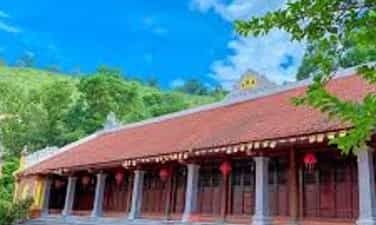
Pha Lai Pagoda is currently located on top of Pha Lai mountain in Duc Long commune, Que Vo town, Bac Ninh province. This is a cultural, religious and belief project that was built a long time ago and has been associated throughout the history of formation and development of the locality. Pha Lai Pagoda was built a long time ago. According to ancient documents, around the Thai Ninh era (1075 - 1075) during the reign of King Ly Nhan Tong, Pha Lai pagoda was built by Zen monks Giac Hai (from Gia Vinh, Thanh Hoa) and Duong Khong Lo. built on a large scale. During this period, the pagoda had a scale of hundreds of compartments, including works: Buddha Pagoda, Ho Pagoda, Am Pagoda, Tam Quan Inner Gate, Tam Quan Outer Gate, Kinh Thien Palace, Bell Tower, Drum Tower, Monk Room... During the Tran Dynasty, the king came here many times to admire the scenery, write poetry and allowed the pagoda to undergo major renovations. The scale includes: Kinh Thien Palace, Four large towers, Bell Tower, Drum Tower, Three Jewels, Temple of Saints Duong Khong Lo and Khong Minh Khong, on both sides are two corridors. At the foot of the mountain, in front of Kinh Thien Palace is the Lower Temple and Dragon Pond, on the east side of the mountain is Co Am Pagoda. Also during this time, the pagoda was renamed "Chuc Thanh Pagoda", the pagoda was recorded in history books as follows: "Since 1407, when our country had the Ming invaders, Chuc Thanh Pagoda was destroyed by the Ming invaders. , they took all the bronze bells, bronze tops... to make weapons, guns and bullets. They also took other gas objects." When Le Loi raised the flag of rebellion and defeated the Ming invaders, a number of other Buddhist objects were also returned to the pagoda. During the reign of Le Trung Hung, Pha Lai pagoda continued to be renovated and embellished. The people, the pagoda, the princes and noblemen donated money and hired green stone carvers to rebuild the Kinh Thien, Tam Bao, Temple, and Am palaces. , Tower... At the same time, a brick and tile kiln was opened on the north side of the hill of the pagoda to provide bricks and tiles for construction projects and a bronze kiln was opened to cast necessary offerings. After each temple repair, the pagoda sets up merit stele and posthumous stele to save for future generations. Over the years from the Le Dynasty to the Nguyen Dynasty, Pha Lai Pagoda continued to repair and offer Buddhist objects such as: Amulets, thrones, incense burners, dragon tablets, fruits, tablets, bells... In 1884, the French colonialists occupied Pha Lai mountain. They destroyed most of the land and tried to set up a post here but failed and had to move to Phao Son to set up a post. After that, people renovated the pagoda to include: 8 compartments worshiping Khong Minh Khong and Duong Khong Lo, 3 compartments for worshiping, 5 compartments in the front called Co Am pagoda worshiping Buddha, 3 compartments Nghe worshiping the Tutelary God and two wooden towers. stone. In 1947, the French invaded Pha Lai again, occupied and destroyed the above works, leaving only a few worship objects. In 1957, Pha Lai people continued to restore and rebuild the works including: 3 Pre-Teacher spaces, 2 Rear Palace spaces, 3 pagoda spaces. Many relics were gathered and returned to their locations, such as the collapsed stone of Kinh Thien Palace, the Adoring Dragon, crocodiles, saint statues, stone stele... In 1985, people continued to repair and embellish the pagoda. In 2014, the doors were replaced with ironwood. In 2018, the entire monument was restored. Currently, Tam Bao Pagoda Pha Lai has a Dinh-shaped architectural plan including: The front hall has 3 compartments, 2 wings and 2 shelves, the architecture is in the style of 4 curved roofs. The frame is made of reinforced concrete, the structure of the roof is "stack of beams and gongs", the middle compartment is of the "cob" style, and the side compartments are of "stack of beams". The upper hall has 2 compartments, the structure is like "The upper house is stacked with beams and gongs, the lower side is stacked with beams and seven porches". In the relic space, there is also the temple of Saint Khong Minh Khong, consisting of 3 architectural buildings: Front temple with 4 compartments, Middle temple with 4 compartments, Rear temple with 2 compartments. In addition, in the relic space there is also a 3-compartment building, the middle of which holds the altar to worship the God Emperor. Through historical changes, Pha Lai Pagoda still preserves a system of extremely precious documents and antiques, with unique artistic value and containing a lot of information about the nation's history, typically: Stele "Pha Lai tu bi" Le Dynasty; the miraculous miracle of 1938; 3 leaders conferred the reigns Dong Khanh 2 (1887), Duy Tan 3 (1909), Khai Dinh 9 (1924); Artifacts of the Nguyen Dynasty include: dragon communal house; octagon set; Statues of the Father's body, the Holy Mother's body of Minh Khong, the statue of the Three Worlds, and the statue of Avalokiteśvara. Pha Lai Pagoda is a place to worship Buddha, Mother Goddess... This place also worships Zen Master Khong Minh Khong and his father and mother. Zen Master Nguyen Minh Khong (1073 - 1141), from Dam Xa village, Gia Vien district, Ninh Binh province. He was a talented Zen master, with many contributions to the political life and cultural ideology of Dai Viet during the Ly dynasty. He was appointed National Teacher by the king, the highest position in the Ly dynasty monk system. . In folk consciousness, Nguyen Minh Khong is a man with extraordinary strength, able to move clouds and wind, move mountains, fill seas... and is one of the very few historical figures who have been canonized as saints by the people. In addition, he is also considered the founder of the medical and pharmaceutical industry and the founder of Vietnamese bronze casting. From ancient times until now, Pha Lai pagoda has always been a place to preserve and maintain the spiritual and cultural activities and beliefs of the village community. Every year, the relic has main event days such as: On March 10, a spring festival takes place to commemorate the day Duong Khong Lo returned to fish and practice at Co Am pagoda; The temple festival takes place from August 12 to 15 (lunar calendar). Especially during the festival, there is a ritual of carrying water from Vuc Chuong to the temple - legend has it that the temple bell of the Ly dynasty sank there. Activities during the special days attracted a large number of people and visitors from all over to attend the festival, contributing to tightening the solidarity of village communities and enriching the country's cultural traditions. Pha Lai Pagoda, Duc Long commune, Que Vo town has been ranked as a national relic by the State, Decision No. 100 VH/QD dated January 21, 1989. SOURCE: QUE VO TOWN ELECTRONIC INFORMATION PORTAL
Bac Ninh
3798 view
Rating : National Monument

DIEM VILLAGE COMMUNAL
The hammock door of Diem village communal house in Hoa Long commune, Bac Ninh city, Bac Ninh province is more than 300 years old, is a unique masterpiece of wood carving art, representing the pinnacle of wood carving art. Combined with red lacquer and gilding during the Le Trung Hung period, it has just been recognized as a National Treasure. Diem communal house, also known as Viem Xa communal house, formerly belonged to Cham Khe canton, Yen Phong district, now belongs to Viem Xa village, Hoa Long commune, Bac Ninh city, Bac Ninh province. Completed in the 13th Chinh Hoa era (1692), this is one of the "first Kinh Bac" communal houses. Diem communal house currently preserves many artifacts of high artistic value, among which the hammock door of Diem communal house is a unique masterpiece of wood carving art. Accordingly, each floor is decorated with different themes, divided into separate floors and sections, but all 5 floors have a harmonious, flexible connection, bringing beauty to life, promoting human life, working and spirit. The god of democracy as well as the desire for prosperity, the desire for human proliferation in life. The top layer of the attic has a station shaped like the sun and clouds. The next part is delicately decorated with the highlight being four statues of fairies lifting the clouds and looking down. Mr. Nguyen Kim Vet, Head of Diem Communal House, said: "The beauty of Diem Communal House is the "unique" Hammock Door painting. This Hammock Door painting runs all the way from Thuong Luong at a height of 7m down to the communal house floor. consists of four large floors arranged in descending order until the main column inside. Each floor is delicately carved with many artistic shapes, symbols of the four sacred animals (dragon, lychee, tortoise, phoenix) and themes. full of art". The carved layer in the center of the hammock door is delicately carved with symmetrical images, demonstrating the skills of Kinh Bac sculptors at that time. The altar of Diem village communal house is carved very elaborately and vividly, creating a monumental but extremely delicate work of art. On one side are elephants and mahouts, on the other side are images of horses and people. In 1964, Diem communal house was recognized by the Ministry of Culture as an architectural and artistic relic and in January 2020, the hammock door of Diem village communal house was recognized as a National Treasure. Located in the ancient and solemn scenic complex of an ancient village on the banks of the Nhu Nguyet River in the land of Quan Ho's ancestors, the national architectural and artistic relic of Diem family along with valuable antiques and treasures has been converging and crystallizing the typical cultural beauty of the thousand-year-old cultural land of Bac Ninh - Kinh Bac and is one of the treasures of precious cultural and spiritual heritage of the homeland and the nation. Source: VOV electronic newspaper
Bac Ninh
3779 view
Rating : National Monument
LINH Ung Pagoda
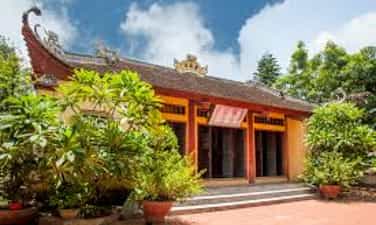
Linh Ung Pagoda (Ngoc Kham - Gia Dong - Thuan Thanh) located on Road 282 in Pho Kham area is an important historical site in the Dau region since ancient times with the song: "The seventh day of the Kham festival/The eighth day of the Dau festival/Mong festival". Wherever you go, you always go to the Giong festival." This ancient pagoda, after hundreds of years of existence, no longer has its original architecture, but still retains its treasures, which are three stone statues and the Linh Ung restoration stele from the epigrams inscribed in the year of Hoang Dinh. 13 (1613). The large stone stele placed on the turtle's back measures 196 x 129 x 26 (cm) with double-sided writing revealing many valuable sources of information about the history of the temple. The pagoda was built during the Tran Dynasty in accordance with the legend "Besides the Buddha next to the pedestal" as follows: Statues of three Buddhas were transported from India. The boat carrying the statue went ahead along the Thien Duc River and landed at Bao Kham wharf (old name of Ngoc Kham village) on the south bank. The boat carrying the platform later landed at Long Kham wharf (Tien Du district) on the north bank. Long Kham people immediately sent a delegation to Bao Kham to demand the statue. While the two sides have yet to negotiate, the Buddha's spirit shows that wherever the statue has settled, the pagoda will be built there. So the people of Bao Kham built a pagoda where there were three stone statues, named Linh Ung Tu. At the beginning of Le Trung Hung's reign, Thai Loc Marquis Le Dinh Chat, the special adjutant of the Fatherland, General Kim Tu Vinh Loc, from Bai Thuong (Thanh Hoa), spent money on his house to buy wood to restore the pagoda, including building a bell tower and erecting a house. stone stele, repairing three treasures, corridors, burning incense, front hall, three gates, Buddha statue bowl and buying a field of 1 sao 3 meters to offer to the pagoda. Construction started on May 11, Nham Ty (1612), completed on November 19 of the same year. Joining in the meritorious service with Marquis Thai Loc Le Dinh Chat were many high-ranking mandarins such as Duke Thanh Trinh Trang (at this time not yet crowned lord), Hoa Duong Marquis Vuong Chau (from Binh Ngo neighboring Bao Kham, later promoted to the throne). The duke, when he died, was crowned king for the people to worship). The three stone statues are almost the same size, 145 cm high. Although there is a legend about the Buddha and the pedestal, in reality the statue still has a lotus-shaped stone pedestal, the middle pedestal is 112 cm high, the two pedestals on both sides are 105 cm high. The statue is in a meditating position, looking healthy. The two faces on both sides are slightly bowed, the middle face is slightly turned up. All three statues have curly hair, so people often call them hibiscus snails. In terms of clothing, all three pho wear ao dai with the chest part wide open and decorated with hyacinth strings with flowers, leaves, and tassels, making the statue feel lively when looking at the statue. The statue's pedestal is decorated with lotus flowers and motifs of dragons, clouds, chrysanthemum strings... bearing the style of the Tran dynasty to prove that the pagoda dates back to the Tran dynasty, meaning that since there was a statue, there was a pagoda. Through some other artifacts, Linh Ung Pagoda has been repaired many times. By 1952, the pagoda was completely destroyed, the stone statues had no roof, and one statue even had its head blown into the water of nearby Thuan Thanh high school. However, with the unique value of the three stone statues, in 1981 the State ranked them as historical and artistic relics. After that, local people rebuilt the pagoda and gradually perfected it into the current scenic spot. Source: Bac Ninh Online Newspaper
Bac Ninh
3507 view
Rating : National Monument

DAM Pagoda
(BNP) – Dam Pagoda is an ancient pagoda located on Dam mountain (Nam Son ward, Bac Ninh city, Bac Ninh province). The pagoda worships Buddha and Nguyen Phi Y Lan (people call her Tam, so it is also called Ba Tam pagoda). The pagoda also has many names: Dam Pagoda, Lam Son, "Canh Long Dong Khanh", "Than Quang Tu". History records and legends say that the pagoda was personally chosen by Nguyen Phi Ỷ Lan and built from the winter of 1086 to 1094, when it was completed and is considered "the largest Buddhist center of Dai Viet". This is an important project, so King Ly Nhan Tong took great care of it and when the pagoda was completed, he gave it the name "Canh Long Dong Khanh". Over a long history, the pagoda has been restored and embellished many times. During the resistance war against the French, the pagoda was demolished. After peace was restored, in 1986, local people built 3 small pagodas on the old ground to worship Buddha. Inheriting archaeological results, from 2015 to present, as well as consulting with Among experts and scientists, Bac Ninh province has carried out the master planning and construction of the "Dam Mountain cultural and ecological relic area". Dam Pagoda was restored and embellished, with a large scale, spacious and perfect decoration, along with a system of statues and worshiping objects at the pagoda of great artistic and aesthetic value, representing the artistic characteristics of each period. . Currently, Tam Bao building has an architectural structure of the letter Cong (I); including works such as: Front Street, Burning Incense and Thuong Dien. The entire structure is made of massive, strong ironwood. The front hall has 7 compartments, 2 wings and 4 curved roofs; The roof structure is "stacked with a beam for the price of a gong", because the armpit is "stacked with a beam for the price of a gong". Connecting the front hall and the upper hall are 3 incense burning spaces. The upper palace has 3 compartments, 2 wings and 4 curved roofs, with a structure similar to the Tien Duong building, with a porch system running around the main building. The new pagoda items have a massive architectural scale, built entirely of ironwood, painted, and exquisitely decorated using traditional techniques. The table door system opens all 7 compartments, 2 compartments are built with brick walls and doors in the style of "Tho". In addition, the pagoda also has the Patriarch's House and the Mother's House built on opposite sides, each with 3 compartments, 2 wings, 4 curved roofs and a load-bearing wooden frame with similar structures. Currently, the pagoda still preserves the stone pillar of Dam pagoda dating from the 11th century, which has been recognized as a national treasure with historical and aesthetic value, attracting a large number of scientific researchers to study. , learn about. In the pagoda, there are also new worship statues and worship objects created in the 21st century such as: 03 statues of Tam The, a set of statues of Dida Tam Ton, a set of Hoa Nghiem Tam Thanh statues, 01 statue of the Jade Emperor, 01 statue of Maitreya, 01 Statue of Avalokiteshvara, statue of Dharma Protector, statue of Monsignor, statue of Thanh Hien, statue of the Eight Sets of Diamonds, statue of Ten Dien Diem Kings, statue of Mrs. Nguyen Phi Ỷ Lan, statue of King Ly Nhan Tong, Hoang Phi, parallel sentences and worship objects on one's own….. The pagoda is located halfway east - south of Dam mountain, overlooking the field in front of Con Rua mountain, in the distance are Tao Khe and Thien Duc rivers. In front of the pagoda there is a ditch running from the foot of the mountain to the river bank called Con Ten stream. Like most pagodas in Vietnamese villages, Dam Pagoda is a religious construction built a long time ago to worship Buddha, Mother Goddesses, and monks. In addition, the pagoda worships Mrs. Nguyen Phi Ỷ Lan (who was instrumental in building the pagoda in the Ly Dynasty), and is also the center of Buddhist religious activities of the people. The pagoda festival takes place every year on September 8 (lunar calendar). The pagoda and all the people prepare offerings to Buddha to pray for peace, health and luck. In addition, on days such as: Buddha's Birthday, Vu Lan Festival, full moon week, first day, traditional festivals, Lunar New Year, Buddhists, monks and guests from all over come to attend the pagoda festival. Dam Pagoda was ranked as a cultural and historical relic by the Ministry of Culture and Information - Decision No. 29 -VH/QD dated January 13, 1964. Source: BAC NINH ELECTRONIC INFORMATION PORTAL
Bac Ninh
3698 view
Rating : National Monument
PEPPER Pagoda
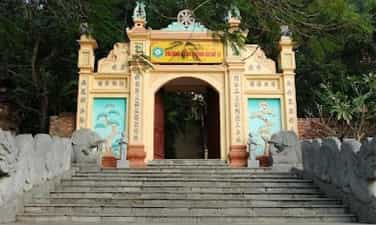
Tieu Pagoda has the literal name (Thien Tam Tu) or also known as Tieu Son Tu, located halfway up Tieu Mountain, in Tuong Giang commune - Tu Son town - Bac Ninh province. The place preserves valuable cultural heritage of the Ly dynasty and attracts a large number of tourists from all over to visit and learn about history. According to historical records, Tieu pagoda is where Ly Cong Uan was reincarnated and was raised and educated by National Teacher Ly Van Hanh, who later became a wise king who was instrumental in founding the Ly dynasty and Dai Viet civilization. Thai To, surnamed Nguyen (Ly), from Co Phap Lo Bac Giang province; His mother was Pham Thi. On February 12, the 5th year of the Thai Binh era (974), the king was born. When he was a child, the king was intelligent, virtuous, and generous. He studied at Luc To Pagoda. Monk Van Hanh saw him with surprise and said: This is an extraordinary person who, when he grows up, will definitely be able to save the country, calm the people, and become a wise man. master of the world. Based on history books and folk legends, Tieu Pagoda can be considered to date back to the Early Le Dynasty. By the Ly dynasty, it was one of the major Buddhist centers, where the abbot of Zen Master Ly Van Hanh, who was instrumental in raising Ly Cong Uan, grew up. Tieu Pagoda has many works such as: Cam Tuyen Institute, Tien Linh Floor, Front Hall, Upper Palace, Back Hall... Besides, to the Southeast, there is Truong Lieu Pagoda. During the reign of Le Trung Hung, Tieu Pagoda was restored and expanded on a large scale in the style of a hundred-room pagoda, so it was also called "hundred-room" pagoda. During the Nguyen Dynasty, King Bao Dai's reign, the pagoda continued to be restored and recorded on the first sentence of the Three Jewels court. During the years of resistance against the US, the enemy bombed and destroyed Tieu Pagoda, leaving only a few Buddha statues and worshiping objects remaining. Truong Lieu Pagoda was also destroyed, leaving only three statues of Tam The, a statue of God and a bronze bell named "Truong Lieu Tu Chung" cast in the year Thieu reigned 3 (1843). The current architecture of Tieu Pagoda is the architecture of restorations and embellishments. The pagoda includes buildings: Tam Bao, Patriarch's house, guest house, bell tower and auxiliary works. The Three Jewels Palace is built with a wooden frame, carved with stylized floral decorations. The Patriarch's House has a roof in the style of stacking matches. At the Patriarch's house, there is an ancient statue of Zen Master Van Hanh and a throne tablet clearly stating "Ly Dynasty entered into Prime Minister Ly Van Hanh's divine position". In addition to the main works, Tieu Pagoda also has a number of auxiliary works such as guest houses, monks' houses... In particular, Tieu Pagoda also preserves 14 ancient towers of famous monks who once lived here. In addition, on the top of Tieu Mountain there is also a statue of Zen Master Ly Van Hanh about 5 meters high. Tieu Pagoda still preserves a number of valuable antiques from the Le and Nguyen dynasties, reflecting the Ly dynasties as follows: 15 beautifully carved wooden Buddha statues, 01 statue of Zen Master Ly Van Hanh, 01 stone stele with the name "Ly Gia Linh Thach" dated "Canh Thinh Nguyen Nien" (1793) records the background and merits of Ly Cong Uan, 01 bronze bell of Truong Lieu pagoda, dated Thieu Tri reign "(1843), 01 stone stele named "Cung Dien Bi Ky" dated Bao Dai 3 (1923) and many parallel sentences, poems, oracles... Visitors to the Tieu pagoda relic area (Thien Tam pagoda) are looking for vivid stories about the childhood of Ly Cong Uan, the wise king who publicly founded the Ly dynasty and the Dai Viet nation. About Tieu Pagoda is about an ancient land with many mysteries associated with the history and culture of the land of Bac Ninh - Kinh Bac and of the Vietnamese people. SOURCE ELECTRONIC INFORMATION PORTAL OF BAC NINH PROVINCE
Bac Ninh
3615 view
Rating : National Monument

LOWER DINH, UPPER DINH THUONG
Lower communal house and Upper communal house belong to Tu Nhien commune, Thuong Tin district, Hanoi city. According to legend, the remaining divine genealogies and ordinations, the two communal houses worship Chu Dong Tu (one of the four immortals of the Vietnamese people) and his two wives, Princess Tien Dung and Hong Van. After Princess Tien Dung married Chu Dong Tu, the two learned magic to cure diseases and save people, and together with the villagers, renovated and expanded the land, planted crops, and raised livestock to establish a prosperous village. When King Hung heard the news, he was angry and ordered his soldiers to take him back to the court to punish him. Knowing that news, Chu Dong Tu and Tien Dung magically flew back to heaven, carrying with them Hong Van of Tu Nhien land. The people were grateful and built a temple. The Upper Communal House and the Lower Communal House are two parallel architectural works, with similar dates, built in the Later Le Dynasty; embellished and renovated to make the Harem Palace at the end of the Nguyen Dynasty. The difference is that the Thuong Dai Pagoda does not have the legend "Mother Dragon" but has the legend "Doc Dragon". The Upper Communal House has 69 ordinations, 3 more than the Lower Communal House. Tu Nhien village's festival takes place on the 1st day of the 4th month (lunar calendar). On this day, the villagers organize a Long Ngu procession including 07 palanquins of three communal houses: Upper communal house, Lower communal house, Thuy tribe communal house to recreate the love story thousands of years ago of Chu Dong Tu and Tien Dung. Both communal houses are ranked as national relics: Ha Communal House was ranked in 1988, Thuong Communal House was ranked in 2002. Source Electronic information portal of Thuong Tin district, Hanoi city.
Hanoi
5209 view
Rating : National monument

Relics of communal houses, temples, and Dao Xa pagoda.
Coming to Dao Xa village, Thang Loi commune, Thuong Tin district, visitors will admire the ancient and unique features of the cluster of communal house and pagoda relics with sophisticated and unique features in architecture, and be immersed in Green, clean, beautiful space of a peaceful village with talented, friendly, hospitable people... Thang Loi commune, Thuong Tin district, is famous for Dao Xa embroidery village with products of sophisticated artistic quality. This place is also a destination for many tourists from near and far because of a unique architectural complex including the East communal house, the Western communal house, and Dao Xa pagoda. All three of these relics were ranked national historical and cultural relics by the Ministry of Culture, Sports and Tourism in 2000. Dao Xa possesses a special feature that few other localities have: in one village there are two communal houses adjacent to each other. The two communal houses are distinguished by their rustic and rustic names: Eastern communal house and Western communal house. Tay Dao Xa Communal House was originally a temple to worship Chu Dong Tu (one of the Four Immortals of the Vietnamese people) and Princess Tien Dung. Legend has it that Chu Dong Tu and Tien Dung once passed by Dao Xa village and saw the charming scenery and stopped to rest. To commemorate the Saint and the Princess, people built a temple. The temple was built during the early Chinh Hoa period (1680-1705), the reign of King Le Hy Tong, and has architecture in the style of the word "two". Later, the temple became a village communal house. In front of the Western communal house, there is a pair of stone crocodiles - popular mascots of the Ly - Tran dynasties, still intact. The great pavilion has 5 steps, the roof is covered with fish-scale tiles, the top is embossed with the image of two dragons painting pearls, and there are roofs on both sides. The distance between the main altar and the upper hall is about 1m, on both sides the gate is decorated with an open holy mat. On both sides of the great altar wall are two sunken stone steles recording the restoration event of the communal house. The great altar has two great Chinese characters: "Nac Doc Chung Linh" and "Higher Class Spiritual Words" praising the merits of Saint Chu Dong Tu. The system of wooden pillars is placed on stone pedestals, the seven heads are carved with exquisite dragon shapes and the mascots are carved separately on the beam system. Dong Dao Xa Communal House was formerly Palm Leaf Temple, built in the early 20th century in a "tam"-shaped continuous architectural style. The three folds of the house gradually increase from the outside to the inside. The altar house has 4 rows of wooden pillars placed on stone pillars in a collared style. On the left is a stone dog lying with its head facing out. The temple worships the father of embroidery, Le Cong Hanh (1606-1661), originally from Quat Dong village (now Quat Dong commune, Thuong Tin district). Thanks to its great spiritual value, the temple was converted into a communal house and called the Eastern communal house to distinguish it from the Western communal house worshiping Chu Dong Tu - Tien Dung. The Eastern communal house is smaller in scale than the Western communal house. Dong Dao Xa communal house is where the death anniversary of embroidery master Le Cong Hanh is held on June 12 (lunar calendar) every year. Located between the two communal houses is Dao Xa pagoda (Van La pagoda), small in scale, with 36 statues arranged in layers from the altar to the upper palace. In front of the pagoda's yard, there is an incense tree carved with Chinese characters: "Vinh Khanh, the year of the year at At Dau, five moons, five moons and five moons" (built in 1729, during the reign of King Le Duy Phuong). Dao Xa is one of the few villages that still retains the spiritual architecture of the communal house - temple - pagoda and the system of courtyards, gates, ponds and ancient trees. The three gates are the common gate for the entire complex and are sculpted in detail. Over time, the three gates have acquired an ancient and majestic beauty. Each gate has 2 floors, a bell tower, and a reception floor. The main gate has 4 Chinese characters inscribed on it "Nhat edict, moonlight forest", facing southwest, 15m high, in front of it is a large yard creating a majestic and majestic look when viewed from afar. Dao Xa village festival is held on February 12 (lunar calendar). Every 5 years, there is a ceremony to bathe Thanh Chu Dong Tu and Princess Tien Dung with water taken from Da Trach lagoon (Hung Yen province). With great historical values, in 2000, the Eastern communal house, Western communal house and Dao Xa pagoda were ranked national historical and cultural relics by the Ministry of Culture, Sports and Tourism. In 2009, Dao Xa village was recognized by the Hanoi People's Committee as a Traditional Craft Village. Dao Xa is chosen by many tourists from near and far as a destination in their spiritual cultural tourism journey. Coming to Dao Xa, visitors will admire the ancient and unique features of the temple relic cluster with sophisticated and unique features in architecture, and be immersed in the green, clean and beautiful space of the village. still retains the characteristics of the Northern Delta countryside. Not only that, if you have time, visitors will have more wonderful experiences at Dao Xa embroidery village to understand more about this land and people. Source Hanoi Department of Culture and Sports.
Hanoi
5702 view
Rating : National monument

TO THE TEMPLE OF KINH DUONG VUONG
Every year, every Tet holiday and spring, thousands of "Lac descendants" from all over the region come to the temple relics and tombs of Kinh Duong Vuong, Lac Long Quan, Au Co, in A Lu village. , Dai Dong Thanh commune, Thuan Thanh district, to pay tribute and worship the ancestors of the nation who openly opened the country. A Lu is an ancient village located close to the southern bank of the Duong River. Legend has it that it is the convergence land of the "Four Spirits" with 99 ponds and 99 humps, considered as the Dragon, the Ly, the Quy, and the Phuong, the only place where Tombs and temples of Kinh Duong Vuong, Lac Long Quan, and Au Co are the ancestors who were instrumental in opening the country. Kinh Duong Vuong's tomb is located on a wide open alluvial ground close to the southern bank of the Duong River and is bustling with ancient forests surrounding it. In the past, two ancient temples in the west of A Lu village worshiped Kinh Duong Vuong, Lac Long Quan, Au Co (Upper Temple worshiped Kinh Duong Vuong, Ha Temple worshiped Lac Long Quan and Au Co), with large architectural scales. large, decorated with splendid "four sacred animals and four precious" decorations. To the east of Kinh Duong Vuong's tomb, there was also a pagoda with the literal name "Dong Linh Bat Nha Tu" worshiping the "Holy Mother Ancestors" namely Vu Tien, Than Long and Au Co. The ancestor Kinh Duong Vuong is also worshiped as the Thanh Hoang of A Lu village. The ancient communal house in the east of the village was built on a large scale, consisting of 2 buildings: the 7-compartment front hall and the 5-compartment main hall, with a splendid wooden frame carved with "four scriptures and four precious rooms". . The system of divine genealogy and ordaining of communal houses and temples clearly shows that the people worshiped are Kinh Duong Vuong, Lac Long Quan and Au Co, who are known for their achievements in mountain and water. In 1949-1952, the French invaders came to A Lu village, set up posts here, and destroyed all temples and pagodas. The villagers were able to save a number of precious ancient worship objects such as: thrones, palanquins, ordinations... of temple and communal house. In 1971, the people of A Lu village restored Kinh Duong Vuong Tomb. In 2000, a communal temple worshiping ancestors was restored in the traditional style. The extremely valuable thing about the relic complex is that it still preserves a treasure trove of tangible and intangible cultural heritage such as: divine genealogy, ordination, stone stele, horizontal panels, couplets, beliefs, and festivals: At Kinh Duong Vuong's tomb, a stone stele is still preserved clearly stating "Kinh Duong Vuong's tomb", dated "Minh Menh's second decade" (1840). At the temples of Kinh Duong Vuong, Lac Long Quan and Au Co, many precious antiques are still preserved such as: thrones, tablets, genealogies, ordinations, orations, diaphragms, and parallel sentences. The system of horizontal panels and parallel sentences reflects and praises the person being worshiped such as: "Nam Bang's ancestors" (Southern country's ancestors), "Nam To Mieu" (Southern country's ancestors' temple)... Especially the 15 ordinations of The kings named the worshipers Kinh Duong Vuong, Lac Long Quan and Au Co, with the following dates: 1 Gia Long 9 (1810), 1 Minh Menh 2 (1821), 2 Thieu Tri 2 (1842), 2 Thieu Tri 6 (1846), 2 Tu Duc 3 (1850), 1 Tu Duc 33 (1880), 2 Dong Khanh 2 (1887), 1 Duy Tan 3 (1909) and 2 Khai Dinh 9 (1924). The precious cultural heritage treasure of the relic complex is also expressed in traditional beliefs and festivals. Legend has it that every year on January 18, A Lu village temple and communal house held a festival. To take care of popular matters, right from within the five villages, tasks were assigned to officials and guards. Giap, who hosts the festival, receives public fields to raise pigs and make banh chung and banh day to sacrifice to the gods. At the festival, right from the 12th day, temples and communal houses are opened to pack worship items and fan flags. On the 16th, the village organizes a procession of water from the Duong River to the temple for offerings all year round. On the 17th, the village organizes a palanquin procession from the communal house to the Upper and Lower temples to request the procession of the nation's ancestors to the communal house for offerings and festivals. From the 18th to the 24th, each day is a week of worship. Offerings include whole pigs, banh chung, and banh day. On the 25th, offerings will be made at the Upper and Lower temples with fish salad. In addition to the festival on January 18, there are also special days for the Upper Temple and the Lower Temple. Legend has it that every August 15 (lunar calendar), villagers make 3 trays of black fillings and 3 trays of fish salad to worship the Kinh Duong Vuong ancestors. Lac Long Quan and Au Co at the Thuong and Ha temples. The offerings: "black filling" symbolizes the 50 children who followed their mother to the mountains and forests to make a living. The "fish salad" trays represent the 50 children who followed their father to the sea to open up the coastal region. During the festival days, thousands of "Lost Sons of Hong" from all over the country have been attracted to the mausoleum and temple relics, to pay tribute and worship to honor Kinh Duong Vuong, Lac Long Quan, Au Co are the ancestors who were instrumental in opening the country. With the great value and significance of the relics of the mausoleums and temples of Kinh Duong Vuong, Lac Long Quan, and Au Co, the People's Committee of Bac Ninh province recently announced a plan to preserve and promote the value of the relics. with a very large scale including many project items. The relic site has become a key cultural and spiritual tourism center of our country. Source: THUAN THANH CULTURAL HERITAGE
Bac Ninh
3864 view
Rating : Updating