Relic point Vietnam
Việt Nam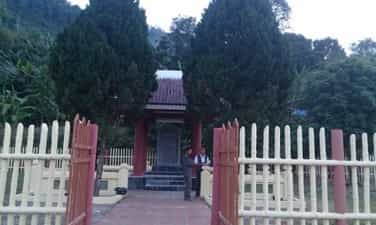
Na Ngan Fort Relics
Na Ngan Fort relic in Hoa Tham commune, Nguyen Binh district, Cao Bang province, is an important relic in the complex of Tran Hung Dao Forest Special National Relic Area. This is where the second victorious battle of the Vietnam Liberation Propaganda Army (Vietnam Liberation Propaganda Army) took place on December 26, 1944. Na Ngan Fort is located on a high hill in Hoa Tham commune, Nguyen Binh district, a place with rugged terrain surrounded by valleys. The enemy chose the house of Deputy Administrator Nong Van Pao, the most solid three-room stilt house in the village, to turn into a military post with several layers of fences surrounding it. The station had 22 red loincloth soldiers commanded by 2 French officers. Thanks to the investigation and understanding of the enemy situation, during the battle of the garrison on December 26, 1944, the Vietnam Liberation Army Propaganda Team disguised itself as a team of brave soldiers to capture communists to enter the garrison. The sudden, lightning-fast battle took place within only 15 minutes. We destroyed and captured all enemy soldiers in the station and collected many guns, ammunition, and documents to bring back to the war zone. At the same time, distribute propaganda leaflets to the People and release all captured red loincloth soldiers back to the locality after spreading enlightenment propaganda. Currently, at this location, on the foundation of the old house, a stele house has been built to mark the event and the glorious victory of the Vietnam Liberation Propaganda Team. Source: Cao Bang province electronic information portal.
Cao Bang
5368 view
Rating : National monument

PHUC NGHIEM Pagoda
Referring to the Buddhist Center of ancient Vietnam (now in Thuan Thanh district, Bac Ninh), many people often think of places such as But Thap pagoda, Dau pagoda, Kinh Duong Vuong mausoleum, Sy Nhiep temple... , relics bearing the mark of Vietnamese spiritual culture. But there is still a place of meditation whose birth is associated with the "Luy Lau Buddha land", which is the To Pagoda in Man Xa village, Ha Man commune, Thuan Thanh district. Phuc Nghiem Pagoda is popularly known as Chan Pagoda, because the pagoda is located in Chan Lang village, Yen Son commune, Luc Nam district, Bac Giang province. Chan village's name is Khe Khau village, under the Le dynasty it belonged to Lan Son commune, Tri Yen district, Phuong Nhon district, Lang Giang district, Kinh Bac region. Khe Khau village has long been divided into 3 independent village units (Chan Lang, Chan Dong and Trai Cau), so Phuc Nghiem Pagoda has become a Buddhist religious building for all 3 villages. Every year, in February, on the 19th and 20th of the lunar calendar, the people of the 3 villages organize a pagoda festival that attracts a large number of Buddhist disciples and tourists from all over to visit the festival. Through surveying the relics, it is estimated that Phuc Nghiem Pagoda was built around the 14th - 15th centuries, that is, the end of the Tran Dynasty and the beginning of the Early Le Dynasty. Over five or six hundred years of history, the architectural work has gone through many restorations and repairs, so there have been many changes compared to the original style of knowledge. The architectural works that still exist today bear the architectural style of the Nguyen Dynasty with typical construction items such as: Three Jewels Court, Ancestor House, Monk's House, Ancient Tower... Direct survey of people's relics It is possible to predict relatively accurately the layout of the ancient pagoda of the early Le period. At that time (15th century), Phuc Nghiem Pagoda had a complete architectural layout in the style of "foreign domestic work", but because the two corridors and three entrance gates were destroyed by time, the current building still follows its layout. Department of Public Letters. The three-jewel building is built in the style of a "vase-shaped vase" in front with two bronze pillars covered with fruit. The Three Jewels are divided into two adjacent buildings, the Front Hall and the Buddha Hall, arranged in a mallet-shaped layout. The front hall consists of 7 ironwood houses, with 5 rows of pillars, a striped architectural structure, and simple carvings. Connected behind the front hall is the Buddha hall, 3 large spaces with the same architectural style but not carved but carefully smoothed and sharpened. In the front hall, there are a number of carved panels, with decorative motifs on the theme of four precious things, vividly reflecting the rich products of the homeland. On the gable of the Buddha hall, the ancients wrote four Chinese characters in the style of a book, with magical butterfly strokes "Boundless Wind and Moon" to praise the charming beauty of this monument. Everlasting with the three jewels, Phuc Nghiem pagoda also preserves the ancient brick tower system. This is the eternal resting place of the monks who practiced and passed away at the temple. Today, visiting Phuc Nghiem Pagoda, people can still clearly see the traces of two ancient architectural works that were damaged during the resistance war against the French. These are two corridors (where the Arhat statue is placed) and three gates. That vestige has helped today's generation to imagine the majestic scale of this monument. For a long time, Phuc Nghiem Pagoda has become a famous Buddhist center of the Truc Lam Zen sect in the lower Luc Nam district. Currently, the system of ancient statues, architectural works, and worship objects are still carefully preserved by the locality. In the Tam Bao and the ancestral house, there are over thirty ancient wooden statues of the Le - Nguyen dynasties that are very valuable. The stone stele system is lost, but the temple still retains a Tay Son bronze bell. The bell is about 100cm high (including handle), mouth circumference is 160cm. The bell handle is molded into the shape of a pair of dragons living together, the dragon's mouth spits out pearls, looking serious but gentle, not fierce like the dragons of the later Nguyen Dynasty. On the 4 segments of the bell are embossed with 4 Chinese characters, indicating the name of the bell: "Phuc Nghiem Tu Chung" (Phuc Nghiem pagoda bell). At the end of the article, there is a stray line indicating the time of casting this bell: "Eight years of the Canh Thinh dynasty, three moons, the first day of the sand, the first day of the third month of the 8th year of the Canh Thinh era (1800). create a large bell). This article engraves the meaning of bell casting, then goes on to record some of the groups and individuals who contributed to casting this bell. The bell text was composed by the monk who was the abbot of Phuc Nghiem Pagoda at that time. Finally, there is an 18-sentence long poem, written in a 4-word verse form praising the scenery of Phuc Nghiem Zen temple and the kindness and compassion of the compassionate Buddhas to bring peace to the country and people. Phuc Nghiem Pagoda is an ancient pagoda, once a place where many Buddhist scriptures were printed in the 18th and 19th centuries. Along with Chan village communal house and Noi communal house, Phuc Nghiem pagoda relics have contributed to beautifying and enriching the people. relics in the lower Luc Nam district. Furthermore, Phuc Nghiem Pagoda also preserves many ancient relics of the Le - Nguyen dynasties, so they need the attention and research and protection of the government and professional sectors./. SOURCE: BUDDHISM TODAY
Bac Ninh
3686 view
Rating : Provincial level relics

VAN PHUC Pagoda
Van Phuc Pagoda, located in Trung Ban village, Dong Tho commune, Yen Phong district, Bac Ninh province, is a pagoda with a rich history and unique culture. This temple is not only a place of worship and spiritual practice for local people but also an important cultural and religious destination in the region. VAN PHUC Pagoda was a Vietnamese Buddhist center during the Ly Dynasty. The pagoda still retains a number of stone sculptures of the Ly Dynasty. In particular, in the Buddha hall, there is a statue of Buddha meditating on a lotus throne, 1.85m high, including a pedestal of 3m. This is a masterpiece of stone sculpture in our country. The pagoda worships the statue of Zen Master Chuyet Cong (1644). In particular, the pagoda has a 27m high stone statue of Great Buddha, weighing more than 3,000 tons, placed at a height of 108m, carved according to the prototype of the Ly Dynasty Buddha statue at the pagoda, which was unveiled on September 26, 2010. Van Phuc Pagoda was built a long time ago and has undergone many renovations. The temple's architecture is typical of Northern Vietnamese pagodas with curved tiled roofs, intricately carved wooden columns and solemnly decorated Buddha statues. The temple grounds have structures such as three gates, main hall, harem and other worship spaces, creating a solemn and pure space. Van Phuc Pagoda is a place of worship for Buddha, where local people come to pray, burn incense, and participate in Buddhist festivals such as Buddha's Birthday, Vu Lan and other religious holidays. The pagoda is not only a place of practice for monks but also a place to connect the community, helping people preserve and promote cultural values and traditional beliefs. In addition, Van Phuc Pagoda also plays an important role in moral and spiritual education for the young generation, helping to preserve the cultural beauty of the Vietnamese people. With its green landscape and peaceful space, the pagoda is a destination that attracts tourists and Buddhists from all over. Van Phuc Pagoda stands out with its ancient space, rare Buddha statues and many relics of historical value. This pagoda is a testament to the cultural and religious development of the land of Yen Phong, Bac Ninh over many generations. The existence and development of Van Phuc Pagoda makes an important contribution to preserving the cultural and spiritual heritage of Bac Ninh province in particular and Vietnam in general. Van Phuc Pagoda is not only a historical relic but also a symbol of the spirit of harmony between humans and nature, between the spiritual life and daily life of the people here. SOURCE: VIETNAMESE GLOBAL Pagoda
Bac Ninh
3636 view
Rating : Provincial level relics
NAM LUONG FAMILY
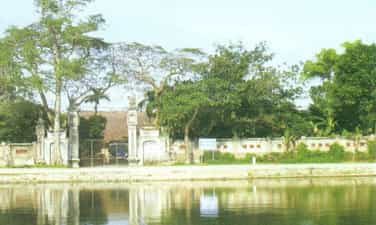
The story of the hundreds of years old communal house in Ngam Luong village, Lang Ngam commune, Gia Binh district, Bac Ninh province that we talk about below is an example to prove that. Ngam Luong village, Lang Ngam commune (formerly named Ngam Dien) is located adjacent to the Thien Thai mountain range, and is the meeting place of many transitional geo-cultural circuits. In the area, there is Duong River hugging the West and Northwest. Along with that is the ancient road route, now the Duong River dyke. That river route and ancient road form an East-West connection between the Thai Binh and Red River basins. Lang Ngam is also located on the western bank of the Luc Dau Giang area, where the high mountains and low hills in the North end; The place where the Thuong River, Cau River, and Luc Dau River converge, opening up the delta and down to the East Sea. Those river routes are important traffic arteries in transporting ancient Vietnamese residents along with the country's economic, historical and cultural elements back to Lang Ngam; And from here - thanks to these special bloodlines - it continues to spread out, integrating with the country in all fields. That has made Ngam Luong - Lang Ngam countryside - since ancient times - a place to both witness and directly contribute to the creation of many unique cultural histories of the homeland and the country. Located at the beginning of the village, looking to the Southeast, Ngam Luong village communal house is in a beautiful feng shui position. In front of the road is a lake with water, the village road curves around, and in the distance is fertile countryside. On both sides are villages and fields. Behind the communal house is a great dike and the Duong river like a strip of noise surrounding it. Perhaps the village and communal house are located by the river, but when the ancients built the communal house, they worshiped the three Water Gods as tutelary gods. The water gods are considered to be figures with a decisive role, directly influencing the thinking, daily life and production of agricultural residents who have grown wet rice since early times. Currently, their records in the locality have been lost for a long time, so it is unclear what their merits were. But in the pavilion, there are still Chinese characters recording their names: First Five Six Shows Improvising Linh Hon Than, Second Trung Thien heroically heroic and strategic Hon Than, and Third Chan Nhi Thong Rui Mat. attain godhood. Ngam Luong village communal house has quite a large scale, containing many unique values of history, cultural beliefs and architecture - art. In particular, in the field of architecture and art, this is one of the last and outstanding representatives of Northern communal house sculpture art during the three golden centuries of folk culture. Because of that, the communal house was ranked as a Historical - Cultural relic by the People's Committee of Bac Ninh province in 2009. According to the chronology still recorded on the first sentence of the communal house in Ngam Luong village, the communal house was restored. created on a beautiful day in early summer in the year of Giap Than - Le Dynasty (around 1764). The overall construction at that time included: The communal house gate and the Tam Quan were built in the style of a 8-roof match stack, on both sides there were 2 dancers, elephants and painted four sacred animals. Inside are two Dance Strips, each side has 4 compartments. Next is the Great Court and the Harem. Over time and war, some works such as Tam Quan and Dai Vu of the relic site were demolished. In 1962, the wooden floor in Dai Dinh was also removed to make tables and chairs. Later, the villagers repaired the outer garden, built walls and gates, and redid the three gates; Gather enough remaining floorboards to fit the floor on one side of the house. Currently, when villages are gathered together, houses are spacious; The communal house, which was originally large and imposing compared to the people's houses in the past, is now somewhat less massive; But the spiritual value and historical and cultural value are multiplied over time. With the Ngam Luong communal house project, the architectural beauty over the centuries still exists through the ancient architectural structure that is still maintained. The great communal house consists of 3 compartments, 2 wings and 4 curved roofs, measuring 21m long and 11m wide, truly an architectural work with all the typical beauty of Northern village communal houses. The architecture of Ngam Luong village communal house has the same style as many Northern village communal houses. The system of ironwood columns, large and small, is solid, structured in the style of stacking beams and gong racks, with 6 rows of columns horizontally and 4 vertical rows. This sturdy column system lifts up the wide, tiled roof of the communal house, protecting the sacred inner space of the communal house, with many carved works of artistic value, imbued with the souls and emotions of the workers - Folk artists build communal houses. The main columns in the front and back horizontal rows of the three main halls all have column ears. That is the worker who sawed the top of the column into a wide frame, then brought the wooden slab down to spread out on both sides of the top of the column, below was the support arm, and on top was a dowel attached to support the upper beam. Thanks to this structure, the column ears are always in a stable position. It is these pillars that the craftsmen have turned into works of art with embossed techniques and rich themes, bringing the bustling breath of life. The rear palace is in the style of a mallet, consisting of 5 architectural compartments in the style of a row, surrounded by bricks, the axis is 11.5m long, 8m wide. Inside the Harem are arranged 3 thrones worshiping the tablets of the tutelary gods. In front are incense bowls, stands, candles, floating trays, altars... all placed on brick pedestals and square tables. Some of these artifacts date back to the Nguyen Dynasty, 19th century. In particular, the ancient communal house was bestowed with many titles by Vietnamese feudal dynasties. Over time, it was lost, and up to now, 7 ordinations are still preserved in the temple. The earliest religion was established in Canh Hung 28 (1767), the latest religion was established in Dong Khanh 2 (1886). Most of them acknowledged the merits of the village tutelary god for helping, eliminating disasters, and dispelling disasters for the people, so that the people could be prosperous and happy. SOURCE: LITERATURE AND ART ASSOCIATION OF BAC NINH PROVINCE
Bac Ninh
3507 view
Rating : Provincial level relics

Nguom Slua Cave
Nguom Slua developed in limestone blocks formed in shallow and warm marine conditions about 270-360 million years ago (Permian Carboniferous period). In front of the cave entrance, there are still traces of two river steps - evidence of the lifting activity of this area in the recent period (called neo-tectonics). According to the legend of the Tay people, Nguom Boc is the place where the couple Pu Luong - Slao Cai met and became husband and wife, while Nguom Slua is the cave where Pu Luong fought with a tiger to protect their peaceful life. my family. Nguom Slua was the place where the Red Flag newspaper (1932-1933) was printed, a base for revolutionary activities from 1932 to 1936. Here, the Cao Bang Party Committee held the Indochina Congress in May 1936 to mobilize People of all ethnic groups in the province responded to the "Indochina Congress" movement and the draft "People's Prayer" demanding democratic reform, improving people's lives, and fighting openly and legally. Nguom Slua is ranked as a national historical relic according to Decision No. 188 VH/QD/BT dated February 13, 1995. Source: Ministry of Culture, Sports and Tourism.
Cao Bang
5066 view
Rating : National monument
Dong Lan Pagoda
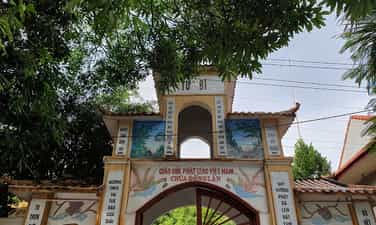
Dong Lan Pagoda located in Hung Dao commune (City) is a pagoda with a long history, built during the Le - Mac dynasties. The pagoda was recognized as a provincial cultural and historical relic in 1997. Dong Lan Pagoda is located on Dong Lan mound (Doong Lan in Tay language), in the northwest of Cao Bang city. The origin of the name "Dong Lan" has many hypotheses, associated with historical stories through many periods such as the story of Thuc Phan organizing the contest "Nine lords fighting for the king" (there are many other place names associated with this story such as : Tong Chup field, banyan tree in Cao Binh, stone clogs in Ban Thanh, upturned boat in Khau Lua). Dong Lan is the place where the lord went to get the bronze drums. He came back tired and fell asleep. Rats bit the drum strings. The drums rolled down the hill and echoed throughout the whole area. The other lords thought the lord who went to get the drums had won, so they abandoned the competition, so no one won. . Tong Lan is a rolling drum, called Dong Lan. There is a hypothesis that Dong Lan is a pagoda located on the Lan hill. During the Ly Dynasty (late 11th century), Dong Lan Pagoda was built to worship Buddha. From the year of Tan Hoi, the 19th Canh Thong era of the Mac Dynasty, the Queen of the Mac Dynasty ordered the pagoda to be built in the shape of a nail, with corridors and a back hall on both sides, and a monk's room. Behind the pagoda is Ly palace of the Mac dynasty. The pagoda is a place for queens and princesses to chant Buddhist scriptures. Before the pagoda was built, at Dong Lan mound there was a temple worshiping Tran Quy and Tran Kien. According to "Cao Bang Thuc Luc" there are many detailed records about the origins and special talents of brothers Tran Quy and Tran Kien. Their father, Tran Trieu, married a fairy wife, so his two sons were blessed with many miracles. When they reached adulthood, their fairy mother had to return to heaven, and their father also went to the mountains to study the way of immortals. The two brothers Tran Quy and Tran Kien remembered their parents' advice and carried swords around the area to search for monsters. , eliminating harm to the people. Remembering the merits of the two young men, the people built a spring-autumn temple to worship. These two, throughout the dynasties, were all ordained. During the Le Dynasty, Tran Kien was appointed Cai Cong Dai Vuong, a lower-class minister; Tran Quy is Dong Lan Dai Vuong, a middle class god. Experiencing historical events, Dong Lan Pagoda was destroyed and severely damaged many times, then repaired. In the year of Thieu Tri (1841-1847) of the Nguyen Dynasty, the pagoda was completely rebuilt. The place to worship Tran Quy - Tran Kien is separately worshiped in a small temple next to the corridor on the right side of the pagoda, while Buddha is worshiped in the main hall. During the resistance war against the French, in 1950, the pagoda was once again destroyed. In addition, according to information provided by some elderly people in Hung Dao commune, previously in the pagoda there was an incense bowl to worship Thach Sanh. This is a character in the legend of the Tay people. Thach Sanh killed the ogres, protecting the peaceful life of the people. On January 15, 1997, the pagoda was granted a Provincial Cultural Historical Relic Certificate by the Provincial People's Committee. In 2004, the pagoda was funded by the state to invest in renovating the three jewels, adding many Buddha statues, and renovating the pagoda grounds. However, the original architecture of the temple is no longer retained intact. Artifacts such as bells, Buddha statues, parallel sentences, etc., can no longer be kept from the past. Only artifacts will be given to Buddhists later. Dong Lan Pagoda currently has quite a large campus. The three-entrance gate is built firmly and solemnly. Looking from the outside you see the words "Compassion", looking from the inside you see the words "Happiness and forgiveness". The pagoda consists of a main church with 5 front halls and a main hall. There is also an ancestral church (3 compartments). The pagoda's roof is tiled and decorated with two dragons flanking the moon. From the pagoda yard, you have to go through 9 steps to reach the first architectural layer, which is the front hall (worship house). The doors are all built in an arch shape. The front hall is spacious, high and airy, with 5 compartments. In the middle is an altar with a thousand-eyed and thousand-armed Guan Yin Buddha statue. The space on the right is the altar to worship Saint Tran Quy - Tran Kien and the statue of Monsignor. The space on the left is the altar for Thach Sanh. Between the altar and the main hall there is a transit gap which is a space used to get light. The main hall (three jewels space) has two layers of altars. The highest layer adjacent to the pagoda's roof contains three Buddhas of the Three Worlds, symbolizing Buddhas belonging to three lifetimes: past, present, and future. Three Tam The Buddhas of the same size and shape are placed on a lotus throne. The second altar layer has 3 statues in the same row called Amitabha Tam Ton. Sitting in the middle is a fairly large carved Amitabha Buddha statue. On both sides are statues of Bodhisattvas and monks, arranged in rows from low to high, majestic and solemn. In the temple yard, there is a 3m high white marble statue of Avalokiteshvara Bodhisattva holding a vase of nectar in his hand. Behind the main church is the Mother Goddess Temple with three altars: Thanh Mau (main hall), Son Trang, and Tran Trieu. Above the main shrine there is the image of a pair of Thanh and White Snakes crossing horizontally. The pagoda festival is held on the 8th day of the first lunar month every year with many activities: chanting sutras, reciting Buddha's name, shaking hexagrams to pray for good fortune, praying for fortune, burning incense to pick fortune, organizing folk games..., attracting visitors from all over. Go to a crowded festival. Source Electronic information portal of Hoa An district, Cao Bang province.
Cao Bang
5366 view
Rating : Provincial level relics

De Doong Temple
De Doong Temple, also known as Giang Dong Temple, is located right on the land of De Doong village, Hong Viet commune (Hoa An). This is the original temple worshiping the stone god according to the folk belief concept of "all things are sacred" of the Tay and Nung Cao Bang ethnic groups. Later, it had the additional function of worshiping Buddha and mother worship. This is one of the sacred temples that local people and tourists admire, pray for, and worship. Legend has it that, once upon a time, there was a poor man who worked diligently as a fisherman, working hard along the river to make a living. He is filial to his parents, lives in harmony and humility with everyone in the neighborhood, and is loved by his relatives. On the day of his father's death anniversary, he went to the river to cast his net in the hope of catching a catch of fish to take home as a memorial, but he kept casting without catching any fish. Whenever I pull up the fishing net, there is only a stone shaped like two people; Feeling strange, he clasped his hands together and prayed: "If it is a god, please give me a catch of fish to commemorate my father's death." Sure enough, right after that, he threw a full catch of fish. Seeing the miracle, the young man took the stone and built a shrine in Vo Ban. On a night of heavy rain and strong winds, the temple's roof was blown off and a piece of wood flew to Riet Ri hill, from which people built the temple there. But this is a place far from the population, with difficult roads and narrow surroundings around the temple, not meeting the needs of crowded ceremonies, so the villagers built a temple in De Doong village and took the god stone to worship. During the Le and Mac dynasties, De Doong temple was repaired and Buddha and mother statues were placed in the altar. Through many changes in history, the temple disappeared and was restored and embellished many times, creating a new appearance until today. The overall architecture of De Doong Temple is in the shape of the letter "nail", including three vertical compartments, tiled roofs, and walls built of local bricks. The partition walls are decorated with motifs of rolling clouds, flying dragons, flowers and leaves..., each room has its own pattern and layout. The outermost space is also known as the main hall or the great worship space. There are no statues in this space, but on the hitch there are decorations depicting charming mountain and water scenes. On both sides of the hall, there are paintings of two mighty generals standing guard with two war horses. In the middle of the space is the altar and incense bowl, and on the right side hangs a small bronze bell. On both sides of the outside wall are painted two tall horses, with the words "great horse" written in Chinese characters on their chests. This is the main space for local people and tourists to burn incense and pray. The middle space, also known as the middle room, has an area of about 21.5 m2. On the hitch are engraved two dragons flanking the moon, showing the descriptive content: two dragons flanking the moon, dragon rolling in the clouds. In the middle of the room there are 3 statues of mandarins, all of them wearing dragon-winged hats and holding scriptures in their hands to preach. The left wall is an altar of meditating statues, the right wall has Buddha statues and Guan Yin Buddha statues with small sizes ranging from 20 - 60 cm. The innermost space, also known as the main hall or harem, has an area of about 20.44 m2. This is the space used for worship with solemn and majestic ceremonies. The middle wall acts as a background decorated with small patterns, orchids and rolling rattan. In this space, there are 3 statue pedestals with 3 steps, the highest step and the second step are a system of Shakyamuni Buddha statues, each step has 3 statues sitting on a lotus. In the middle of the second pedestal is a sitting statue with many arms, smaller than the other statues. The third pedestal is the statue of Maitreya, a symbol of the god of wealth, with an incense bowl and flower vase next to it. On the left side of the altar, there is a statue of Tang Tang in the middle and statues of good and evil gods on both sides. On the left wall is a throne to worship a god stone and an incense bowl for offerings. The right wall has 3 statues of mandarins and incense bowls for good luck. De Doong Temple Festival is held on the 15th day of the first lunar month every year, attracting a large number of people from all over to attend the festival, pray for blessings, pray for wealth, pray for good fortune, hope for favorable rains, peaceful winds, and fresh crops. Good for cultural activities, arts, traditional folk sports, and bustling spring days. During the resistance war against the French colonialists, the temple witnessed the activities of the Cao Bang Party Committee, many revolutionary soldiers came here to take refuge at the temple door and discuss state affairs. On June 15, 1945, a meeting was held here to welcome the establishment of the province's revolutionary government. De Doong Temple was ranked as a provincial-level historical and cultural relic on November 4, 2008. Source Ministry of Culture, Sports and Tourism.
Cao Bang
5354 view
Rating : Provincial level relics

Nguom Boc Cave
Nguom Boc - meaning Dry Cave in the local language - is located on the west slope of Lam Son mountain range, in Ban Nua hamlet, Lam Son village, Hong Viet commune. This is the place that marks many historical events about President Ho Chi Minh's revolutionary life in the years 1942-1945. From late March to August 1942, President Ho Chi Minh moved from Pac Bo to the base in Lam Son to direct the revolution. Here, people often secretly go back and forth to Nguom Boc cave, affectionately called "Mr. Ke" by local people. In May 1945, at Nguom Boc cave, President Ho Chi Minh attended a meeting with leaders of the Cao - Bac - Lang Joint Provincial Party Committee to prepare for the historic general uprising in August 1945. Nguom Boc is also where Le To's military workshop lived and worked during the resistance war against the French. Here in October 1950, President Ho Chi Minh attended and directed the Conference summarizing the Border Campaign; talked with workers at the Le To military factory and representatives of the people of Hong Viet commune, Hoa An district. Archaeologists also found many relics in Nguom Boc showing that this was once the residence of prehistoric people of the early Neolithic period, equivalent to the early Hoa Binh Culture, about 10,000 years ago today. In the famous legend Pu Luong - Slao Cai of the Tay people, Nguom Boc is the first residence of these two legendary characters in Cao Bang. Geologically, Nguom Boc cave developed in limestone formed in shallow sea conditions about 270 - 360 million years ago (Permian Carboniferous period). At the cave entrance, traces of shelves and ancient flows are clearly visible, evidence appears to have been raised during the recent period (called the neo-tectonic period). Nguom Boc Cave was recognized as a national revolutionary historical relic according to Decision No. 02/2004/QD/BVHTT of the Ministry of Culture, Sports and Tourism dated January 19, 2004. Source Electronic information portal of Hoa An district, Cao Bang province.
Cao Bang
5121 view
Rating : National monument

DAI BI Pagoda
Dai Bi Pagoda is located in hamlet 8, Ninh Giang village, Ninh Hiep commune, Gia Lam district, suburban Hanoi. The pagoda is also called Ninh Giang pagoda or Xom 8 pagoda. Dai Bi Pagoda was built very early. Based on written documents and relics left in the monument, it can be confirmed that the pagoda was built at least 400 years ago. According to the elders in the commune, the pagoda was burned on September 22, Mau Dan year, but soon after, local people joined in making merit with Mr. Ky, a native of the commune, who practiced here. Contribute to rebuilding the pagoda according to its old appearance. Perhaps the most recent was the restoration in 1939, which is still inscribed in Chinese characters on the upper palace: Emperor Bao Dai's reign was fourteen years old The fifth year of Ky Mao, five moons, twenty-six days of great prosperity and great auspiciousness. Translated as: The roof was topped off on the auspicious day of May 26, Ky Mao year, the 14th Bao Dai era (1939). Dai Bi Pagoda is not very large in scale; The entire floor plan is square, each side is 13.4m with an area of about 200m2. The ancient craftsman cleverly built a pagoda that has all the architectural components of a typical pagoda including: Front hall, incense burner, upper hall and surrounding corridors, Patriarch's house, guest house, outbuilding. On the top of the Tien Duong roof, in the middle is a relief of the sun image, on both sides there is a relief of a phoenix and a pincer head is a relief of a dragon, on the two banks of the river is a relief of Nghe. These are reliefs symbolizing the mascots in the Four Sacred Treasures. The head of the knife is stylized in the form of a carp turning into a dragon, and all the tiles are covered with funny-nosed tiles. On the 4 pillars attached to the facade are 2 parallel sentences made of cement. The Upper Palace is the center of worship decoration, has a simple structure and shares the roof with the Tien Duong, which includes 25 round statues painted in red and gold, splendidly decorated with parallel parallelograms and flags. Close to the wall of the Upper Palace, there are 4 stone relief statues of the Hau and a gable wall on the right are typical works of art of the 17th century. Through many ups and downs and changes of time, especially the fire, the relics have suffered a lot of loss. Currently, the pagoda still retains precious relics made of stone and bronze including: 5 relief stone queen statues, 6 small stone stele, 1 heavenly stone pillar (1691), some earthen statues, 1 bronze bell. 75cm high, 50cm diameter, 25cm handle, 4 sides with the words "Dai Bi Tu Chung", the era name "Canh Thinh Royal Dynasty" (1800); 3 horizontal paintings and 7 parallel sentences. Every year the people still maintain the festival at the temple on the 5th, 6th, and 7th days of the second lunar month. Dai Bi Pagoda was ranked an architectural and artistic relic by the Ministry of Culture and Information in 1997./. SOURCE: HANOI PEOPLE ONLINE MAGAZINE - SPEECH AGENCY OF HANOI LITERATURE AND ART ASSOCIATION ASSOCIATION
Bac Ninh
3645 view
Rating : Provincial level relics

XA TEMPLE
Xa Temple is located on the south bank of Cau River, near Xa junction, which is the confluence of two ancient rivers Ca Lo and Cau River (also known as Nhu Nguyet River) flowing into Luc Dau River (Hai Duong province). Xa Temple, Xa Doai village, Tam Giang commune (Yen Phong district, Bac Ninh) worships two generals Truong Hong and Truong Hat. The two were siblings and talented generals of Trieu Quang Phuc in the resistance war against the invaders of the Luong Dynasty. Nearly a thousand years ago, in the 11th century, Lieutenant Ly Thuong Kiet built the Nhu Nguyet river defense line here during the second resistance war against the Song Dynasty, leading to a famous victory over the Song invaders in October 1077. Talking about the history of the temple, Mr. Vu Cong Tuong (82 years old, from Xa Doai village, head of Xa Temple) said: Xa Temple worships Saint Tam Giang - the brothers Truong Hong and Truong Hat, who are famous generals of the temple. Trieu Quang Phuc was credited with fighting the Liang invaders in the 6th century. The sacred temple also dates from the 6th century, after their death. The legend of Saint Tam Giang says that, in the past, in Van Mau village (Kinh Bac region) there was a girl named Phung Tu Nhan. At the age of 18, Tu Nhan dreamed that the Dragon god descended from the sky and entwined herself on the Luc Dau River. After that, she was 14 months pregnant and gave birth to a bundle of 5 children: 4 boys and 1 girl. Because she was a child given by heaven, she took the Jade Emperor's surname Truong and gave it to her four sons, Truong Hong, Truong Hat, Truong Lung, Truong Lay, and her daughter, Truong Dam Nuong. Some time later, Heaven sent La Tien Ong to earth to teach literature and martial arts to Tu Nhan's five children at Trang Hoc beach near Co Trach's house. The five brothers, all skilled in literature and martial arts, grew up responding to Trieu Viet Vuong's call to become generals to fight the Luong invaders in Da Trach lagoon and win a great victory. Truong Hong and Truong Hat were appointed talented generals of Trieu Quang Phuc. When Trieu Quang Phuc ascended the throne (other names are Trieu Viet Vuong, Da Trach Vuong), Ly Phat Tu led his army to fight back but could not win, so he used the trick of marrying his son, causing Trieu Viet Vuong to fall for the trick and be defeated. When Ly Phat Tu won the throne, knowing that Truong Hong and Truong Hat were talented generals, he invited them to become mandarins. But with your loyalty, you decided not to worship two kings. Knowing that he could not be subdued, Ly Phat Tu ordered them to be arrested everywhere. They knew they couldn't escape so they committed suicide in the Cau River to maintain their loyalty to the king. Also according to legend, the Jade Emperor felt compassion and ordained Truong Hong and Truong Hat as River Gods. Since then, the people of 372 villages along the Cau River, Thuong River, Ca Lo River and the places where the two men were stationed to fight the enemy all mourned and built temples to worship them as Gods. The Ngo, Dinh, Le, and Ly dynasties were later blessed by Yin to keep their territories in peace, so they all honored the Truong cousins as Saint Tam Giang - great kings and superior gods. According to history books, Xa Temple and Saint Tam Giang are also associated with the birth of the poem "Nam Quoc Son Ha" by Ly Thuong Kiet - our country's first declaration of independence. Talking about the legend of the story of the poem Than, Mr. Vu Cong Tuong said: According to the elders of Xa Doai village, one night in October 1077, at the sacred temple on the Cau River battlefield against the Tong and Ly Thuong invaders. Kiet went to the temple to pray for yin and yang to support the resistance war against foreign invaders. After the ceremony, the sky suddenly lit up like daytime, two clouds appeared in the air, one white, one red. Above were two brave soldiers, one riding a white horse, the other riding a pink horse, riding the clouds among the four armies cheering their horses. hi. Legend has it that he was Mr. Truong Hong and Truong Hat who appeared to bless our army and people in fighting the Song invaders. Tu Vu Cong Tuong was moved and respectfully said: "You are "born as a form, death as a spirit"; That means living as a general, transforming into a god, and still carrying out the noble mission of serving the country." At the same time, in the air or in Ly Thuong Kiet's mind, the poem "Nam Quoc Son Ha" suddenly echoed: Nam Quoc Son Ha Nam Emperor's residence/ Absolutely destined to be in the book of heaven/ Like a rebellious river invading/ Nhu "The king of the South lives in the rivers and mountains of the country. The fate is clear in the book of heaven. Why do the invaders invade? They will be beaten to a pulp." This is the reason why the poem is called Divine poetry. When the poem was read by Ly Thuong Kiet, it resounded loudly in the area, causing the Song invaders to panic and run away, trampling each other to death. Together with the strategic ingenuity of our army and people, the resistance war against the Song Dynasty was completely victorious, destroying 300,000 Song troops, corpses piled up into mountains, blood flowed into rivers. After nearly 1,000 years since that divine victory, currently in Tam Giang commune there are still places such as Bai Xac, Bo Xac, and Dong Xa which are traces of the disastrous defeat of the enemy in the past. Every year, Xa Temple has two major festivals on the 5th of the first lunar month and the 9th and 10th of the fourth month of the lunar calendar. The Xa Temple Festival is the largest in the region. In addition to the solemn rituals of palanquin procession and water procession, there is also the custom of swimming competitions. Legend has it that the swimming custom of Xa Temple is associated with Ly Thuong Kiet mobilizing local militia to participate in fighting the Tong invaders on Nhu Nguyet River. Xa Temple today is located on a mound of land nearly 10 hectares wide, less than a kilometer from Xa junction - the confluence of two ancient rivers. The temple is currently being restored but its architecture still retains its ancient features that have existed for thousands of years. In front of the yard there is still an ancient stone stele engraved with the divine poem "Nam Quoc Son Ha" on both sides in Chinese and national language, outside is a four-pillar gate with a time-tinged relief. In addition to the system of precious antiques still kept as worship statues, in the harem of Xa temple there is also a Tao Quan altar with statues of "two men and one woman". In early spring, tourists and people who come to the Xa Temple ceremony to pray for the country of Thai Dan An do not forget to light incense at the Tao Quan altar with the wish to pray for the family to always be warm, hoping for happiness and peace for their family and for everyone. home. With a history of nearly 1,500 years, in 1988, Xa Temple was ranked by the Ministry of Culture as a National Historical Site. Source: Electronic newspaper of the Central Vietnam Farmers' Union
Bac Ninh
3620 view
Rating : National Monument