Relic point Vietnam
Việt Nam
BECOME A THEATER OF THEATER
The citadel of the Mac dynasty was built with soil from the late 16th century, running from South to North from Bao Dai mountain, passing Mount Ai (Dong Phu), along the north side of the mountain, running into Trai Mit area (Tien Nha) and then feeding into Luc Nam river, across the bank. On the East side, run into the land of Vuon village, Ho Nuoc village, into the Han Lam temple area (Nghia Phuong), then stop at the foot of Mang mountain in the Huyen Dinh - Yen Tu range. The Mac Dynasty Citadel runs across the Luc Nam River valley for about 18km, and is a relic of ancient military talent. During the Le Trung Hung period, many ancient architectural works such as communal houses and pagodas were left in Bac Giang, such as Tho Ha communal house, Huong Cau communal house, Dong Lam communal house, San communal house, Than communal house, Dan Hoi communal house, Ha My communal house, and Ha My communal house. Bao Son, Gai communal house, Trung Dong communal house..., Te pagoda, Trung An, Non village, Kham Lang, Trang pagoda (Dong Phu), Vuon village (Cuong Son), Hui village (Dan Hoi)..., Hiep ancient stone mausoleum system Hoa, Viet Yen, Tan Yen. During the Tay Son period in Luc Nam, there was also the Ria communal house (Dong Phu) with the date of creation: Hoang Trieu Bao Hung's second year of creation (i.e. Bao Hung's reign, year 2 - 1802). Modern times clearly marked relics in the relic system related to the Yen The peasant uprising. During the anti-French and anti-American period, Bac Giang had the Mai Suu Military Training Center, the location where American planes were shot down in Duong Huu and Nghia Phuong communes. SOURCE: BAC GIANG DEPARTMENT OF CULTURE, SPORTS AND TOURISM CENTER FOR INFORMATION - TOURISM PROMOTION
Bac Ninh
2702 view
Rating : National monument

Forbidden Forest Communal House
Forbidden Rung Cam Communal House in Phe village, Van Son commune is a place to worship the hero of the 11th century Song Dynasty - the concubine Than Canh Phuc who married Princess Thien Thanh, son of King Ly Thanh Tong, and is a place for cultural and religious activities of the people. Tay ethnic group in Van Son region. Forbidden Forest Communal House is located on a land with a beautiful terrain, in the middle of a field, with ancient trees providing shade, in front of the Communal House is the Champa Nam stream that leads the water flowing around it; The current forbidden forest communal house has a 3-compartment vestibule, 1-compartment harem looking to the East. In the temple, there are still 4 stone legs and a yin-yang stone of great value in scientific research and discovery. understand the history of local monuments. Every year, people hold a festival on the 11th day of the third lunar month with sacrifices and incense offerings to commemorate the merits of the Village God who has contributed to the people and the country. With historical and cultural values, on December 7, 2021, the People's Committee of Bac Giang province issued Decision No. 2499/QD - People's Committee ranking Forbidden Forest Communal House as a provincial-level historical and cultural relic in 2021. At the ceremony, authorized by the Chairman of the Provincial People's Committee, leaders of the Bac Giang Provincial Museum and the District Department of Culture and Sports awarded the Provincial-level relic ranking certificate of the Forbidden Forest Communal House to the Party Committee, authorities and people of Van commune. Paint. SOURCE: SON DONG DISTRICT ELECTRONIC INFORMATION PORTAL
Bac Ninh
2773 view
Rating : Provincial level relics
Relics of communal house and Lan Tranh pagoda
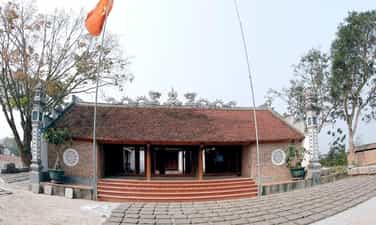
Lan Tranh communal house and pagoda formerly belonged to Lan Tranh commune, Tuy Loc Son district, Yen The district, Bac Giang province. Nowadays, Lan Tranh communal house and pagoda belong to 3 villages (Lan Tranh 1, Lan Tranh 2, Lan Tranh 3), Lien Chung commune, Tan Yen district, Bac Giang province. Before the August Revolution of 1945, Lan Tranh village was also Lan Tranh commune of Tuy Loc Son district, Yen The district, Bac Giang province including 3 villages: Middle village, Lower village, Upper village. After the August Revolution of 1945, the general level was eliminated. In 1957, Tan Yen district was established, this place belongs to Hoa Binh commune. In 1973, the name was changed to Lien Chung commune. Based on the current status of the relic, documentary sources of artifacts and worship objects in the relic show that Lan Tranh communal house was built during the reign of Le Trung Hung (around the 18th century). During the resistance war against the French, in 1946, people donated some bronze and wooden worship objects to the revolution, so the communal house was no longer intact as before. Up to now, the people of Lan Tranh village have restored the communal house using old materials and artifacts. Communal houses and pagodas are arranged in the style of "Before the gods, then after the Buddha" (the communal house first, the pagoda later). The relic has the ancient beauty of the architectural works of Le Trung Hung's reign and has historical and cultural value. During the years of resistance against the French colonialists, Lan Tranh communal house and pagoda were also a place to develop self-defense forces, protect revolutionary cadres, and store food to serve the resistance. During the resistance war against the Americans, communal houses and pagodas were where Ke prison camp was evacuated. Based on the current status of the relic, on documentary sources and artifacts such as horizontal panels, couplets, worshiping texts, orations, worship objects... contained in the relic and the respectful worship of the people of Lan Tranh village for You know, Lan Tranh communal house worships Cao Son and Quy Minh gods. The communal house is located on a turtle-shaped mound at the edge of the village, in a quiet space, overlooking the south and east. In front of the communal house is a large field and on the left is the winding Thuong River. Surrounded on 3 sides are densely populated residential areas, creating a landscape that is both quiet but warm with a village and countryside feel. Going through the village road, we turned into the large land and entered the communal house yard. The communal house's yard is spacious and square. To the right of the communal house is a large soccer field, formerly the communal pond. Lan Tranh Communal House has a layout in the shape of the letter Nhi, including: the front hall and the back palace. Go through the courtyard to enter the altar hall. This building has a straight roof, with a picture of two dragons flanking a moon on top. The two gables are built in the style of a stepped three-mountain throne. In front of the front gable are two bronze pillars with two parallel sentences written on them. The front altar has 5 compartments, 2 shelves, and paneled doors. The size of each compartment is 2.5m wide, the two ends are 0.5m wide. The height from the ground to the roof of the house is 4.25m. This building has 5 compartments, 6 floors and 5 rows of pillars. The main column is 3.55m high, the military column is 2.7m high, and the porch column is 2.15m high. The architectural structure of the altar building follows the traditional style of lines and gong stands. The harem building has a 2-vaulted space, in the middle there are two gables guarding the wall and 3 rows of pillars made of 6 pillars. Each compartment has a width of 2.4m, the height from the ground to the roof of the harem is 3.50m. The distance between two main columns is 1.5m. The sculptural art of Lan Tranh communal house is concentrated in architectural structures. That is the system of column bases, architectural structures, walls, cocks, ends, traps... On the ends of each column are engraved beautiful curling symbols, expressing the wishes of the Vietnamese people. Nam wants to pray for good weather and a prosperous life. In particular, the communal house has a system of large, strong and sturdy pillars, and the joints and paths are all fitted together, creating a strong, elegant, and poised appearance. That confirms the creative talent of ancient artisans, to have a large, beautiful and majestic architectural work for us today. SOURCE: ELECTRONIC INFORMATION PORTAL OF CANH THUY COMMUNE - YEN DUNG DISTRICT - BAC GIANG PROVINCE
Bac Ninh
2761 view
Rating : National monument

Ngoc Hoa Temple
Ngoc Hoa Temple is located in the center of Van Tao village, Thanh An commune, the temple sits on a beautiful land, the gate faces south, its back leans against the flow of the Rang river. In the 9th year of Khai Dinh, it was recorded: The edict for Van Tao commune to serve, conferred on Ngoc Hoa as an upright and gentle deity, helping the country protect the people, allowing the villagers to serve the god. In February 1994, the temple was awarded the title of national historical relic by the Ministry of Culture and Information. In memory of the beautiful and beautiful girl Ngoc Hoa, who had a loyal love for her husband, Pham Tai. Every year, on the 4th to 6th day of the second lunar month, the locality organizes a traditional Festival with many exciting activities, imbued with unique spiritual cultural values. Ngoc Hoa Temple has been in Van Tao village for hundreds of years. At first it was just a temple, then people from all over contributed their resources to gradually renovate and upgrade it. With the help of the culture and information industry and the efforts of the people of Thanh An commune and even those living far from home, the temple has now become one of the most beautiful relics in the area. area. The temple has an area of 3,640 square meters. Outside is a nearly 1,000 square meter park with many giant trees creating a beautiful, spacious landscape. The temple's lake area has an area of 3,490 square meters, creating a quiet and peaceful space. The temple has a complex of many beautiful architectural houses, with terraces, left vu, right vu and harem. In addition to a number of stele engraved with Chinese characters erected at the temple gate and around the garden, there are also a number of unidentified tombs on the grounds. In 1980, people excavated an ancient tomb and discovered the remains of a girl wrapped in many layers of cloth. At that time, the museum had not yet determined the origin of the remains. The outer space of Ngoc Hoa temple has beautiful architecture, curved roofs, and columns built on stone slabs. The harem part is like a large hut, with two doors only about the height of a person's head. Ngoc Hoa statue is placed in the middle of the high altar. The statue is not large, about 60 centimeters high, but is carved quite delicately: round face, bright eyes, high nose, rosy cheeks exude the glitter, dignity and elegance of a beautiful woman in the countryside. According to the temple caretaker, the statue has been around for a long time, no one remembers its origin. Ngoc Hoa Temple and Ngoc Hoa Temple Festival with sacred rituals of reverence, a devotion to honoring traditional values, recognizing the merits of General Tran Cong for fighting the enemy and defending the country; At the same time, upholding the moral values of fidelity and virtue that need to be embellished and preserved. Source Electronic information portal of Thanh Ha district, Hai Duong province.
Hai Phong
3264 view
Rating : National monument

Ca Pagoda
Ca Pagoda in Tan An commune (Thanh Ha) was recognized as a national historical, cultural, architectural and artistic relic in 1994. It also preserves many precious antiques. Ca Pagoda's literal name is Dai Tu Kham Thien Tu. According to history books, the pagoda was built during the Later Le Dynasty and restored on a large scale in 1881. Ca Pagoda worships King Ly Nhan Tong. Legend has it that King Ly Nhan Tong once stationed a garrison here to fight the enemy. The pagoda also worships Buddha Emperor Tran Nhan Tong, whom the people here respect as a Saint. Therefore, Ca Pagoda has two functions: both a temple and a pagoda. The pagoda has a nail-shaped architecture including 5 front halls 21 m long, 7.5 m wide and 3 back halls 10.9 m long, 8.5 m wide. The difference of Ca Pagoda is that the front altar has temple-like architecture, soaring corners, and dragon-shaped reliefs delicately carved by the skillful hands of ancient artisans... Every year on October 30 and November 1 of the lunar calendar, Tan An commune holds an incense offering ceremony to commemorate Buddha Emperor Tran Nhan Tong and King Ly Nhan Tong, praying for favorable weather, favorable production, and a prosperous life. People's lives are increasingly prosperous. On these days, many people who are far from home also come to temples. Since being ranked as a national historical cultural, architectural and artistic relic, the pagoda has been restored and renovated at a cost of more than 2 billion VND. This amount of money is contributed by the people here and tourists from all over. People have contributed thousands of work days to repair and build construction items within the temple grounds. Up to now, the relic site has become more spacious but still retains its sacred and ancient soul. The pagoda now has a three-entrance building and restored a number of statues and worship objects. In the temple yard, many ornamental plants and flowers are placed, creating a quiet, fresh space that attracts tourists. Ca Pagoda also preserves many precious antiques. The person who was instrumental in building and restoring some items of the pagoda is monk Thich Quang Nghiem, currently the abbot of the pagoda. Previously, the pagoda did not have an official abbot but was assigned to the local management. In 2012, Master Thich Quang Nghiem took over the temple, and there were still many abandoned places on the campus. After taking over, monk Quang Nghiem classified each antique and carefully preserved it. The pagoda still retains the nearly 2.7 m high Amitabha Buddha statue (not including the pedestal and lotus). This is one of the largest ancient wooden statues in the country. The statue was built during the Nguyen Dynasty, joined together by pieces of wood, so at first glance it is difficult to recognize the joints. Buddha statue in meditating position on lotus. Although it has been around for a long time, the paint and jackfruit wood material are still durable over time, showing no signs of rot. This place also preserves a 5-storey stone tower right in front of the street. The two upper floors of the stone tower are curved in the shape of apricot blossoms, the four corners are curved in the shape of a dragon's head, and on the top of the tower is a sepal placed on blooming lotus petals. This is also a rare ancient stone tower that few pagodas have. According to the village elders, the stone tower is where the relics of Buddha Emperor Tran Nhan Tong are placed. In the temple grounds, there are also many tomb towers of abbots over many generations, carved with elaborate lines. The pagoda also has 5 valuable stone steles, dating from 1874-1933, recording traces of each historical period in Chinese. Next to the pagoda's well is a pair of stone crocodiles from the 17th century, carved by ancient artisans with exquisite lines. The pagoda still preserves 11 ordinations from the Le and Nguyen dynasties and a bronze bell 1.2 m high and 56 cm in diameter. On the bell are engraved hymns praising the beautiful scenery of the pagoda and the meritorious person who cast the bell. Source Electronic information portal of Thanh Ha district, Hai Duong province.
Hai Phong
3241 view
Rating : National monument

Khuon Than Tourist Area
Khuon Than Forest has an area of about 800 hectares, including 300 hectares of natural forest and 500 hectares of planted forests, regenerated forests and grasslands. Khuon Than Lake is 240 hectares wide, surrounded by lush pine, cajuput, and acacia mangium forests all year round. The lake bed has 5 small islands, which are upturned hills rising in the middle of the blue water. The islands are all planted with pine trees that are 15 - 20 years old. Khuan Than is also famous for its fruit farms and orchards as far as the eye can see, Tu Ma temple worshiping famous generals of the Tran Dynasty, which has been classified as a relic by the State, and many traditional cultural beauties of ethnic minorities such as : San Chi, Cao Lan, Nung, Tay… Coming to Khuon Than, visitors will have the opportunity to explore the "green lung of Luc Ngan region" with 5 pine islands that are green all year round, and at the same time cruise on the lake, admiring the scenery of clouds and water. In particular, during the rainy season, visitors can observe water flowing from the top of Khuon Than dam rushing down into the valley along the lake. Visitors to Khuon Than can not only roam the lake by boat but also visit lush green orchard farms as far as the eye can see. This is also the place to reside, nurture and preserve the unique cultural values of ethnic minorities such as the San Chi, Cao Lan, Tay, Nung people... Coming here, visitors will have the opportunity to enjoy the incense. The sweet taste of specialties: honey, gecko wine, chestnuts, lychees, persimmons, custard apples... of ethnic minorities such as Kinh, Cao Lan, Tay, San Chi, Nung. Especially worth mentioning is the fish dish. Anyone who has ever enjoyed grilled goby fish on a charcoal stove of the ethnic people here will never forget it. If those who like wild "fairyland" scenery can visit the floating islands, which are bowl-shaped hills rising in the middle of the lake. The quiet, peaceful, lyrical space is very suitable for intimate stories on the green grass... under the rows of pine trees swaying in the cool breeze. When you feel tired, you can immediately see the hammocks swinging under the trees in the longan garden. You can lie in a hammock and enjoy the rich sweet flavor of ripe lychee bunches. Not only that, coming here, visitors can also visit Tu Ma temple worshiping famous generals of the Tran Dynasty, which has been ranked as a Monument by the State. In particular, if you spend the night here on leisurely agricultural occasions, you will have the opportunity to attend traditional cultural activities with the singing of soong hao, si, luon... that captivate the hearts of the people of the countryside. Ethnic minorities live around the lake area. The most exciting thing is that you don't have to go all the way to Da Lat to hear the whispering sound of pine trees, but you can also discover the wonder of wild nature with trails crossing mountain slopes and winding, clear streams. , meandering. Khuan Than currently has a wild beauty very close to nature, creating a great attraction for all tourists. Although there are no luxury hotels, restaurants, motels with full amenities... visitors will have a comfortable and gentle feeling. On Spring and Summer days, visitors coming here can be relieved of their thoughts and worries. Take a leisurely stroll around the lake, immerse yourself in the vast space of the blue lake surface, silhouetted by clouds and sky, and watch the sunset with a herd of children chasing back herds of buffalo, so charming and romantic. In the fall and winter, visitors can hang out with fishing rods, relax floating on the lake, cozy up next to the fire, enjoy the items they harvest from the wild, and watch people's faces. Quiet water, feel the refreshing wind blowing... Khuon Than Lake is also a very suitable place to build resort centers and entertainment areas with new types, such as boating. , climbing mountains, walking around the lake and visiting ethnic villages... After an exciting and tiring trip, visitors can relax and float on wooden boats gliding on the rolling water. Enjoy the waves, mingle with nature, listen to birds sing, watch the blooming wild flowers, and listen to smooth, loving folk songs. And then, visitors will feel excited and ecstatic, as if lost in the nothingness and fantasy of the vast landscape... SOURCE: BAC GIANG PROVINCE ELECTRONIC INFORMATION PORTAL
Bac Ninh
2603 view
Rating : National monument

Tay Yen Tu eco-spiritual tourist area
Coming to Bac Giang, one of the tourist destinations not to be missed is the Tay Yen Tu ecological spiritual tourist area. This is the final destination in the spiritual tour following the walking path of Buddha Emperor Tran Nhan Tong and his disciples through pagodas and towers along the western slope of the Yen Tu mountain range. Tay Yen Tu Spiritual - Ecological Tourism Area is located in Tay Yen Tu town, Son Dong district, Bac Giang province, about 140km northeast of Hanoi. From Hanoi, you travel along the Hanoi - Bac Giang highway. When you reach the Bac Giang City intersection, turn right onto Provincial Road 293 - West Yen Tu Road (also known as the spiritual road), follow the signs. Directions about 70km to the Tourist Area. When talking about Tay Yen Tu, we must talk about the Truc Lam Zen sect. Truc Lam Zen sect is a Zen sect with pure Vietnamese philosophy, founded by Buddha Emperor Tran Nhan Tong in the 13th century. Truc Lam Zen sect is the soul of Yen Tu sacred mountain system, it has become the pride of every Vietnamese person. Pilgrimage to West Yen Tu, visitors can admire famous religious relics and feel the peaceful and poetic beauty of Bac Giang land. Yen Tu Mountain is located on the Dong Trieu arc, hugging the northeastern region of Vietnam, the east side mainly belongs to Quang Ninh province, the west side belongs to Son Dong, Luc Ngan, Luc Nam and Yen Dung districts of Bac Giang province. Currently, the West Yen Tu area still retains many historical and cultural relics and works related to religion, associated with the process of building and defending the country of our people, especially during the Ly and Tran dynasties. With a system of pagodas and towers, historical-cultural relics and the magnificence of endless mountains and forests, rich vegetation and many animal species, Yen Tu has created a potential. Together with East Yen Tu of Quang Ninh, West Yen Tu of Bac Giang is coordinated and connected into a unified Yen Tu landscape complex, creating conditions for tourism development and promoting the cultural heritage of our ancestors. leave. Tay Yen Tu tourist area was started construction in 2014 and put into operation phase I in 2019. The favored tourist area is located next to Tay Yen Tu nature reserve with thousands of hectares of primeval forest and many animal species. wild animals. This is an advantage in bringing tourists nationwide different experiences during their visit and pilgrimage to the land of Buddha. The overall planning of the tourist area is divided into 02 functional zones: ecological - spiritual sightseeing zone and ecological - entertainment resort zone. The ecological - spiritual sightseeing area includes main items such as: central square, five elements garden, infinity hill - a system of 10 statues recreating the Buddha's life journey, cable car route, Ha pagoda and Thuong Pagoda. In addition, in this subdivision there are also a number of other service works such as parking lots, air conditioning lakes, streamside restaurants... SOURCE BAC GIANG DEPARTMENT OF CULTURE, SPORTS AND TOURISM CENTER FOR INFORMATION - TOURISM PROMOTION
Bac Ninh
3118 view
Rating : National monument

Thien Thai Cave - Temple of Ky Dong Nguyen Van Cam
Thien Thai Cave - Temple of Ky Dong Nguyen Van Cam Thien Thai Cave is about 35km northwest of Bac Giang city. Before 1945, it belonged to Dong Ky commune, Huong Vy district, Yen The district, now belongs to Hong Ky commune, Yen The district, Bac Giang province. This is a large plantation area in Dong Ky and Hong Ky communes today. Seven magical plantations are arranged like the 7 bright stars of the Big Dipper constellation, including seven zones (or seven camps), including: first camp, second camp, third camp, fourth camp, fifth camp, sixth camp and Dong area. Thien Thai. Thien Thai is the place where the gods live or the fairy realm. Ky Dong created this name to distract the colonialists, making them mistakenly think he came here just to enjoy leisurely travel with mystical and strange illusions, but in fact Thien Thai was the center and the camps gathered. around the region, and at the same time had a close connection with the Yen The insurgent army. These seven camps are arranged along both sides of the road from Dong Ky to Dong Vuong. From here to Phon Xuong - De Tham's headquarters is about 4 km. Thien Thai Cave was originally just a small thatched cottage area built by Ky Dong. Later, the people turned it into a temple to worship Ky Dong (after his death). The temple faces south, located in Trai Nhat, with an inter-commune road in front, next to it is provincial road 398 and the railway connecting Kep intersection (Lang Giang district) with Thai Nguyen province. Behind the temple is the Soi River flowing southwest toward Bo Ha. The temple has a layout in the style of the letter J, including a 5-compartment front hall and a 2-compartment harem. The load-bearing frame structure is made of wood, the roof frame's architectural design is simple, with traditional lines, the gong stand's pillars are smoothed and sharpened, not carved with elaborate patterns, in front of the back of the hall are embossed with the three words Thien Thai cave, the background The temple is tiled with traditional square tiles and has a tiled roof. The temple door is built in an arched shape with 3 doors, the middle door is higher and larger than the two sides, the door is made of wood, table style. The temple is decorated with statues and many other worship objects. Every year, on February 24 (lunar calendar), people in the area and officials of Hong Ky commune joyfully celebrate, offer incense and organize cultural activities to commemorate his merits. With the above historical significance, Thien Thai cave is one of 23 relics belonging to the historical relic system of Yen The uprising sites signed by the Prime Minister with Decision No. 548/QD-TTg dated May 10. /2012 ranked as a Special National Monument. SOURCE ELECTRONIC INFORMATION PORTAL DEPARTMENT OF CULTURE - SPORTS - TOURISM OF BAC GIANG PROVINCE
Bac Ninh
3427 view
Rating : Special national monument
Bach Hao Pagoda
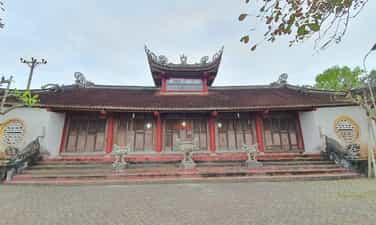
Hao Xa Pagoda or Hao Pagoda (called in Sino-Vietnamese, Bach Hao ancient Zen pagoda), in Hao Xa village, Thanh Xa commune, Thanh Ha district, Hai Duong province; was built during the Ly Dynasty. This pagoda has a charming river landscape, with many unique features of the Red River Delta, and was ranked as a national historical relic in 1993 and 2015; Hao Xa pagoda festival is a national intangible cultural heritage. Hao Xa village, Thanh Xa commune, Thanh Ha district is located on a narrow strip of land along Cua Chua river - a branch of the Huong river. The land of the village resembles the shape of a phoenix with its wings spread. Hao Xa Pagoda is located on the head of a bird with a white plume, so its name is Bach Hao, meaning Bach Hao Pagoda. Local people call it Hao Pagoda for short According to genealogical records, the pagoda was built in 1011 during the reign of King Ly Thai To. At first, people in the area built a pagoda called Hao Pagoda with a scale of three compartments, mainly made of bamboo thatch and covered with palm leaves to worship Buddha. Later, through dynasties, the pagoda was rebuilt and expanded to worship Buddha, King Tran Nhan Tong, village tutelary god and abbots. According to genealogical records and related documents, in the Tran dynasty, in Ha Hao site (in the Later Le dynasty, Ha Hao site was changed to Hao Xa village, in Huong Dai commune, Binh Ha district, Thanh Ha district, Nam Sach district; Since 1956, Hao Xa is a village of Thanh Xa commune, Thanh Ha district) where Mr. Nguyen Danh Doan and Mrs. Pham Thi Phuong gave birth to two sons named Nguyen Danh Nguyen and Nguyen Danh Quang. The two brothers Nguyen and Quang are very good at studying martial arts. Growing up, the two brothers became close friends with Ly Dinh Khue, a classmate and fellow villager. When taking the exam, all three of them passed high and were appointed scholars by the king, specializing in teaching in the palace. When the Mongol invaders brought troops to invade our country, the three men followed King Tran Nhan Tong and Hung Dao Dai Vuong Tran Quoc Tuan to fight the enemy in Pha Lai, Van Kiep. When the enemy was defeated, the king was full of praise. The stone stele also recorded the king's words: "Since the day the war broke out in our country, Tam Cong has diligently cultivated himself day and night to find a way to save the country and the people." On January 6, 1293, Dieu Ngu Dau Da Tran Nhan Tong traveled in early spring and preached scriptures by water. Arriving at Ha Hao site, three lay people organized a boat racing festival with the villagers to welcome the first founder of the Truc Lam Zen sect. Seeing the charming river landscape, the Emperor ordered the pagoda to be rebuilt, expanded, and renamed Bach Hao pagoda. He made a horizontal parallel-panel board, built a lotus-shaped stone altar to worship Buddha, and handed it over to him. The three men stayed to practice at the temple. A few years later, three lay people were summoned by Duc Dieu Ngu to Yen Tu to practice and then "transformed" here one by one. Remembering his father's contributions to helping the people and the country, the King of the Tran Dynasty gave gold and silver to the villagers of Ha Hao to set up a temple and ordained him as a tutelary god, engraved with the great title "General Hao shines". Nguyen Danh Quang was ordained as Pha Lai layperson, Nguyen Danh Nguyen as Pha Ho layperson, Ly Dinh Khue as Pha Te layperson. Three lay people are worshiped at the pagoda and are revered as the first three monks of the pagoda. Every year, on the 4th - 6th day of the first lunar month, Hoa villagers hold ceremonies and festivals (boat racing...) to this day. In the 1540s, during the Mac Dynasty, deputy monk Tran Nhu Thua donated money to rebuild the pagoda with 60 large and small compartments in the style of foreign internal works. Later, due to natural erosion, storms and floods as well as the wars of the Le, Mac and Nguyen dynasties, the pagoda was also repaired, but not much of the ancient architecture was retained. Venerable Thich Gia Hue abbot at the temple from 1954 until his death... In the late 90s and early 2000s, monks, nuns, Zen monks lived at the pagoda, Buddhists and people renovated the pagoda; The bell tower and the Three Jewels of the pagoda were built spaciously. Through time and many wars, up to now, too few unique features and antiques have been retained. The current pagoda includes a 5-compartment front hall, 2-compartment harem, and 3-compartment Ancestral House; The front street is built in the style of stacking lotus lines; The rafters all have carvings of flowers and leaves, with bamboo turning into dragons. At the end of the 19th century, Bai Say insurgents took Hao Pagoda as their base. During the Vietnam - France war, Hao pagoda was the place where the first party cell of Binh Ha commune (formerly Binh Ha district) was established; where the launching ceremony of the Viet Minh Front in Thanh Ha district was witnessed; base of operations of cadres in some neighboring communes and many revolutionary soldiers; where a number of district agencies stand, where the communication station between the district and Ha Dong area is located and where the resistance war is carried out with the bell tower having to be removed. The temple's abbot, Ngo Van Nhan, admitted to the Communist Party of Vietnam, one of the first party members in Hao village. Source Electronic information portal of Thanh Ha district, Hai Duong province.
Hai Phong
3289 view
Rating : National monument

Minh Khanh Pagoda
Minh Khanh Pagoda (Huong Dai Pagoda, Perfume Pagoda) is located in Binh Ha village, Thanh Ha town, Thanh Ha district, Hai Duong province; belongs to the Northern sect, worshiping Buddha and King Tran Nhan Tong; was a national historical and cultural relic in 1990. Minh Khanh Pagoda was built during the Ly - Tran dynasties, and was restored many times in the 16th, 17th, 18th, and 19th centuries. In 1992, abbot Thich Dam organized a major restoration of the pagoda and built three entrance gates. Currently, Minh Khanh Pagoda has a campus of more than 1 hectare, inside also preserving a system of Buddha statues, ancient tower gardens and precious relics: preserving over 200 antiques such as statues, towers, stele, stone pillars, wells. water...; 13 ordinations of the Le and Nguyen dynasties (Vinh Khanh, Canh Hung, Gia Long, Minh Mang, Thieu Tri, Tu Duc, Dong Khanh, Duy Tan, Khai Dinh...) and the Governor-General's relic ranking decree Indochina in 1925. In the main hall, the pagoda still preserves 9 pearl relics that are said to belong to Truc Lam's first patriarch Tran Nhan Tong and his blood-flowing tower. Minh Khanh Pagoda Festival lasts for 3 consecutive days, the main festival is held on November 1 of the lunar calendar every year, commemorating the day King Tran Nhan Tong passed away on Yen Tu Mountain. The ceremony includes a colorful procession, a five-fruit tray procession, a rustic ceremony, and a sacrificial ceremony. The festival includes games: human chess, water puppetry, rowing, five-fruit tray contest, rice cake making contest... Source Electronic information portal of Thanh Ha district, Hai Duong province.
Hai Phong
3056 view
Rating : National monument